

4 catfish fillets (about 6 oz / 170 g each), patted dry
2 cups (480 ml) buttermilk
1 tbsp (15 ml) hot sauce (optional)
1 1 / 2 cups (195 g) fine yellow cornmeal
1 / 2 cup (65 g) all-purpose flour
2 tsp kosher salt, plus more for finishing
1 tsp freshly ground black pepper
1 tsp paprika (smoked or sweet)
1 tsp garlic powder
1 / 2 tsp onion powder
1 / 4 tsp cayenne pepper (optional)
1 tsp baking powder (optional, for extra crispness)
Neutral oil for frying (peanut, canola, or vegetable), enough for 2 inches (5 cm) depth
Lemon wedges, for serving
Tartar sauce or remoulade, for serving (optional)
In a shallow dish, whisk the buttermilk with the hot sauce. Submerge the catfish fillets and refrigerate for 30–60 minutes.
In a separate bowl, whisk together the cornmeal, flour, salt, black pepper, paprika, garlic powder, onion powder, cayenne, and baking powder.
Set a wire rack over a rimmed baking sheet for draining. Pour oil into a heavy skillet or Dutch oven to a 2-inch depth and heat to 350°F (175°C).
Remove fillets from the buttermilk, letting excess drip off. Dredge firmly in the cornmeal mixture, pressing to coat well and shaking off excess. Let coated fillets rest 5 minutes to set the crust.
Fry the fillets in batches without crowding, carefully lowering them into the hot oil. Cook 3–4 minutes per side until deep golden and crisp, and the fish flakes easily or reaches 145°F (63°C) internal temperature.
Transfer fried fillets to the wire rack and immediately sprinkle with a pinch of salt. Allow the oil to return to 350°F (175°C) between batches.
Serve hot with lemon wedges and tartar sauce or remoulade. Pair with coleslaw, hushpuppies, or fries if desired.

3 large eggs, at room temperature
1 cup (240 ml) buttermilk, at room temperature
1 cup (120 g) all-purpose flour
1 / 2 tsp kosher salt
1 / 4 tsp freshly ground black pepper
1 / 4 tsp cayenne pepper (optional)
1 tsp chopped fresh thyme leaves
3 tbsp (45 ml) unsalted butter, melted, plus more for greasing the pan
3 oz / 85 g sharp cheddar cheese, finely grated
Place a 6-cup popover pan (or 12-cup muffin tin) on the middle rack and preheat the oven to 450°F (230°C).
In a bowl, whisk the eggs until foamy. Whisk in the buttermilk and 3 tablespoons melted butter until combined.
In a separate bowl, whisk together the flour, salt, pepper, cayenne (if using), and thyme. Add to the wet mixture and whisk just until smooth. Let the batter rest 10 minutes while the pan finishes heating.
Carefully remove the hot pan and generously grease the cups with butter. Sprinkle a small pinch of cheddar into the bottom of each cup.
Fill each cup 1/2 to 2/3 full with batter, then divide the remaining cheddar over the tops.
Bake for 20 minutes without opening the oven. Reduce the heat to 350°F (175°C) and continue baking 15–18 minutes, until deeply golden and well puffed.
Remove from the oven and immediately pierce each popover with a small knife to vent steam. Serve hot alongside the pot roast to catch the gravy.

2 medium eggplants (about 2 lb / 900 g)
2 tsp kosher salt, plus more to taste
Freshly ground black pepper to taste
1 cup all-purpose flour (120 g)
4 large eggs
1 / 2 cup milk (120 ml)
2 cups Italian-style breadcrumbs (or panko) (200 g)
1 cup finely grated Parmesan cheese, divided (100 g)
2 tsp dried Italian seasoning (or 1 tsp dried basil and 1 tsp dried oregano)
1 tsp garlic powder
3 cups marinara sauce (720 ml)
12 oz low-moisture mozzarella, shredded or thinly sliced (340 g)
1 / 4 cup extra-virgin olive oil, plus more for the pan (60 ml)
1 / 4 cup chopped fresh basil, plus more leaves for garnish (15 g)
Optional: 1 / 4 tsp crushed red pepper flakes
Prep the eggplant: Trim ends and slice into 1/2-inch-thick rounds. Toss with 2 teaspoons kosher salt and place on a wire rack set over a sheet pan. Let stand 30–45 minutes to draw out moisture. Pat slices very dry with paper towels.
Heat the oven: Preheat to 425°F (220°C). Line 2 baking sheets with parchment and lightly oil them.
Set up breading: Put flour in a shallow dish and season with black pepper. In a second dish, whisk eggs with milk. In a third, combine breadcrumbs, 1/2 cup Parmesan, Italian seasoning, garlic powder, a pinch of salt, and pepper.
Bread the eggplant: Dredge each slice in flour (shake off excess), dip in egg, then coat in the breadcrumb mixture, pressing to adhere. Arrange on the prepared baking sheets and drizzle or brush both sides with the olive oil.
Bake the cutlets: Bake until golden and crisp, 18–22 minutes total, flipping halfway. Remove and reduce oven temperature to 375°F (190°C).
Assemble: Spread 1/2 cup marinara in a 9x13-inch baking dish. Layer half the eggplant over the sauce, slightly overlapping. Top with about 1 to 1 1/4 cups marinara, half the mozzarella, and 1/4 cup of the remaining Parmesan. Repeat with the remaining eggplant, another 1 to 1 1/4 cups marinara, the remaining mozzarella, and the last 1/4 cup Parmesan. If using, sprinkle red pepper flakes over the top.
Bake: Bake at 375°F until bubbly and the cheese is melted, 20–25 minutes. For extra browning, broil 1–2 minutes, watching closely.
Rest and serve: Let stand 10–15 minutes to set. Garnish with chopped basil and basil leaves. Slice and serve.
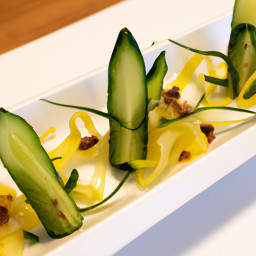
4 Persian cucumbers (about 1 lb / 450 g), ends trimmed
1 / 2 tsp kosher salt
1 tsp granulated sugar
1 tbsp fresh lime juice
1 tbsp unseasoned rice vinegar
1 tsp low-sodium soy sauce
1 tsp toasted sesame oil
1 tsp finely grated fresh ginger
1 small garlic clove, finely grated
1 / 4 tsp red pepper flakes (or to taste)
2 tbsp toasted sesame seeds, lightly toasted
2 scallions, thinly sliced
Lightly crack the cucumbers with the flat side of a knife or rolling pin until split and craggy. Halve lengthwise, then tear or cut into 1-inch pieces.
Toss the cucumber pieces with the kosher salt in a bowl and let sit 10 minutes to draw out excess water. Drain off the liquid and pat cucumbers dry with paper towels.
In a small bowl, whisk together the sugar, lime juice, rice vinegar, soy sauce, toasted sesame oil, grated ginger, garlic, and red pepper flakes until the sugar dissolves.
Add the cucumbers to the dressing along with most of the sesame seeds and scallions. Toss to coat evenly.
Taste and adjust seasoning (more lime for brightness, soy for salt, or chili for heat). Sprinkle with remaining sesame seeds and scallions. Chill 5–10 minutes and serve cold.

1 cup (227 g) unsalted butter, softened
1 cup (200 g) packed light brown sugar
1 / 2 cup (100 g) granulated sugar
2 large eggs, room temperature
2 tsp (10 ml) pure vanilla extract
1 1 / 2 cups (190 g) all-purpose flour
1 tsp baking soda
3 / 4 tsp fine salt
1 / 2 tsp ground cinnamon (optional)
3 cups (270 g) old-fashioned rolled oats
1 1 / 2 cups (270 g) semisweet chocolate chips
3 / 4 cup (75 g) chopped walnuts or pecans (optional)
Preheat oven to 350°F (175°C). Line 2 baking sheets with parchment paper.
In a large bowl, beat softened butter, brown sugar, and granulated sugar together until creamy and slightly fluffy, about 2 minutes.
Beat in eggs one at a time, then mix in vanilla until smooth.
In a separate bowl, whisk together flour, baking soda, salt, and cinnamon (if using). Add to the butter mixture and mix on low just until combined.
Stir in oats, chocolate chips, and nuts (if using) until evenly distributed. If the dough feels very soft, chill for 20–30 minutes for thicker cookies.
Scoop dough into 1 1/2-tablespoon portions (about a heaping tablespoon) and place 2 inches apart on prepared sheets.
Bake 11–13 minutes, until edges are set and lightly golden and centers still look slightly soft.
Cool on the baking sheet for 5 minutes, then transfer to a wire rack to cool completely. Store cookies airtight at room temperature for up to 4 days or freeze up to 2 months.

2 tbsp (30 ml) olive oil
1 tbsp (14 g) unsalted butter (optional, for richness)
1 medium fennel bulb, cored and thinly sliced (reserve fronds for garnish)
1 large leek, white and light green parts only, thinly sliced (or 1 medium yellow onion, chopped)
1 Granny Smith apple, peeled, cored, and diced
1 small Yukon Gold potato, peeled and diced
2 cloves garlic, minced
1 / 2 tsp kosher salt, plus more to taste
1 / 4 tsp freshly ground black pepper
1 / 2 tsp smoked paprika
1 cup (240 ml) unfiltered apple cider
3 cups (720 ml) low-sodium chicken broth (or vegetable broth)
1 bay leaf
4 fresh thyme sprigs (or 1 / 2 tsp dried thyme)
3 fresh sage leaves (or 1 / 4 tsp dried sage)
1 tsp lemon zest
2 tsp fresh lemon juice, plus more to taste
2 tbsp (30 ml) crème fraîche or plain Greek yogurt (optional garnish)
Chopped fennel fronds and/or chives, for garnish
Pinch of smoked paprika or cracked pepper, for finishing (optional)
Warm olive oil (and butter, if using) in a medium pot over medium heat. Add fennel and leek; cook, stirring occasionally, until softened and lightly translucent, 6–8 minutes.
Stir in apple, potato, and garlic; season with salt, pepper, and smoked paprika. Cook 2 minutes to bloom the spices.
Pour in apple cider and simmer, scraping up any browned bits, until slightly reduced, about 3 minutes.
Add chicken broth, bay leaf, thyme, and sage. Bring to a gentle simmer, cover partially, and cook until potato and fennel are very tender, 15–20 minutes.
Remove bay leaf and herb stems. Stir in lemon zest. Blend the soup until silky-smooth using an immersion blender (or carefully in batches in a countertop blender).
Return to the pot if needed; stir in lemon juice and adjust seasoning with additional salt, pepper, or cider/lemon to balance richness and acidity.
Ladle into warm bowls. Top with a small dollop of crème fraîche or yogurt if using, a sprinkle of fennel fronds/chives, and a pinch of smoked paprika or cracked pepper. Serve hot alongside the grilled pork chops.

1 large fennel bulb, trimmed and very thinly sliced (reserve fronds)
4 cups (120 g) baby arugula
2 navel oranges, peeled and segmented
2 tbsp (30 ml) fresh orange juice (from the segmented oranges)
1 / 3 cup (35 g) sliced almonds, toasted
2 tbsp chopped fennel fronds or fresh mint
2 tbsp (30 ml) fresh lemon juice
1 tsp finely grated lemon zest
1 tbsp Dijon mustard
1 tsp honey or maple syrup
1 tbsp capers, rinsed and chopped
1 / 4 cup (60 ml) extra-virgin olive oil
Kosher salt and freshly ground black pepper to taste
If your almonds aren’t toasted, toast them in a dry skillet over medium heat until golden and fragrant, 3 to 4 minutes; cool.
Whisk together lemon juice, lemon zest, Dijon, honey, capers, and the reserved 2 tablespoons orange juice with a pinch of salt and pepper. While whisking, slowly stream in the olive oil until emulsified.
In a large bowl, combine the shaved fennel, arugula, orange segments, and chopped fennel fronds or mint.
Season the salad lightly with salt and pepper, then drizzle over just enough vinaigrette to coat (you may not need all of it). Toss gently to combine.
Scatter toasted almonds over the top and serve immediately alongside the creamy farfalle.

2 cups (300 g) cooked Peruvian choclo kernels or regular corn kernels, cooled
1 large English cucumber, thinly sliced into half-moons or ribbons
1 medium ripe avocado, diced
1 cup (130 g) jicama, cut into thin matchsticks
6 radishes, thinly sliced
1 / 4 cup (15 g) thinly sliced scallions (white and light green parts)
1 / 4 cup (10 g) cilantro leaves, roughly chopped
2 tbsp (8 g) fresh mint leaves, finely sliced
1 / 3 cup (40 g) cancha (toasted corn nuts) or roasted salted pepitas
1 / 4 cup (60 ml) passion fruit pulp or 1 / 3 cup (80 ml) unsweetened passion fruit juice
1 tbsp (15 ml) fresh orange juice
1 tsp (5 ml) fresh lime juice
1 tsp (5 ml) honey or agave, to taste
1 / 4 tsp aji amarillo paste or finely minced mild chili (optional)
3 tbsp (45 ml) extra-virgin olive oil
1 / 4 tsp fine sea salt, plus more to taste
Pinch of freshly ground white or black pepper
In a small bowl, whisk together passion fruit pulp (or juice), orange juice, lime juice, honey, aji amarillo (if using), salt, and pepper. Slowly whisk in the olive oil until lightly emulsified; adjust sweetness or salt to balance the tartness.
In a large mixing bowl, combine the choclo, cucumber, jicama, radishes, and scallions. Add about half of the vinaigrette and toss to coat evenly. Let stand 5 minutes to lightly marinate and chill.
Gently fold in the avocado, cilantro, and mint. Add more vinaigrette to taste and season with a pinch of salt if needed.
Transfer to a serving platter and sprinkle the cancha or pepitas over the top just before serving for crunch.
Serve well-chilled alongside the ceviche to provide a cooling, lightly sweet counterpoint to its bright acidity and heat.

12–16 oz / 340–450 g ribeye steak, very thinly sliced
2 Amoroso-style hoagie rolls (8–10 in / 20–25 cm)
1 large yellow onion, thinly sliced
1 small green bell pepper, thinly sliced (optional)
1 / 2 cup (120 ml) sliced mushrooms (optional)
4–6 slices provolone or white American cheese, or 1 / 2 cup (120 ml) Cheez Whiz
2 tbsp (30 ml) neutral oil (canola or vegetable), divided
1 tbsp (15 g) unsalted butter
1 / 2 tsp kosher salt, plus more to taste
1 / 2 tsp freshly ground black pepper
1 / 4 tsp garlic powder (optional)
Partially freeze the ribeye for 30–45 minutes to firm it up, then shave it very thinly across the grain (skip if using pre-sliced).
Preheat a large cast-iron skillet or flat-top griddle over medium-high heat until very hot.
Split the rolls. Spread the cut sides with butter and toast in the hot pan until golden; set aside.
Add 1 tbsp oil to the pan. Sauté the onion (and bell pepper/mushrooms if using) with a pinch of salt until softened and lightly browned, 6–8 minutes; push to one side of the pan or transfer to a plate.
Increase heat to high. Add the remaining 1 tbsp oil. Spread the sliced steak in an even layer and sear undisturbed for 30–45 seconds.
Season with salt, pepper, and garlic powder if using. Using two spatulas, chop and turn the meat into small pieces; cook just until no longer pink, 1–2 minutes.
Mix the onions (and any other veg) back into the steak and form two even piles roughly the length of the rolls.
Cheese option: For provolone/American, lay slices over each pile, add a splash of water to the pan, and cover to melt for 20–30 seconds. For Cheez Whiz, warm it separately until pourable.
Place a roll cut-side down over each pile and, using a spatula, flip the meat into the roll, or scoop the mixture into the rolls. If using Cheez Whiz, spread or drizzle it inside the rolls or over the meat.
Serve hot immediately.
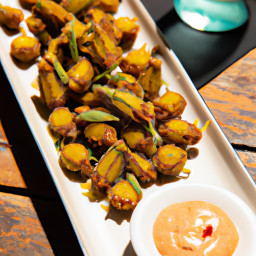
1 lb / 450 g fresh okra, tips trimmed and halved lengthwise
1 cup (240 ml) buttermilk
3 / 4 cup (90 g) fine cornmeal
1 / 4 cup (30 g) all-purpose flour
1 tsp baking powder
1 tsp Cajun seasoning
1 / 2 tsp garlic powder
1 / 4 tsp smoked paprika
1 / 2 tsp kosher salt, plus more to finish
1 1 / 2 cups (360 ml) neutral oil for frying
1 / 2 cup (120 g) mayonnaise
1 tbsp (15 ml) Dijon mustard
1 tbsp (15 ml) fresh lemon juice
1 tsp lemon zest
1 tbsp chopped capers (or dill pickle relish)
1 scallion, finely sliced
1 tbsp chopped fresh parsley
1 / 2 tsp hot sauce
Pinch paprika
Pinch black pepper
Lemon wedges, for serving (optional)
Make the remoulade: In a small bowl, whisk mayonnaise, Dijon, lemon juice, lemon zest, capers, scallion, parsley, hot sauce, paprika, and black pepper until smooth. Chill while you fry the okra.
In a medium bowl, toss the okra with the buttermilk and let sit 10 minutes.
In a shallow dish, combine cornmeal, flour, baking powder, Cajun seasoning, garlic powder, smoked paprika, and kosher salt.
Heat 1/2 inch of neutral oil in a large skillet to 350°F (175°C).
Working in batches, lift okra from buttermilk, allowing excess to drip off, then dredge in the cornmeal mixture, pressing to adhere and shaking off excess.
Fry okra in batches until deeply golden and crisp, about 2–3 minutes per side; avoid crowding the pan.
Transfer to a rack or paper towels and immediately sprinkle with a pinch of salt.
Serve hot with the lemon-scallion remoulade and lemon wedges on the side. (For a lighter option, bake on a greased sheet at 425°F/220°C for 18–20 minutes, flipping once.)

24 chocolate sandwich cookies (Oreos), finely crushed (about 2 1 / 2 cups / 280 g crumbs)
5 tbsp (75 ml) unsalted butter, melted
Pinch of fine salt (optional)
32 oz / 900 g full-fat cream cheese, room temperature
1 cup (200 g) granulated sugar
1 cup (240 ml) sour cream, room temperature
2 tsp (10 ml) pure vanilla extract
1 tbsp (8 g) cornstarch (or all-purpose flour)
1 / 4 tsp fine salt
3 large eggs, room temperature
10 to 12 chocolate sandwich cookies, coarsely chopped
Whipped cream and extra cookie pieces for garnish (optional)
Prep: Preheat oven to 325°F (163°C). Lightly grease a 9-inch springform pan and line the bottom with parchment. Place a large metal baking pan on the lower rack and pour in about 1 inch of hot water to create a steamy environment (no need to wrap the springform).
Make the crust: In a bowl, combine the finely crushed cookies, melted butter, and a pinch of salt (if using) until the crumbs look like wet sand. Press firmly into the bottom of the springform pan. Bake for 10 minutes, then set aside to cool slightly.
Make the filling: In a large mixing bowl, beat the cream cheese and sugar on medium speed until completely smooth and creamy, about 2 minutes. Mix in the sour cream, vanilla, cornstarch, and salt until combined, scraping the bowl as needed.
Add eggs: Beat in the eggs one at a time on low speed just until incorporated—do not overmix. Gently fold in the chopped cookies.
Bake: Pour the batter over the crust and smooth the top. Place on the middle rack (with the water pan still on the lower rack). Bake 60–70 minutes, until the edges are set and the center has a 2–3 inch wobble. If browning too quickly, tent loosely with foil after 45 minutes.
Cool: Turn off the oven, crack the door, and let the cheesecake cool inside for 1 hour. Remove, run a thin knife around the edge to loosen, and cool to room temperature. Cover and chill at least 6 hours or overnight until fully set.
Serve: Release the springform ring. Garnish with whipped cream and extra cookie pieces if desired. Slice with a warm knife, wiping between cuts.
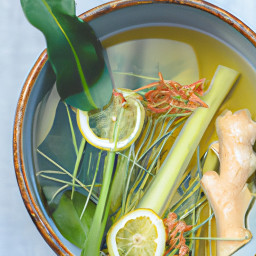
4 cups (960 ml) low-sodium chicken broth
1 cup (240 ml) water
2 stalks lemongrass, trimmed and smashed
1 1 / 2-inch piece fresh ginger, thinly sliced (about 2 tbsp / 30 ml)
2 wide strips lime zest (or 2 kaffir lime leaves, if available)
1 small garlic clove, lightly crushed
1 tsp sugar or honey
1 to 1 1 / 2 tbsp fish sauce (or 1 tbsp light soy sauce for a no-fish option)
1 small carrot, shaved into thin ribbons
2 cups (60 g) baby spinach, loosely packed
2 scallions, thinly sliced
1 tsp toasted sesame oil
Juice of 1 / 2 lime
Salt, to taste
Combine broth, water, lemongrass, ginger, lime zest, and garlic in a pot. Bring to a gentle simmer over medium heat and cook 15–20 minutes to infuse.
Strain the broth, discarding solids, and return the clear broth to the pot.
Stir in sugar or honey and fish sauce (or soy sauce). Taste and adjust salt as needed.
Add carrot ribbons and simmer 2 minutes until just tender.
Stir in spinach and scallions; cook 30–45 seconds until the spinach wilts but stays vibrant.
Remove from heat. Finish with toasted sesame oil and lime juice. Taste again and balance with a pinch more salt or lime if desired.
Serve hot alongside the creamy chicken shiitake sauté to cut richness and refresh the palate.

6 cups (about 450 g) thinly sliced green cabbage
2 cups (about 150 g) thinly sliced red cabbage
2 medium carrots, peeled and julienned or coarsely grated
1 crisp apple (e.g., Granny Smith), cut into matchsticks
3 scallions, thinly sliced
1 / 4 cup (15 g) fresh dill, chopped
1 small jalapeño, thinly sliced (optional)
1 tsp celery seeds
1 / 3 cup (80 ml) apple cider vinegar
2 tbsp (30 ml) Dijon mustard
1 tbsp (15 ml) honey
1 / 3 cup (80 ml) mayonnaise
1 / 4 cup (60 ml) plain Greek yogurt or sour cream
Juice of 1 / 2 lemon
1 / 2 tsp kosher salt, plus more to taste
1 / 2 tsp freshly ground black pepper
Toast celery seeds in a dry skillet over medium heat until fragrant, 30–60 seconds; set aside to cool.
In a large bowl, whisk together apple cider vinegar, Dijon, honey, mayonnaise, yogurt (or sour cream), lemon juice, salt, and pepper until smooth.
Add green and red cabbage, carrots, apple, scallions, dill, and jalapeño (if using) to the bowl. Sprinkle in the toasted celery seeds.
Toss until everything is evenly coated. Taste and adjust seasoning—add a pinch more salt, vinegar, or honey to balance to your liking.
Refrigerate 20–30 minutes to lightly wilt the cabbage and meld flavors.
Serve chilled alongside the ribs; garnish with extra dill and cracked pepper if desired.
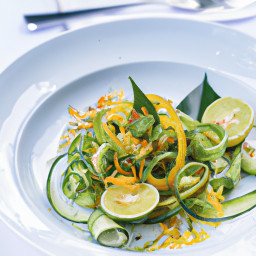
1 large English cucumber, shaved into ribbons or thin half-moons
1 firm green (unripe) mango, peeled and julienned (about 2 cups / 300 g)
1 small red onion, very thinly sliced
2 medium oranges, segmented (about 1 cup / 240 ml)
2 cups baby watercress (or baby arugula) (about 60 g)
1 / 2 cup fresh cilantro leaves, roughly chopped (about 15 g)
1 / 4 cup fresh mint leaves, torn (about 10 g)
1 / 3 cup unsweetened coconut flakes, toasted (about 30 g)
1 / 4 cup toasted pumpkin seeds or cashews (about 30 g)
1 / 4 cup fresh lime juice (from about 2 limes) (60 ml)
1 tsp finely grated lime zest
2 tbsp light coconut milk, well-shaken (30 ml)
2 tbsp extra-virgin olive oil or neutral oil (30 ml)
1 tsp finely grated fresh ginger
1 to 1 1 / 2 tsp honey or sugar, to taste
1 / 8 tsp ground allspice
1 / 2 tsp kosher salt, plus more to taste
Freshly ground black pepper, to taste
Toast coconut flakes and pumpkin seeds/cashews in a dry skillet over medium heat until lightly golden and fragrant, 2 to 3 minutes. Cool.
Soften the onion by soaking slices in cold water for 10 minutes; drain and pat dry.
Whisk dressing: in a bowl, combine lime juice, lime zest, ginger, honey, salt, allspice, and a few grinds of black pepper. Whisk in coconut milk, then slowly whisk in the oil until smooth. Adjust sweetness/salt to taste.
In a large bowl, combine cucumber, green mango, drained onion, orange segments, watercress, cilantro, and mint.
Drizzle on dressing and toss gently to coat. Sprinkle with toasted coconut and seeds/nuts.
Chill 5 to 10 minutes for flavors to mingle. Serve cool alongside the curry goat.

1 whole packer beef brisket (10–12 lb / 4.5–5.4 kg), excess hard fat trimmed to about 1 / 4 inch
Hardwood chunks or pellets (oak, post oak, or hickory), for smoking (optional)
2 tbsp kosher salt
2 tbsp coarse black pepper
2 tbsp smoked paprika
2 tbsp light brown sugar
1 tbsp garlic powder
1 tbsp onion powder
1 tsp cayenne pepper (optional)
2 cups low-sodium beef broth or apple juice (480 ml), for spritzing and wrapping
12 brioche or potato sandwich buns
1 1 / 2–2 cups BBQ sauce (360–480 ml), store-bought or homemade
Dill pickle chips, for serving
Thinly sliced white onion, for serving
Coleslaw, for serving (optional)
For homemade BBQ sauce:
1 cup ketchup (240 ml)
1 / 4 cup apple cider vinegar (60 ml)
1 / 4 cup packed brown sugar (50 g)
1 tbsp Worcestershire sauce (15 ml)
1 tsp Dijon mustard
1 tsp smoked paprika
1 / 2 tsp garlic powder
1 / 2 tsp onion powder
1 / 4 tsp black pepper
Pinch cayenne (optional)
Mix the dry rub: In a bowl combine salt, black pepper, smoked paprika, brown sugar, garlic powder, onion powder, and cayenne (if using).
Season the brisket: Pat brisket dry. Lightly score any thick hard fat; leave about 1/4 inch cap. Rub the spice mixture generously over all sides, pressing to adhere. For best flavor, cover and refrigerate 1–12 hours.
Smoking method: Preheat smoker to 225°F/107°C with clean-burning oak/post oak or hickory. Place brisket on the grate fat-side down if heat comes from below (up if heat from above). Insert a probe into the thickest part of the flat.
Smoke to the stall: Smoke until the bark is set and internal temp reaches about 165°F/74°C, 6–8 hours depending on size and cooker. Beginning at hour 3, spritz the surface lightly every 60–90 minutes with broth or apple juice to keep the bark from drying.
Wrap (Texas crutch): Place brisket on unwaxed butcher paper or double-layer heavy foil. Add a small splash (2–4 tbsp) of broth. Wrap tightly. Return to the smoker and raise temp to 250°F/121°C.
Finish cooking: Continue until internal temp is 195–203°F (90–95°C) and a probe slides into the flat with little resistance (like room-temp butter), 3–5 hours more. Focus on tenderness over a specific number.
Rest: Vent steam for 5 minutes, then rewrap in clean paper/foil and rest 1–2 hours in an insulated cooler or a 150°F/65°C oven. Resting is critical for juicy slices.
Make the BBQ sauce (if homemade): In a small saucepan combine ketchup, apple cider vinegar, brown sugar, Worcestershire, Dijon, smoked paprika, garlic powder, onion powder, black pepper, and cayenne. Simmer over medium-low, stirring, for 8–10 minutes until glossy. Adjust salt/sweet/tang to taste. Keep warm.
Slice and/or chop: Separate point from flat along the natural seam. Slice the flat across the grain into 1/4-inch slices. Chop some of the fattier point meat for chopped sandwiches, if desired. Skim fat from collected juices and stir some into the sauce for extra richness.
Toast the buns: Lightly butter or oil cut sides of buns and toast on a skillet or grill until golden.
Assemble sandwiches: Pile sliced or chopped brisket onto buns. Spoon on BBQ sauce to taste. Add pickle chips, sliced white onion, and coleslaw if using. Top with the bun.
Oven method (alternative): Heat oven to 275°F/135°C. Place rubbed brisket on a rack set over a roasting pan with 1 cup broth or water in the pan. Roast uncovered until 160–170°F/71–77°C, 4–5 hours. Wrap tightly with foil (add a splash of liquid) and continue until 195–203°F/90–95°C, 3–4 hours. For a firmer bark, unwrap and broil 3–5 minutes, watching closely. Rest 1–2 hours before slicing.
Serving tips: Offer extra sauce on the side. Serve with chips, fries, or beans. This yields about 12 sandwiches depending on portion size.
Storage and reheat: Cool leftovers, then refrigerate up to 4 days or freeze up to 3 months. Reheat gently covered with a splash of broth at 300°F/150°C until warmed through.

1 large fennel bulb, trimmed (fronds reserved)
2 oranges, segmented
1 tbsp (15 ml) fresh orange juice
1 tsp finely grated orange zest
6 radishes, thinly sliced
1 small shallot, thinly sliced
2 tbsp (30 ml) shelled pistachios, roughly chopped
2 tbsp (30 ml) fresh dill, chopped
2 tbsp (30 ml) extra-virgin olive oil
1 tbsp (15 ml) fresh lemon juice
1 tsp (5 ml) white wine vinegar
1 / 2 tsp (2.5 ml) honey
Salt to taste
Freshly ground black pepper to taste
Halve the fennel bulb, remove the core, and thinly shave the bulb with a mandoline or sharp knife; coarsely chop a small handful of fennel fronds for garnish.
Segment the oranges over a bowl to catch juices; set segments aside and measure 1 tablespoon of the collected juice.
Whisk together olive oil, lemon juice, reserved orange juice, white wine vinegar, honey, orange zest, a pinch of salt, and black pepper to make the dressing.
In a large bowl, toss the shaved fennel, radishes, and shallot with the dressing; let sit 5 minutes to lightly soften.
Gently fold in the orange segments.
Transfer to a platter and sprinkle with pistachios, chopped dill, and fennel fronds; finish with additional salt and pepper to taste and serve.

2 sheets frozen puff pastry (14–16 oz / 400–450 g total), thawed
2 medium apples (Granny Smith or Honeycrisp), peeled, cored, and diced small
2 tbsp unsalted butter
1 / 3 cup granulated sugar
2 tbsp light brown sugar, packed
1 tsp ground cinnamon
1 / 8 tsp ground nutmeg (optional)
Pinch kosher salt
2 tsp lemon juice
1 tbsp cornstarch
1 tsp vanilla extract
1 large egg, beaten with 1 tbsp water (egg wash)
1–2 tbsp coarse or turbinado sugar, for sprinkling (optional)
1 / 2 cup powdered sugar (optional glaze)
1–2 tbsp milk or cream (optional glaze)
Preheat the oven to 400°F (200°C). Line 2 baking sheets with parchment paper.
Make the filling: In a medium skillet over medium heat, melt the butter. Add the diced apples, granulated sugar, brown sugar, cinnamon, nutmeg (if using), and a pinch of salt. Cook, stirring often, until the apples soften and release some juices, 5–7 minutes.
In a small bowl, stir together the lemon juice and cornstarch to make a slurry. Add it to the skillet and cook, stirring, until the juices thicken and look glossy, about 1 minute. Remove from heat and stir in the vanilla. Transfer to a plate to cool to room temperature, about 10 minutes.
Prepare the pastry: On a lightly floured surface, unfold each puff pastry sheet and roll to roughly a 10-inch square. Cut each sheet into 4 equal squares to make 8 total.
Fill and seal: Spoon about 2 tablespoons of cooled apple filling into the center of each square, leaving a clean border. Brush the edges lightly with egg wash. Fold each square into a triangle to enclose the filling, pressing the edges to seal; crimp with a fork. Transfer to the prepared baking sheets.
Vent and finish: Cut a small slit or two on top of each turnover to vent steam. Brush tops with egg wash and sprinkle with coarse sugar if desired.
Bake until puffed and deep golden, 18–22 minutes, rotating the pans halfway through. Let cool on the sheets for 10 minutes.
Optional glaze: Whisk the powdered sugar with 1 tablespoon milk, adding more milk drop by drop until it’s thick but drizzly. Drizzle over warm turnovers.
Serve warm or at room temperature. Store leftovers covered at room temperature up to 1 day or refrigerate up to 3 days; re-crisp in a 350°F (175°C) oven for 5–8 minutes.

6 cups (1.4 L) water
1 piece dried kombu (4 x 4 inches)
4 dried shiitake mushrooms
2 stalks lemongrass, trimmed, outer layer removed, bruised
6 thin slices fresh ginger
8-10 white peppercorns, lightly crushed
1 tbsp (15 ml) low-sodium tamari or soy sauce
2 tsp (10 ml) rice vinegar (or 1 tsp / 5 ml yuzu juice, to taste)
2 small baby bok choy, halved lengthwise
6 oz / 170 g silken tofu, cut into 3 / 4-inch (2 cm) cubes
3 oz / 85 g enoki mushrooms, ends trimmed (optional)
1 tsp (5 ml) toasted sesame oil
2 scallions, thinly sliced (greens only)
Fine sea salt, to taste
Combine water, kombu, and dried shiitake in a pot; soak 30 minutes to make a cold-brew base.
Set over medium heat and slowly bring just to a bare simmer (do not boil). Remove kombu as soon as small bubbles appear around the edges.
Add lemongrass, ginger, and white peppercorns. Simmer gently 15 minutes; do not boil to keep the broth clear.
Strain the broth, pressing gently on solids; return clear broth to the pot.
Season with tamari and rice vinegar (or yuzu). Taste and adjust salt as needed for a delicate, savory balance.
Add bok choy and enoki; simmer 2-3 minutes until just tender-crisp.
Slide in silken tofu and warm 1-2 minutes without boiling to avoid breaking.
Remove from heat; swirl in toasted sesame oil and garnish with scallions just before serving.

1 1/2 lb (680 g) asparagus, woody ends trimmed
2 tbsp (30 ml) olive oil, divided
1/2 tsp kosher salt, plus more to taste
1/4 tsp freshly ground black pepper
1/3 cup (30 g) sliced almonds
1 small garlic clove, finely grated or minced
2 tbsp (8 g) finely chopped fresh flat-leaf parsley
1 tsp finely grated lemon zest
1 tsp fresh lemon juice (optional)
Pinch red pepper flakes (optional)
1. Toast the almonds in a dry skillet over medium heat, stirring, until golden and fragrant, 3–4 minutes. Transfer to a board and roughly chop; let cool slightly.
2. Make the gremolata: In a small bowl, combine chopped almonds, garlic, parsley, lemon zest, a pinch of salt, and red pepper flakes if using. Stir in 1 tablespoon olive oil and the lemon juice (optional) to moisten; set aside.
3. Heat a large skillet or grill pan over medium-high until hot. Toss asparagus with the remaining 1 tablespoon olive oil, 1/2 teaspoon salt, and black pepper. Cook, turning occasionally, until charred in spots and tender-crisp, 4–6 minutes (thicker spears may need 1–2 minutes more).
4. Transfer asparagus to a platter and spoon the almond-parsley gremolata over the top. Serve immediately.

4 thick-cut pork chops (1 1 / 4–1 1 / 2 inches / 3–4 cm thick), bone-in or boneless
1 tsp kosher salt (for chops)
1 / 2 tsp freshly ground black pepper (for chops)
1 tsp garlic powder
1 tsp sweet paprika
1 tbsp olive oil
Toothpicks or kitchen twine, for securing
3 cups day-old bread cubes (about 150 g)
3 tbsp unsalted butter
1 small yellow onion, finely diced (about 1 cup)
2 celery ribs, finely diced (about 1 cup)
1 medium tart apple, peeled, cored, and diced (about 1 cup)
2 garlic cloves, minced
1 tsp fresh thyme leaves (or 1 / 2 tsp dried thyme)
1 tbsp chopped fresh sage (or 1 tsp dried rubbed sage)
2 tbsp chopped fresh parsley
1 / 2 cup low-sodium chicken broth, plus more as needed (for stuffing)
1 / 4 cup grated Parmesan cheese
1 / 2 tsp kosher salt (for stuffing)
1 / 4 tsp freshly ground black pepper (for stuffing)
1 / 2 cup apple cider or dry white wine (for pan sauce)
1 / 2 cup low-sodium chicken broth (for pan sauce)
1 tsp Dijon mustard (for pan sauce)
1 tsp apple cider vinegar or lemon juice (for pan sauce)
1 tbsp cold unsalted butter (for pan sauce)
Preheat oven to 375°F (190°C) with a rack in the center. Pat the pork chops dry with paper towels.
Make the stuffing: In a large skillet over medium heat, melt the butter. Add onion, celery, and apple; cook, stirring, until softened and lightly golden, 6–8 minutes. Stir in the garlic, thyme, and sage; cook 1 minute more.
Transfer the mixture to a large bowl. Add bread cubes, parsley, Parmesan, 1/2 teaspoon kosher salt, and 1/4 teaspoon black pepper. Drizzle in 1/2 cup chicken broth and toss until evenly moistened; the stuffing should be damp but not soggy. Add a splash more broth if needed. Set aside to cool slightly.
Prepare the chops: Using a sharp paring knife, cut a deep horizontal pocket into the side of each chop, taking care not to cut through. Season the chops inside and out with 1 teaspoon kosher salt, 1/2 teaspoon black pepper, garlic powder, and paprika.
Stuff each chop with 1/3 to 1/2 cup of the stuffing (do not overfill). Secure the opening with toothpicks or tie with kitchen twine to keep the stuffing in place.
Sear: Heat an oven-safe skillet over medium-high heat and add the olive oil. Sear the stuffed chops until well browned, 2–3 minutes per side. If bone-in, briefly sear the fat cap by standing the chops on edge.
Roast: Transfer the skillet to the oven and cook until an instant-read thermometer registers 140–145°F (60–63°C) in the thickest part of the meat and at least 150°F (66°C) in the center of the stuffing, about 12–18 minutes depending on thickness.
Rest: Transfer chops to a plate, tent loosely with foil, and rest 5–10 minutes (the pork will carry over to 145°F/63°C). Remove toothpicks or twine before serving.
Pan sauce: Return the skillet to medium heat (pour off excess fat). Add apple cider or wine and scrape up browned bits; reduce by half, 2–3 minutes. Stir in 1/2 cup chicken broth and Dijon; simmer 3–4 minutes until slightly thickened. Off heat, whisk in the vinegar/lemon juice and cold butter. Season to taste.
Serve the chops with pan sauce spooned over the top. Pair with roasted vegetables or mashed potatoes.

1 cup (180 g) pearled farro, rinsed
1 small shallot, finely chopped (about 2 tbsp / 20 g)
1 tbsp olive oil
1 tbsp unsalted butter (optional)
1 / 4 cup (60 ml) dry white wine
2 1 / 2 cups (600 ml) low-sodium chicken or vegetable stock, warmed
1 tsp finely grated lemon zest
1 tbsp fresh lemon juice
2 tbsp chopped fresh tarragon
2 tbsp chopped flat-leaf parsley
1 / 3 cup (40 g) shelled unsalted pistachios, toasted and roughly chopped
1 / 2 tsp kosher salt, plus more to taste
Freshly ground black pepper to taste
Toast pistachios in a dry skillet over medium heat until fragrant and lightly golden, 3–4 minutes; roughly chop and set aside.
Warm the stock in a small saucepan over low heat.
In a medium saucepan, heat olive oil (and butter, if using) over medium heat. Add shallot and cook until translucent, 2–3 minutes.
Stir in farro and toast, stirring, until lightly nutty, 1–2 minutes. Deglaze with white wine and cook, stirring, until mostly absorbed, about 1 minute.
Add 2 cups (480 ml) warm stock, bring to a gentle simmer, reduce heat to low, cover, and cook until farro is tender with a pleasant chew, 18–22 minutes. If the pan dries before the farro is done, add warm stock a splash at a time.
Remove from heat. Fold in lemon zest and juice, tarragon, parsley, and toasted pistachios. Season with salt and several grinds of black pepper. If desired, stir in a splash of remaining warm stock for a looser, glossy finish.
Let rest 2–3 minutes, fluff with a fork, and serve warm to catch the quail’s braising juices.

2 lb (900 g) small clams (Manila or littleneck), scrubbed and purged
1 lb (450 g) dried linguine
3 tbsp (45 ml) extra-virgin olive oil, plus more for serving
3 tbsp (45 g) unsalted butter (optional but recommended)
4 garlic cloves, thinly sliced
1 small shallot, finely chopped (optional)
1 tsp anchovy paste or 2 anchovy fillets, minced (optional)
1/2 tsp red pepper flakes, or to taste
1/2 cup (120 ml) dry white wine
1/2 cup (120 ml) low-sodium clam juice or water, as needed
1 lemon, zested and juiced
1/4 cup (15 g) chopped fresh flat-leaf parsley, plus more for serving
Kosher salt, to taste
Freshly ground black pepper, to taste
3/4 cup (180 ml) reserved pasta cooking water
Lemon wedges (optional, for serving)
1. Purge and scrub the clams: Rinse well, then soak in 2 quarts cold water mixed with 2 tablespoons kosher salt for 20 to 30 minutes. Scrub the shells and rinse again. Discard any cracked or damaged clams.
2. Bring a large pot of generously salted water to a boil for the pasta.
3. Start the sauce: In a wide, deep skillet with a lid, warm the olive oil over medium heat. Add the garlic, shallot, and anchovy (if using) and cook, stirring, until fragrant and just turning translucent, 1 to 2 minutes. Add the red pepper flakes.
4. Add the clams to the skillet, increase heat to medium-high, and pour in the white wine. Cover and cook, shaking the pan occasionally, until most clams open, 5 to 7 minutes.
5. Transfer opened clams to a bowl, keeping their juices in the skillet. If some clams remain closed, cover and cook 1 to 2 minutes more; discard any that never open. If you like, remove the meat from about half the clams for easier eating and set aside.
6. If the skillet looks dry, add the clam juice or a splash of water. Simmer 2 to 3 minutes to meld flavors. Taste and season lightly with salt and pepper (the clams are naturally salty).
7. Cook the linguine until very al dente, 1 to 2 minutes shy of package time. Reserve 3/4 cup pasta water, then drain.
8. Add the linguine to the skillet with the clam juices along with 3/4 cup reserved pasta water and the butter. Cook over medium-high heat, tossing constantly, until the pasta finishes cooking and the sauce emulsifies and coats the strands, 2 to 3 minutes. Add more pasta water as needed to keep it silky and saucy.
9. Stir in the lemon zest, half the lemon juice, and the parsley. Return the clams (and any collected juices) to the skillet and toss just to warm through, 30 to 60 seconds. Adjust with more lemon juice, salt, and black pepper to taste.
10. Finish with a drizzle of olive oil. Serve immediately, topped with extra parsley and lemon wedges on the side, if desired.

1 cup (160 g) medium-grind polenta (coarse cornmeal)
4 cups (960 ml) vegetable broth
1 tsp fine sea salt
1 / 2 tsp black pepper
1 tsp fresh thyme leaves, chopped
1 tsp lemon zest
1 tbsp (15 ml) olive oil (for polenta)
2 tbsp (30 ml) olive oil (for searing)
1 large shallot, thinly sliced
1 / 4 cup (60 ml) apple cider vinegar
1 / 4 cup (60 ml) water
1 tsp sugar
1 / 2 tsp salt (for pickling)
1 / 3 cup (80 ml) tahini
3 tbsp (45 ml) fresh lemon juice
1 small garlic clove, finely grated
1 / 4 tsp ground cumin
1 tsp maple syrup
3 to 5 tbsp (45 to 75 ml) warm water (to thin sauce)
2 tbsp (15 g) toasted pumpkin seeds (pepitas)
2 tbsp chopped fresh parsley
Lemon wedges, for serving
Make quick-pickled shallots: In a small bowl, combine apple cider vinegar, water, sugar, and 1/2 tsp salt. Stir to dissolve. Add sliced shallot and set aside at room temperature for at least 15 minutes.
Cook polenta: In a saucepan, bring vegetable broth to a simmer. Whisk in polenta in a steady stream. Reduce heat to low and cook, whisking frequently, until thick and creamy, 10 to 15 minutes. Stir in sea salt, black pepper, thyme, lemon zest, and 1 tbsp olive oil.
Set polenta: Lightly oil an 8- or 9-inch square pan (or line with parchment). Spread polenta into an even 1/2-inch layer. Cool to room temperature, then chill until firm, 30 to 45 minutes (or 15 minutes in the freezer).
Cut: Turn the set polenta out onto a cutting board and cut into 1.5-inch squares (or rectangles).
Crisp: Heat 2 tbsp olive oil in a large nonstick skillet over medium-high heat. Sear polenta pieces in batches until golden and crisp, 2 to 3 minutes per side. Transfer to a rack or paper towels to drain. (Alternative: brush both sides with oil and bake at 450°F/230°C for 15 to 20 minutes, flipping halfway.)
Make lemon-tahini sauce: In a bowl, whisk tahini, lemon juice, grated garlic, cumin, and maple syrup. Whisk in warm water, 1 tbsp at a time, until smooth and drizzleable. Season to taste with salt if needed.
Assemble: Arrange warm polenta bites on a platter. Drizzle with lemon-tahini sauce, top with drained pickled shallots, and sprinkle with toasted pumpkin seeds and parsley. Serve with lemon wedges.
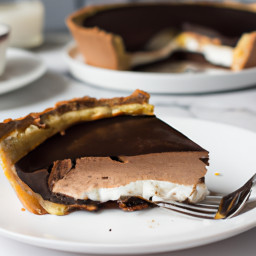
1 (9-inch) pie crust, baked and fully cooled (homemade or store-bought; traditional, graham, or chocolate cookie crust)
8 oz / 225 g semisweet chocolate (chips or chopped)
3 large eggs
3 / 4 cup (150 g) granulated sugar
1 / 4 cup (60 ml) water
1 cup (2 sticks / 225 g) unsalted butter, room temperature
2 tsp (10 ml) vanilla extract
1 / 4 tsp kosher salt
1 1 / 4 cups (300 ml) heavy cream, cold (for filling)
1 cup (240 ml) heavy cream, cold (for topping)
2 tbsp (15 g) powdered sugar, divided
Optional: chocolate curls or shaved chocolate, for garnish
Prebake the pie crust according to package or recipe directions and let it cool completely.
Melt the chocolate: Place the chocolate in a microwave-safe bowl and heat in 20–30 second bursts, stirring between each, until smooth. Set aside to cool until just warm to the touch.
Cook the eggs safely: In a heatproof bowl, whisk together the eggs, granulated sugar, and water. Set the bowl over a saucepan with an inch of gently simmering water (do not let the bowl touch the water). Whisk constantly until the mixture is thickened, glossy, and reaches 160°F, about 7–10 minutes.
Whip to cool: Remove the bowl from heat and beat the warm egg mixture with a hand mixer or stand mixer on medium-high until pale and cooled to room temperature, 5–7 minutes.
Build the silk base: Beat in the melted chocolate, vanilla, and salt until combined. With the mixer on medium, add the softened butter 1–2 tablespoons at a time, beating until the filling is silky and glossy, 2–3 minutes. Set aside.
Whip the cream for the filling: In a cold bowl, whip 1 1/4 cups heavy cream to soft peaks, then beat in 1 tablespoon powdered sugar just to combine.
Lighten the filling: Gently fold the whipped cream into the chocolate mixture in two additions until no streaks remain.
Fill and chill: Spread the filling into the cooled pie crust, smoothing the top. Refrigerate until firm, at least 4 hours or overnight.
Make the topping: Whip the remaining 1 cup heavy cream with the remaining 1 tablespoon powdered sugar to soft peaks. Pile or pipe over the chilled pie. Garnish with chocolate curls if desired.
Slice with a warm, dry knife and serve. Store leftovers covered in the refrigerator for up to 3 days.
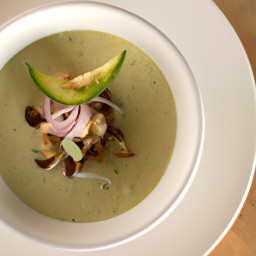
1 lb / 450 g tomatillos, husked and rinsed
1 large English cucumber, peeled and chopped (about 2 cups / 480 ml)
1 small ripe avocado, pitted and peeled
1 jalapeño, stemmed (seeded for less heat)
1 small garlic clove
1 cup (240 ml) chilled vegetable stock or cold water, plus more as needed
1 / 2 cup (15 g) loosely packed fresh cilantro leaves and tender stems
1 / 4 cup (60 ml) fresh lime juice (about 2 limes)
1 tsp finely grated lime zest
2 tbsp (30 ml) extra-virgin olive oil, plus more for serving
1 / 2 tsp ground cumin
1 / 2 tsp kosher salt, plus more to taste
Freshly ground black pepper, to taste
1 / 4 cup (30 g) toasted pepitas (pumpkin seeds), for serving
2 radishes, thinly sliced (optional), for serving
Position an oven rack close to the broiler and preheat the broiler. Arrange tomatillos and jalapeño on a foil-lined sheet and broil 6–8 minutes, turning once, until blistered and softened. Cool to room temperature.
In a blender, combine the charred tomatillos and jalapeño with cucumber, avocado, garlic, cilantro, lime juice, lime zest, olive oil, cumin, salt, and 1 cup chilled stock/water.
Blend until very smooth and silky. If too thick, blend in more chilled stock/water a little at a time to reach a pourable, creamy consistency. Season with black pepper and adjust salt and lime to taste.
Transfer to a covered container and chill 30–60 minutes to meld flavors and fully cool.
Stir, then ladle into chilled bowls. Garnish with toasted pepitas and radish slices, and finish with a light drizzle of olive oil if desired. Serve alongside the entrée for a bright, cooling counterpoint.

1 cup pearled farro, rinsed
2 cups (480 ml) low-sodium chicken stock or water
1 small head radicchio, cored and cut into thin wedges
1 small shallot, thinly sliced
1 / 3 cup (40 g) hazelnuts, toasted and coarsely chopped
Zest of 1 orange, plus 1 tbsp (15 ml) juice
1 tbsp (15 ml) balsamic vinegar
2 tbsp (30 ml) extra-virgin olive oil, divided, plus more to finish
1 tbsp (14 g) unsalted butter (optional)
1 tsp fresh thyme leaves
Kosher salt and freshly ground black pepper, to taste
2 tbsp (8 g) chopped flat-leaf parsley (optional)
Place farro in a medium saucepan with the stock and a pinch of salt. Bring to a boil, then reduce to a simmer, cover, and cook until tender but pleasantly chewy, 18–22 minutes. Drain any excess liquid, cover, and let steam off heat for 5 minutes.
While the farro cooks, heat 1 tablespoon olive oil in a large skillet over medium-high heat. Add the radicchio and shallot, season with salt and pepper, and cook, tossing occasionally, until edges are lightly charred and wilted, 3–4 minutes.
Splash in the balsamic vinegar; toss for 30 seconds until mostly evaporated. Transfer the radicchio mixture to a bowl.
Fluff the farro with a fork. Stir in the butter (if using), remaining 1 tablespoon olive oil, thyme, orange zest, and orange juice. Fold in the charred radicchio mixture and hazelnuts. Add parsley if using. Taste and season with additional salt and pepper.
Drizzle with a touch more olive oil and serve warm.
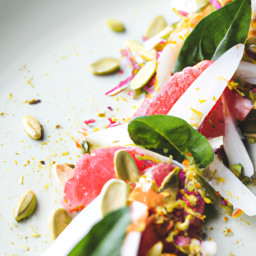
1 large fennel bulb, fronds reserved
2 cups (60 g) watercress or baby arugula
1 pink grapefruit, supremed, plus 2 tbsp (30 ml) reserved juice
4 small radishes, paper-thin slices
1 / 3 cup (45 g) roasted unsalted pistachios, roughly chopped
2 tbsp (8 g) fresh mint leaves, torn
2 tbsp (30 ml) extra-virgin olive oil
1 tsp (5 ml) Dijon mustard
1 tsp (7 g) honey, to taste
1 tsp (5 ml) white wine or champagne vinegar
1 / 4 tsp fine sea salt, plus flaky salt to finish
Pinch white pepper
Trim fennel, reserving a tablespoon of tender fronds. Using a mandoline or sharp knife, shave the bulb as thinly as possible. Soak shavings in ice water for 5 minutes to crisp, then drain and pat dry.
Supreme the grapefruit over a bowl to catch juices, setting segments aside. Measure 2 tablespoons of the collected juice for the dressing.
Whisk the reserved grapefruit juice, vinegar, Dijon, honey, olive oil, fine sea salt, and white pepper until emulsified.
In a large bowl, gently toss the fennel, watercress, radishes, mint, and chopped fennel fronds with about two-thirds of the dressing.
Fold in the grapefruit segments just to coat, then plate the salad. Sprinkle with pistachios, drizzle remaining dressing, and finish with a pinch of flaky salt to taste.

4 cups (960 ml) water or low-sodium chicken stock
1 cup (240 ml) whole milk, optional
1 cup (160 g) fine yellow cornmeal/polenta
2 tbsp (30 g) unsalted butter
1 / 2 cup (50 g) grated Parmesan cheese
Kosher salt, to taste
Freshly ground black pepper, to taste
Olive oil, for frying
2 cups (300 g) red seedless grapes
1 small shallot, thinly sliced
1 sprig fresh rosemary
1 tbsp (15 ml) extra-virgin olive oil
1 / 4 cup (60 ml) dry red wine
2 tbsp (30 ml) balsamic vinegar
1 to 2 tsp (5 to 10 ml) honey, to taste
Pinch red pepper flakes
Flaky sea salt, to taste
Zest of 1 / 2 lemon
Shaved Pecorino Romano, for finishing
Toasted walnuts, chopped, optional
Make the polenta: In a saucepan, bring the water (and milk, if using) to a gentle simmer. Whisk in the cornmeal in a steady stream. Cook over low heat, whisking frequently, until very thick and pulling from the sides, 20–25 minutes. Stir in butter and Parmesan; season with salt and black pepper.
Set the polenta: Line a small rimmed tray or 9-inch square pan with parchment. Spread polenta into an even 1/2–3/4 inch layer. Cool, then refrigerate until firm, about 45–60 minutes (or up to overnight).
Roast the grapes: Heat oven to 425°F/220°C. On a small sheet pan, toss grapes, sliced shallot, and rosemary with extra-virgin olive oil, a pinch of salt, and red pepper flakes. Roast until grapes blister and release juices, 12–15 minutes.
Make the agrodolce: Transfer the hot pan to the stovetop (or scrape into a skillet). Add red wine and balsamic; simmer 2–3 minutes, scraping up any browned bits, until slightly syrupy. Stir in honey to balance; adjust salt. Discard rosemary.
Crisp the polenta: Remove polenta from the pan and cut into batons (“soldiers”). In a large skillet, film the bottom with olive oil over medium-high heat. Fry polenta pieces on all sides until deeply golden and crisp, 2–3 minutes per side. Drain briefly on paper towels; season with a pinch of salt.
Serve: Arrange warm polenta on a platter. Spoon roasted grape agrodolce over the top. Finish with lemon zest, shaved Pecorino, optional toasted walnuts, and a twist of black pepper. Serve immediately.
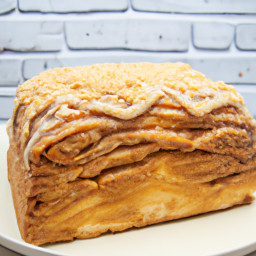
1 (15.25 oz / 432 g) box yellow cake mix
4 large eggs, at room temperature
1 cup (240 ml) sour cream
1 / 2 cup (120 ml) vegetable oil
2 tsp vanilla extract
3 / 4 cup packed (150 g) light brown sugar
2 tsp ground cinnamon
Optional: 1 / 2 cup (60 g) chopped pecans or walnuts
2 cups (240 g) powdered sugar
3 tbsp (45 ml) milk, plus more as needed
1 tsp vanilla extract (for glaze)
Pinch of fine salt
Preheat oven to 350°F (175°C). Grease a 9x13-inch baking pan or line with parchment with overhang.
Make the batter: In a large bowl, whisk together the cake mix, eggs, sour cream, vegetable oil, and 2 teaspoons vanilla until smooth, about 1–2 minutes.
Make the cinnamon layer: In a small bowl, mix the brown sugar and cinnamon (stir in nuts if using).
Assemble: Spread half of the batter into the prepared pan. Sprinkle the cinnamon-sugar mixture evenly over the batter. Dollop the remaining batter on top in spoonfuls, then use a butter knife to gently swirl the layers together—avoid overmixing so you get ribbons.
Bake for 28–33 minutes, or until the top is golden and a toothpick inserted near the center comes out clean or with a few moist crumbs.
While the cake bakes, whisk the powdered sugar, milk, 1 teaspoon vanilla, and a pinch of salt until smooth and pourable; add a splash more milk if needed.
Glaze: While the cake is still warm (about 5 minutes out of the oven), poke holes all over with a skewer or fork and pour the glaze evenly over the surface. Let set 15–20 minutes.
Slice and serve warm or at room temperature.

4 cups (960 ml) low-sodium chicken or vegetable broth
1 cup (100 g) fresh shiitake mushrooms, thinly sliced (stems removed)
1 small head baby bok choy, thinly sliced (stems and leaves separated)
2-inch piece fresh ginger, cut into thin matchsticks
2 cloves garlic, lightly crushed
4 scallions, whites and greens separated and thinly sliced
2 large eggs, beaten
1 tbsp (15 ml) light soy sauce (or tamari)
1 tsp (5 ml) rice vinegar
1 / 2 tsp (2.5 ml) toasted sesame oil
1 / 4 tsp ground white pepper
2 tsp cornstarch mixed with 2 tbsp (30 ml) cold water
Fine sea salt, to taste
In a medium pot, combine broth, ginger, garlic, shiitake, and scallion whites. Bring to a simmer over medium heat and cook for 8–10 minutes to infuse flavor.
Stir in the bok choy stems and simmer 2 minutes until just tender.
Add soy sauce and white pepper. Taste and season lightly with salt if needed. If you prefer a clearer broth, remove the ginger and garlic with a slotted spoon.
Whisk the cornstarch slurry, then drizzle it into the simmering soup while stirring. Simmer 1 minute until lightly silky.
Reduce heat to low. Create a gentle whirlpool with a spoon and slowly drizzle in the beaten eggs; let set for 30–45 seconds, then stir once to form delicate ribbons. Add bok choy leaves and cook 30 seconds until just wilted.
Remove from heat. Stir in rice vinegar and toasted sesame oil. Garnish with scallion greens and serve immediately.

1 medium green cabbage (about 2 lb / 900 g), cut into 8 wedges, core intact
1 small tart apple (e.g., Granny Smith), cored and thinly sliced
2 tbsp (30 ml) unsalted butter, melted
2 tbsp (30 ml) extra-virgin olive oil
2 tbsp (30 ml) whole-grain mustard
1 tbsp (15 ml) apple cider vinegar, plus 1 tsp (5 ml) for finishing
1 tsp (5 ml) honey
1 tsp (5 ml) caraway seeds, lightly crushed
3 / 4 tsp kosher salt
1 / 2 tsp freshly ground black pepper
2 tbsp (8 g) chopped fresh parsley (for garnish)
Preheat the oven to 450°F (230°C). Place a rimmed baking sheet on the middle rack to heat while the oven preheats.
In a bowl, whisk together the melted butter, olive oil, whole-grain mustard, 1 tablespoon cider vinegar, honey, caraway seeds, salt, and pepper.
Reserve half of the mustard mixture in a separate bowl for brushing later. Toss the cabbage wedges gently with the remaining half, keeping the wedges intact.
Carefully remove the hot baking sheet and arrange the cabbage wedges cut-side down. Spoon any marinade left in the tossing bowl over the wedges.
Roast for 15 minutes until the bottoms are browned.
Flip the wedges, brush with the reserved mustard mixture, and scatter the apple slices around the pan.
Roast 8–12 minutes more, until the edges are charred and the cores are tender, and the apples are softened and glossy.
Transfer to a platter, splash with the remaining 1 teaspoon cider vinegar, and sprinkle with chopped parsley. Serve hot alongside the lamb stew.

1 large fennel bulb, trimmed, cored, and very thinly sliced (fronds reserved)
2 crisp apples (e.g., Honeycrisp or Granny Smith), cored and thinly sliced or cut into matchsticks
3 celery stalks, thinly sliced on the bias
6 radishes, thinly sliced
1 / 4 cup (15 g) flat-leaf parsley, roughly chopped
2 tbsp (30 ml) fennel fronds, chopped (optional)
1 / 3 cup (45 g) shelled pistachios, toasted and roughly chopped
Finely grated zest of 1 lemon
2 tbsp (30 ml) fresh lemon juice
1 tbsp (15 ml) white wine or champagne vinegar
1 tsp Dijon mustard
1 tsp honey or maple syrup
1 / 4 tsp kosher salt, plus more to taste
Freshly ground black pepper, to taste
3 tbsp (45 ml) extra-virgin olive oil
Toast pistachios in a dry skillet over medium heat until fragrant, 3–4 minutes; cool, then roughly chop.
In a small bowl, whisk lemon juice, vinegar, Dijon, honey, salt, and several grinds of pepper. Slowly whisk in olive oil until emulsified, then stir in lemon zest.
In a large bowl, combine fennel, apples, celery, radishes, parsley, and fennel fronds (if using).
Drizzle with the dressing and toss gently to coat. Taste and adjust salt, pepper, or lemon as needed.
Transfer to a serving platter and scatter pistachios over the top just before serving to preserve crunch.
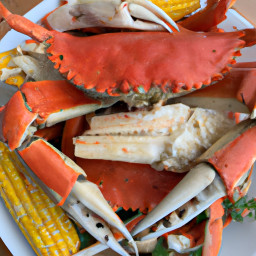
12 live blue crabs (about 4–5 lb / 1.8–2.3 kg), scrubbed
6 qt (5.7 L) water
1–2 (12 oz / 355 ml) bottles lager beer (optional; replace with water if not using)
1 / 2–2 / 3 cup (40–55 g) Old Bay or similar crab boil seasoning, plus extra for serving
1 / 4 cup (60 g) kosher salt (reduce if using very salty seasoning blend)
2 crab boil spice bags (optional, e.g., Zatarain’s)
3 lemons, halved (juice squeezed into pot, then add rinds)
2 medium yellow onions, quartered
1 head garlic, halved crosswise
4 bay leaves
1 1 / 2 lb (680 g) baby red potatoes
1 lb (450 g) andouille or smoked sausage, cut into 1-inch pieces (optional)
6 ears corn, husked and halved
1 / 2 cup (1 stick / 115 g) unsalted butter, melted, for serving
Hot sauce, to taste
Additional lemon wedges, for serving
Chopped parsley, for garnish (optional)
Set up a large (12–16 qt) stockpot. Add water, beer (if using), Old Bay, kosher salt, optional spice bags, lemon juice and rinds, onions, garlic, and bay leaves.
Bring the pot to a vigorous boil over high heat. Let the aromatic broth boil 5 minutes to infuse.
Add potatoes. Return to a boil and cook 10–12 minutes until just tender when pierced.
Add sausage (if using) and cook 5 minutes.
Add corn and cook 5–7 minutes until bright and crisp-tender.
Add the live crabs carefully, claws first, using tongs. Cover, return to a strong boil, and cook 12–15 minutes, until shells are bright red and crabs float. Rotate crabs halfway with tongs for even cooking if your pot is crowded.
Turn off heat. Let everything steep 10 minutes to absorb seasoning (shorter for milder, longer for spicier).
Drain well using a large colander or carefully pour off the liquid. Spread newspapers or butcher paper on a table and spill the boil out for communal eating, or transfer to platters.
Serve hot with melted butter, extra Old Bay, lemon wedges, and hot sauce. Garnish with parsley if desired.
Notes: If using pre-cooked crab clusters, add them with the corn and heat 5–7 minutes. To stop cooking sooner, pull items as they reach doneness or shock briefly with a quick rinse of hot contents using a colander (do not use cold water, which can wash off seasoning).

2 English cucumbers (about 21 oz / 600 g), thinly sliced into half-moons
1 tsp kosher salt (for draining cucumbers)
1 cup fresh pineapple, 1 / 4-inch dice
2 scallions, thinly sliced
1 small Fresno chili, thinly sliced (optional)
1 / 4 cup rice vinegar (60 ml)
1 tbsp fresh lime juice (15 ml)
1 tbsp soy sauce (15 ml)
1 tbsp granulated sugar (or to taste)
1 tsp finely grated fresh ginger
1 / 2 tsp toasted sesame oil
1 / 3 cup toasted macadamia nuts, coarsely chopped (35 g)
1 tbsp toasted white sesame seeds (9 g)
1 / 2 sheet nori, cut into thin ribbons (optional)
Place cucumber slices in a bowl, sprinkle with the kosher salt, and toss. Let stand 10 minutes to draw out moisture.
Rinse cucumbers briefly under cold water, then gently squeeze and pat dry to remove excess liquid. Transfer to a clean bowl.
In a small bowl, whisk together rice vinegar, lime juice, soy sauce, sugar, ginger, and toasted sesame oil until the sugar dissolves.
Add the pineapple, scallions, and Fresno chili (if using) to the cucumbers. Pour the dressing over and toss to coat evenly.
Chill for 15–20 minutes to let flavors meld.
Just before serving, sprinkle with macadamia nuts, sesame seeds, and nori ribbons (if using). Toss lightly and adjust seasoning to taste. Serve cold alongside the grilled tilapia.

1 cup (2 sticks / 225 g) unsalted butter, softened
1 / 2 cup (60 g) powdered sugar, plus about 1 1 / 2 cups (180 g) more for rolling
2 tsp (10 ml) vanilla extract
1 / 2 tsp (2.5 ml) almond extract (optional)
2 1 / 4 cups (280 g) all-purpose flour
1 / 2 tsp (2.5 g) fine salt
1 cup (120 g) finely chopped pecans (toast for extra flavor, optional)
Preheat oven to 350°F. Line 2 baking sheets with parchment paper.
In a large bowl, beat the softened butter and 1/2 cup powdered sugar with a hand mixer until light and creamy, 1–2 minutes.
Beat in the vanilla, almond extract (if using), and salt.
Add the flour and mix on low just until a soft dough forms; do not overmix.
Fold in the chopped pecans until evenly distributed.
Scoop and roll dough into 1-inch balls (about 1 tablespoon each) and place 2 inches apart on the prepared sheets.
Bake 12–14 minutes, until the bottoms are lightly golden and the tops are set but still pale.
Let cookies cool on the sheet for 5 minutes, then roll each warm cookie in powdered sugar to coat. Transfer to a rack to cool completely.
Once cool, roll the cookies in powdered sugar a second time for a classic thick snowball coating.
Store in an airtight container at room temperature for up to 1 week. Flavor improves by the next day. Makes about 30–36 cookies.

1 cup (200 g) dried pinquito beans (or small pink beans), soaked overnight and drained
1 tbsp (15 ml) olive oil, plus extra for finishing
1 medium yellow onion, diced
1 rib celery, diced
1 small carrot, diced
3 cloves garlic, minced
1 lb (450 g) ripe tomatoes (Roma or cherry), halved
1 Anaheim or poblano chile, whole
1 / 2 tsp smoked paprika
1 tsp dried oregano
1 bay leaf
6 cups (1.4 L) low-sodium chicken or vegetable broth
1 / 2 cup (120 ml) dry white wine (optional)
1 to 1 1 / 4 tsp kosher salt, to taste
1 / 2 tsp freshly ground black pepper
2 tsp sherry vinegar (or red wine vinegar), to finish
2 tbsp chopped fresh parsley
Zest of 1 / 2 lemon or a strip of lemon peel (optional)
Sliced scallions or thinly sliced radishes, for garnish (optional)
Char the vegetables: Place tomatoes (cut side up) and the whole chile on a foil-lined sheet under a broiler or over a hot grill until skins blister and blacken, 6–10 minutes. Steam under an inverted bowl 5 minutes, then peel. Roughly chop; deseed the chile if you prefer mild heat.
Build the base: In a pot, warm olive oil over medium heat. Add onion, celery, and carrot with a pinch of salt; cook until translucent, 6–8 minutes. Stir in garlic for 30 seconds.
Bloom and deglaze: Stir in smoked paprika and oregano for 30 seconds. Add white wine (if using) and reduce by half, scraping up any browned bits.
Simmer: Add soaked beans, charred tomatoes and chile, bay leaf, and broth. Bring to a boil, then reduce to a gentle simmer. Cook uncovered until beans are tender, 60–75 minutes, adding a splash of water as needed to keep beans submerged. (Shortcut: use 2 cans of drained beans and simmer 20 minutes.)
Finish: Season with salt and pepper. Remove bay leaf. Stir in sherry vinegar, parsley, and lemon zest, plus a drizzle of olive oil.
Serve: Ladle into warm bowls and garnish with scallions or radishes if desired. This bright, lightly smoky broth complements the tri-tip’s rub while cutting richness with acidity and herbs.

1 lb (450 g) broccolini, ends trimmed
3 tbsp (45 ml) extra-virgin olive oil, divided
2 cloves garlic, thinly sliced
1 / 4 tsp red pepper flakes
1 / 2 tsp kosher salt, plus more to taste
Freshly ground black pepper, to taste
Zest of 1 lemon
1 tbsp (15 ml) fresh lemon juice
1 / 4 cup (30 g) sliced almonds, toasted and roughly chopped
2 tbsp (8 g) finely chopped fresh flat-leaf parsley
Shaved Parmesan, for serving (optional)
Toast the almonds in a dry skillet over medium heat, stirring often, until golden and fragrant, 3–4 minutes. Transfer to a bowl to cool and roughly chop if not already sliced.
Heat a large heavy skillet (cast iron preferred) over medium-high until very hot.
Toss broccolini with 2 tablespoons olive oil, red pepper flakes, salt, and several grinds of black pepper.
Add broccolini to the hot skillet and cook, turning occasionally, until charred in spots and just tender, 4–6 minutes.
Push broccolini to the edges, add the remaining 1 tablespoon olive oil and sliced garlic to the center, and cook 30–60 seconds until just golden and fragrant. Toss everything together and remove from heat. Add lemon juice and toss to coat.
In a small bowl, combine lemon zest, toasted almonds, parsley, and a pinch of salt to make the gremolata.
Transfer broccolini to a platter, sprinkle generously with the lemon-almond gremolata, and finish with shaved Parmesan if using. Serve immediately.

2 cups (250 g) jicama, peeled and cut into thin matchsticks
1 small fennel bulb, cored and very thinly sliced (reserve tender fronds for garnish)
1 large Persian or English cucumber, halved lengthwise, seeded, and thinly sliced
1 ruby red grapefruit, segmented (reserve 2 tbsp / 30 ml juice from the trimming)
4 small radishes or 1 / 2 watermelon radish, thinly shaved
1 small serrano chile, very thinly sliced (optional)
1 / 3 cup (40 g) toasted pepitas (pumpkin seeds)
1 / 4 cup (10 g) cilantro leaves, lightly packed
2 tbsp (8 g) fresh mint leaves, torn
Flaky sea salt, to taste
White pepper, to taste
2 tbsp (30 ml) fresh lime juice
2 tbsp / 30 ml reserved grapefruit juice
1 tsp (7 g) honey or agave syrup
1 / 2 tsp finely grated lime zest
1 / 4 tsp ground coriander
3 tbsp (45 ml) extra-virgin olive oil
Pinch of sea salt
Toast pepitas in a dry skillet over medium heat, shaking often, until fragrant and lightly golden, 3–4 minutes. Let cool.
Segment the grapefruit over a bowl to catch juices, reserving 2 tablespoons of the juice for the vinaigrette.
Whisk the vinaigrette: in a small bowl combine lime juice, reserved grapefruit juice, honey/agave, lime zest, ground coriander, and a pinch of salt. Whisk in olive oil until emulsified; adjust salt to taste.
In a large bowl, combine jicama, sliced fennel, cucumber, radishes, and serrano (if using). Season lightly with a pinch of salt.
Add the grapefruit segments, cilantro, and mint. Drizzle about two-thirds of the vinaigrette over the salad and toss gently to coat without breaking the citrus.
Transfer to a serving platter. Scatter toasted pepitas and fennel fronds over the top. Spoon on remaining vinaigrette as desired, then finish with a pinch of flaky sea salt and white pepper to taste.
Serve chilled alongside ceviche for a crisp, citrusy counterpoint.
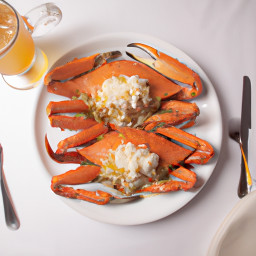
10-12 live blue crabs (about 5-6 lb / 2.3-2.7 kg), scrubbed
6 quarts (5.7 liters) water
12 oz (355 ml) lager beer, optional
1 / 2 cup (60 g) Old Bay or crab boil seasoning, plus more for sprinkling
1 / 4 cup (60 g) kosher salt
2 tbsp (30 ml) whole black peppercorns
2 tbsp (30 ml) mustard seeds, optional
3 bay leaves
2 large lemons, halved (plus extra wedges for serving)
1 head garlic, halved crosswise
2 yellow onions, quartered
1 lb (450 g) small red potatoes
12 oz (340 g) smoked sausage, cut into 1-inch pieces
4 ears corn, halved
4 tbsp (60 g) unsalted butter, melted
Chopped fresh parsley, for garnish (optional)
Chill live crabs in the freezer for 15 minutes to calm them, then scrub shells under cold water.
In a 12-16 quart pot, combine water, beer (if using), Old Bay, salt, peppercorns, mustard seeds, bay leaves, lemons (squeeze in the juice and add the halves), garlic, and onions. Bring to a rolling boil over high heat.
Add the potatoes and boil 10-12 minutes until barely tender.
Add the sausage and cook 5 minutes.
Add the corn and cook 4-5 minutes.
Add the crabs, cover, and cook 10-12 minutes, until shells are bright red and the meat is opaque.
Turn off the heat, sprinkle in a little more Old Bay, and let the boil soak 5-10 minutes for extra flavor.
Drain well. Spread the contents on a lined table or large platter, drizzle with melted butter, sprinkle more seasoning to taste, and garnish with parsley. Serve with lemon wedges.

2 heads Belgian endive, trimmed and sliced into 1-inch pieces
1 small fennel bulb, thinly shaved (reserve fronds for garnish)
2 oranges, segmented, plus 1 tsp finely grated zest
1 / 4 cup (35 g) Castelvetrano olives, pitted and sliced
1 / 4 cup (30 g) shelled pistachios, toasted and chopped
1 tbsp flat-leaf parsley, finely chopped
1 / 2 tsp fresh thyme leaves, finely chopped
1 tsp finely grated lemon zest
1 small shallot, minced
2 tbsp (30 ml) fresh lemon juice
1 tsp honey
1 / 2 tsp Dijon mustard
3 tbsp (45 ml) extra-virgin olive oil
Sea salt and freshly ground black pepper to taste
Make the gremolata: In a small bowl, combine chopped pistachios, parsley, thyme, and lemon zest. Set aside.
Prepare the dressing: In another small bowl, whisk together shallot, lemon juice, honey, Dijon, a pinch of salt, and several grinds of pepper. Let sit 5 minutes to mellow the shallot, then whisk in olive oil until emulsified.
Crisp the fennel: Place shaved fennel in ice water for 5 minutes, then drain and pat dry.
Assemble the salad: In a large bowl, combine endive, fennel, orange segments, and olives. Add orange zest and half the dressing; toss gently. Season to taste with salt and pepper, adding more dressing as needed.
Plate and finish: Divide among plates. Scatter the pistachio gremolata over the top and garnish with reserved fennel fronds. Serve immediately.

1 medium jicama (about 1 1 / 2 lb / 680 g), peeled and cut into thin matchsticks
1 large English cucumber, seeded and cut into thin matchsticks
2 oranges, segmented, plus 2 tbsp (30 ml) reserved juice and 1 tsp zest
6 radishes, thinly sliced
1 / 4 small red onion, very thinly sliced
1 / 3 cup (40 g) toasted pepitas (pumpkin seeds)
2 tbsp (8 g) chopped fresh cilantro
2 tbsp (8 g) chopped fresh mint
1 small serrano chile, seeded and minced (optional)
3 tbsp (45 ml) fresh lime juice
2 tbsp (30 ml) extra-virgin olive oil
1 tsp (7 g) honey or agave syrup
1 tsp Tajín or mild chili powder
1 / 4 tsp ground cumin
1 / 2 tsp kosher salt, plus more to taste
Freshly ground black pepper to taste
Segment the oranges over a bowl to catch the juices; reserve 2 tbsp juice and 1 tsp zest. Set segments aside.
Whisk together lime juice, reserved orange juice, orange zest, honey, chili powder, cumin, salt, and a few grinds of black pepper. Slowly whisk in olive oil until emulsified.
In a large bowl, combine jicama, cucumber, radishes, red onion, cilantro, mint, and serrano (if using).
Pour the dressing over the mixture and toss to coat. Let sit 10–15 minutes to lightly marinate and soften.
Fold in the orange segments and toasted pepitas. Taste and adjust salt, pepper, or lime as desired.
Serve chilled as a bright, crunchy counterpoint to the rich Carne Asada Fries.

4 skinless halibut fillets (about 6 oz / 170 g each, 1–1.5 inches thick)
1 tsp kosher salt, plus more to taste
1 / 2 tsp freshly ground black pepper
2 tbsp (30 ml) olive oil
4 tbsp (60 g) unsalted butter, divided
2 garlic cloves, minced
1 / 2 cup (120 ml) dry white wine or low-sodium fish/vegetable broth
2 tbsp (30 ml) fresh lemon juice (about 1 lemon)
1 tsp lemon zest
1 tbsp capers, drained (optional)
2 tbsp fresh parsley, chopped
Lemon wedges, for serving
Pat halibut dry with paper towels. Season both sides with salt and pepper.
Heat a large skillet over medium-high until hot. Add olive oil. Sear halibut, undisturbed, 3–4 minutes until well browned. Flip and cook 2–4 minutes more, until the centers reach 130–135°F and are just opaque. Transfer fish to a warm plate; tent loosely with foil.
Reduce heat to medium. Add 1 tablespoon butter to the skillet. Add garlic and cook, stirring, 30 seconds until fragrant.
Pour in wine or broth. Simmer 2–3 minutes, scraping up browned bits, until reduced by about half.
Stir in lemon juice, lemon zest, and capers (if using). Remove from heat and whisk in remaining 3 tablespoons butter, a piece at a time, until the sauce is glossy. Taste and season with salt and pepper as needed.
Return halibut to the pan for 30 seconds to warm and coat, or plate the fish and spoon the lemon butter over the top. Sprinkle with parsley and serve with lemon wedges.

1 large fennel bulb, core removed, very thinly sliced (reserve fronds)
1 tart apple (such as Granny Smith), cored and very thinly sliced
1 small celery rib, very thinly sliced
1 / 3 cup (35 g) toasted walnuts, roughly chopped
1 / 4 cup (15 g) flat-leaf parsley leaves, chopped
1 oz / 28 g Parmesan, shaved
2 tbsp (30 ml) fresh lemon juice
1 tsp finely grated lemon zest
1 tsp Dijon mustard
1 tsp honey
3 tbsp (45 ml) extra-virgin olive oil
1 / 4 tsp kosher salt, plus more to taste
Freshly ground black pepper, to taste
In a small bowl, whisk together lemon juice, lemon zest, Dijon, honey, olive oil, salt, and several grinds of black pepper until emulsified.
Place sliced fennel, apple, and celery in a large bowl. Add half the vinaigrette and toss gently to coat to prevent browning.
Add toasted walnuts and parsley, then drizzle in remaining vinaigrette and toss again until evenly dressed. Adjust seasoning with salt and pepper.
Transfer to a platter and top with shaved Parmesan and a few chopped fennel fronds.
Let sit 5 minutes to lightly soften, then serve chilled or at cool room temperature before the soup.
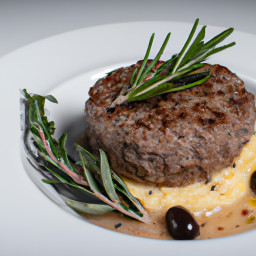
1 1 / 2 lb (680 g) ground beef (80 / 20)
1 / 2 cup (75 g) finely minced onion (for patties)
1 / 3 cup (35 g) plain breadcrumbs
1 large egg
2 tbsp (30 ml) milk
1 tbsp Worcestershire sauce (for patties)
1 tsp Dijon mustard (for patties)
2 cloves garlic, minced
1 tsp kosher salt
1 / 2 tsp freshly ground black pepper
1 tbsp chopped fresh parsley (optional, for patties)
1 to 2 tbsp neutral oil (for searing)
2 tbsp unsalted butter
8 oz / 225 g cremini or button mushrooms, sliced
1 small onion, thinly sliced (for gravy)
2 tbsp all-purpose flour
2 cups (480 ml) low-sodium beef broth
1 tbsp ketchup
1 tsp Worcestershire sauce (for gravy)
1 tsp Dijon mustard (for gravy)
1 / 2 tsp dried thyme (or 1 tsp fresh chopped)
Salt and freshly ground black pepper, to taste
Chopped fresh parsley, for serving (optional)
Make the patties: In a large bowl, combine ground beef, minced onion (for patties), breadcrumbs, egg, milk, 1 tablespoon Worcestershire sauce, 1 teaspoon Dijon mustard (for patties), garlic, 1 teaspoon kosher salt, 1/2 teaspoon black pepper, and parsley if using. Mix gently with your hands until just combined; do not overwork.
Shape: Divide mixture into 4 to 6 equal portions and form oval patties about 3/4 inch (2 cm) thick. Press a slight indentation in the center of each to prevent doming. Chill 10 to 15 minutes to help them hold shape.
Sear: Heat the neutral oil in a large skillet over medium-high heat. Add patties and cook 3 to 4 minutes per side until well browned. Transfer to a plate; they will finish cooking in the gravy.
Start the gravy: Reduce heat to medium. Add butter to the same skillet. Add sliced onion (for gravy) and cook, stirring, until softened, about 3 minutes. Add mushrooms, a pinch of salt, and cook until browned and most liquid evaporates, 5 to 7 minutes.
Roux: Sprinkle flour over the vegetables and cook, stirring, for 1 minute to remove raw flour taste.
Build the sauce: Gradually whisk in beef broth until smooth. Stir in ketchup, 1 teaspoon Worcestershire sauce (for gravy), 1 teaspoon Dijon mustard (for gravy), and thyme. Bring to a simmer; taste and season with salt and pepper as needed.
Simmer steaks: Return the seared patties and any juices to the skillet, nestling them into the gravy. Reduce heat to medium-low, cover partially, and simmer 8 to 10 minutes, turning once, until the gravy thickens and the patties are cooked through (internal temperature 160°F/71°C).
Adjust: If the gravy is too thick, whisk in a splash of broth or water; if too thin, simmer uncovered a few minutes to reduce. Adjust salt and pepper to taste.
Serve: Spoon the mushroom-onion gravy over the Salisbury steaks. Garnish with chopped parsley if desired. Serve with mashed potatoes, egg noodles, or rice.
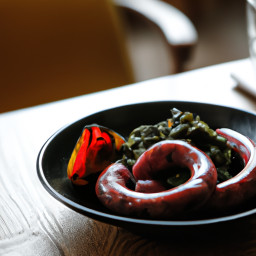
1 1 / 2 lb (675 g) smoked sausage (kielbasa or andouille), sliced into 1 / 2-inch coins
3 bell peppers (mixed colors), cored and sliced into 1 / 2-inch strips
1 large yellow onion, halved and thinly sliced
3 cloves garlic, minced
2 tbsp (30 ml) olive oil, divided
1 tbsp (15 ml) tomato paste (optional but recommended)
1 tsp smoked paprika
1 tsp Italian seasoning (or 1 / 2 tsp dried oregano + 1 / 2 tsp dried basil)
1 / 2 tsp red pepper flakes (optional)
1 / 2 to 3 / 4 tsp kosher salt, to taste
1 / 2 tsp freshly ground black pepper
1 / 4 cup (60 ml) low-sodium chicken broth (or water)
1 tbsp (15 ml) red wine vinegar or balsamic vinegar
1 tbsp fresh parsley, chopped
Lemon wedges, for serving (optional)
To serve: toasted hoagie rolls, cooked rice, or creamy polenta (optional)
Prep all ingredients: slice the sausage, peppers, and onion; mince the garlic. Have the tomato paste, spices, broth, and vinegar measured and ready.
Heat a large skillet over medium-high heat. Add 1 tablespoon olive oil and the sliced sausage. Cook, stirring occasionally, until well browned on both sides, 5 to 7 minutes. Transfer the sausage to a plate, leaving any rendered fat in the pan.
Reduce heat to medium. Add the remaining 1 tablespoon olive oil along with the sliced onions and peppers and a pinch of salt. Cook, stirring occasionally, until softened and lightly charred in spots, 6 to 8 minutes.
Add the minced garlic, smoked paprika, Italian seasoning, and red pepper flakes (if using). Cook, stirring, until fragrant, about 30 seconds.
Push the vegetables to the sides and add the tomato paste to the center of the pan. Cook the paste, stirring, for 30 to 60 seconds to caramelize slightly, then toss to coat the vegetables.
Pour in the chicken broth and vinegar, scraping up any browned bits from the bottom of the skillet. Simmer for 2 to 3 minutes to reduce slightly.
Return the browned sausage and any accumulated juices to the pan. Toss to combine and simmer until the sausage is heated through and the liquid forms a glossy glaze, 3 to 4 minutes. Season to taste with salt and black pepper, adding a splash more broth if the pan looks dry.
Remove from heat and sprinkle with chopped parsley. Squeeze a little lemon over the top if you like brightness.
Serve hot piled into toasted hoagie rolls, or spoon over cooked rice or creamy polenta.

1 lb / 450 g carrots, peeled and sliced
1 small leek (white and light green parts), thinly sliced and rinsed (or 1 small yellow onion, diced)
1 tbsp fresh ginger, thinly sliced
1 garlic clove, smashed
2 tbsp (30 ml) olive oil
3 cups (720 ml) low-sodium chicken or vegetable stock
1 wide strip lemon zest (peeled)
2 tbsp (30 ml) fresh lemon juice, plus more to taste
3 tbsp plain Greek yogurt or crème fraîche (optional, for silkiness)
3 / 4 tsp fine sea salt, plus more to taste
1 / 4 tsp white pepper (or black pepper)
For the lemon-thyme oil:
3 tbsp (45 ml) extra-virgin olive oil
1 tsp finely grated lemon zest
1 tsp fresh thyme leaves
For the pepita crunch:
1 / 3 cup (40 g) hulled pumpkin seeds (pepitas)
1 / 2 tsp (2.5 ml) olive oil
1 / 4 tsp smoked paprika
Pinch sea salt
Make the lemon-thyme oil: In a small pan over low heat, warm 3 tbsp olive oil with 1 tsp lemon zest and 1 tsp thyme for 2–3 minutes; do not sizzle. Remove from heat and let steep until serving.
Toast the pepitas: In a small skillet over medium heat, toss pumpkin seeds with 1/2 tsp olive oil, smoked paprika, and a pinch of salt until puffed and lightly golden, 3–4 minutes. Cool on a plate.
Sweat aromatics: In a pot, warm 2 tbsp olive oil over medium heat. Add leek (or onion) with a pinch of salt and cook until translucent, 4–5 minutes. Add ginger and garlic; cook 1 minute until fragrant.
Simmer: Add carrots, stock, and the strip of lemon zest. Bring to a simmer, cover partially, and cook until carrots are very tender, 15–18 minutes. Discard the zest strip.
Blend: Carefully puree the soup until completely smooth (high-speed blender preferred). If too thick, add a splash of stock or cold water. Season with 3/4 tsp salt and white pepper.
Chill: Transfer to a container, cool to room temperature, then refrigerate until cold, at least 2 hours (up to 2 days).
Finish: Whisk in lemon juice and, if using, yogurt or crème fraîche. Adjust salt and acidity to taste.
Serve: Ladle into small chilled bowls or cups. Drizzle with lemon-thyme oil and top with pepita crunch. Garnish with a few fresh thyme leaves or a whisper of lemon zest if desired.

1 lb (450 g) ziti or penne pasta
2 tbsp (30 ml) olive oil, divided
1 lb (450 g) sweet Italian sausage, casings removed (or ground beef/turkey; optional for vegetarian omit)
1 medium yellow onion, finely diced
4 cloves garlic, minced
1 jar (24–26 oz / 680–730 g) marinara sauce
1 can (28 oz / 800 g) crushed tomatoes
1 tsp dried oregano
1 tsp dried basil or Italian seasoning
1 / 4–1 / 2 tsp red pepper flakes (optional)
1 tsp sugar (optional)
Kosher salt and freshly ground black pepper, to taste
15 oz (425 g) whole-milk ricotta
1 large egg
1 cup (100 g) grated Parmesan cheese, divided
16 oz (450 g) low-moisture mozzarella, shredded, divided
2 tbsp (30 ml) chopped fresh parsley or basil, plus more for garnish
Nonstick spray or butter, for the baking dish
Preheat the oven to 375°F (190°C). Grease a 9x13-inch (23x33 cm) baking dish.
Bring a large pot of well-salted water to a boil. Cook the ziti until very al dente, 1-2 minutes shy of package time. Drain and toss with 1 tbsp olive oil to prevent sticking.
Make the sauce: Heat 1 tbsp olive oil in a large skillet over medium-high heat. Add sausage and cook, breaking it up, until browned and cooked through, 6-8 minutes; drain excess fat if needed. Add onion and cook until translucent, 4-5 minutes. Stir in garlic and cook 30 seconds.
Stir in marinara and crushed tomatoes, oregano, basil, red pepper flakes, and sugar. Season with salt and pepper. Bring to a simmer, then reduce heat and cook gently 15-20 minutes to thicken and develop flavor. Taste and adjust seasoning.
Ricotta mixture: In a bowl, combine ricotta, egg, 1/2 cup (50 g) Parmesan, 1 cup (115 g) mozzarella, parsley, 1/2 tsp salt, and a few grinds of pepper.
Assemble: In a large bowl, combine cooked pasta, the ricotta mixture, and about two-thirds of the sauce; fold until the pasta is evenly coated.
Spread a thin layer of the remaining sauce over the bottom of the baking dish. Add the pasta mixture in an even layer. Spoon the remaining sauce on top. Sprinkle with the remaining mozzarella (about 3 cups) and the remaining 1/2 cup Parmesan.
Cover loosely with foil (tent so cheese doesn’t stick) and bake 20 minutes. Uncover and bake 10-15 minutes more, until bubbling and lightly browned. For extra color, broil 1-2 minutes, watching closely.
Rest 10-15 minutes before serving. Garnish with more parsley or basil. Optional: drizzle with a little olive oil and serve with extra Parmesan.
Make-ahead and storage: Assemble up to 24 hours ahead; cover and refrigerate, then bake an extra 10-15 minutes. Leftovers keep refrigerated 3-4 days or frozen up to 3 months; reheat covered at 350°F (175°C) until hot.
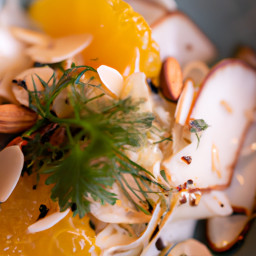
1 large fennel bulb, fronds reserved
2 oranges (navel or cara cara), segmented, plus 1 tsp (5 ml) zest
1 small shallot, very thinly sliced
2 tbsp (30 ml) extra-virgin olive oil
1 tbsp (15 ml) fresh lemon juice
1 tsp (5 ml) white wine vinegar (optional)
1 / 2 tsp (2.5 ml) honey or maple syrup
2 tbsp (15 g) sliced almonds
1 tbsp (15 ml) chopped fresh dill or fennel fronds
Pinch of flaky sea salt
Freshly ground black pepper to taste
Toast the sliced almonds in a dry skillet over medium heat until golden and fragrant, 2–3 minutes; transfer to a plate to cool.
Trim fennel, halve lengthwise, remove the core, and shave very thinly with a mandoline or knife. Soak shavings in ice water for 5 minutes to crisp, then drain and pat dry.
In a bowl, whisk olive oil, lemon juice, white wine vinegar (if using), honey, orange zest, salt, and pepper to make the vinaigrette.
Add fennel and shallot to the bowl and toss to coat; gently fold in the orange segments. Let sit 5 minutes to lightly marinate.
Scatter with toasted almonds and dill or fennel fronds, adjust seasoning, and serve chilled or at cool room temperature.

3 small heads Belgian endive, leaves separated and trimmed
1 ripe but firm pear (Bosc or Anjou), diced small
1 tsp fresh lemon juice
1 / 3 cup blue cheese, crumbled (Gorgonzola dolce or Roquefort) (1.3 oz / 40 g)
1 / 2 cup walnut halves (2 oz / 60 g)
1 tsp unsalted butter
1 tbsp honey
1 / 4 tsp crushed red pepper flakes (optional)
1 tbsp finely minced shallot
1 tsp fresh thyme leaves, chopped
1 tbsp sherry vinegar
2 tbsp extra-virgin olive oil (30 ml)
Sea salt and freshly ground black pepper, to taste
1 tbsp chopped chives or flat-leaf parsley, for garnish
Candy the walnuts: In a small skillet over medium heat, toast walnuts 2–3 minutes until fragrant. Add butter, honey, a pinch of salt, and red pepper flakes (if using). Cook, stirring, 1–2 minutes until glossy. Spread on parchment to cool, then roughly chop.
Make the vinaigrette: In a bowl, combine shallot and sherry vinegar with a pinch of salt; let sit 3 minutes to soften. Whisk in olive oil and thyme; season with black pepper to taste.
Prepare the pear: Toss diced pear with lemon juice and a teaspoon of the vinaigrette to prevent browning and lightly season.
Assemble: Arrange endive leaves on a platter. Fill each with a spoonful of pear, sprinkle with blue cheese, and top with chopped honeyed walnuts.
Finish and serve: Drizzle lightly with remaining vinaigrette, garnish with chives or parsley, and add a final crack of black pepper. Serve chilled or at cool room temperature.

1 lb (450 g) boneless, skinless chicken breast or thighs, thinly sliced
1 tbsp (15 ml) soy sauce (for marinating chicken)
1 tsp cornstarch (for marinating chicken)
1 tsp toasted sesame oil (for marinating chicken, optional)
2 tbsp (30 ml) neutral oil (vegetable or peanut), divided
3 cloves garlic, minced
1 tbsp fresh ginger, minced
2 cups (150 g) broccoli florets
1 red bell pepper, thinly sliced
1 small carrot, thinly sliced on the bias
1 small yellow onion, thinly sliced
1 cup (100 g) sugar snap peas (optional)
3 green onions, sliced (reserve some for garnish)
1 tsp sesame seeds (for garnish, optional)
Cooked rice or noodles, for serving
SAUCE:
3 tbsp (45 ml) low-sodium soy sauce
1 tbsp (15 ml) oyster sauce
1 tbsp (15 ml) hoisin sauce (optional)
1 tbsp (15 ml) rice vinegar
1 tbsp (15 ml) honey or brown sugar
2 tsp cornstarch
1 / 3 cup (80 ml) chicken broth or water
1 tsp toasted sesame oil
1 / 4 tsp crushed red pepper flakes (optional)
Marinate chicken: In a bowl, combine sliced chicken with 1 tablespoon soy sauce, 1 teaspoon cornstarch, and 1 teaspoon sesame oil (if using). Toss to coat and let stand 10–15 minutes.
Make the sauce: In a small bowl, whisk together 3 tablespoons soy sauce, oyster sauce, hoisin (if using), rice vinegar, honey, 2 teaspoons cornstarch, chicken broth, 1 teaspoon sesame oil, and red pepper flakes (if using) until smooth. Set aside.
Prep vegetables and aromatics so they’re ready to go: mince garlic and ginger; slice broccoli, bell pepper, carrot, onion, snap peas, and green onions.
Heat a wok or large skillet over high heat until very hot. Add 1 tablespoon neutral oil and swirl to coat.
Stir-fry chicken: Add chicken in a single layer. Cook 2–3 minutes, stirring once or twice, until just cooked through and lightly browned. Transfer to a plate (leave any fond in the pan).
Add remaining 1 tablespoon oil to the pan. Add garlic and ginger; stir-fry 20–30 seconds until fragrant.
Add vegetables starting with the firm ones: broccoli and carrot first for 2 minutes; then add bell pepper, onion, and snap peas for 1–2 minutes more, stirring constantly until crisp-tender.
Return chicken and any juices to the pan. Whisk the sauce briefly and pour it in. Stir-fry 1–2 minutes until the sauce bubbles and thickens, coating everything. Toss in most of the green onions during the last 30 seconds.
Taste and adjust seasoning (more soy for salt, vinegar for brightness, or a splash of water if too thick).
Serve immediately over hot rice or noodles. Garnish with remaining green onions and sesame seeds.