

4 haddock fillets (about 6 oz/170 g each), skinless
1 lemon, zested and juiced
1 cup crushed buttery crackers (such as Ritz)
3 tbsp unsalted butter, melted
1 tbsp olive oil, plus more for greasing the pan
2 cloves garlic, minced
2 tbsp fresh parsley, finely chopped, plus more for serving
1/2 tsp paprika
1/2 tsp kosher salt
1/4 tsp freshly ground black pepper
2 tbsp grated Parmesan (optional)
Lemon wedges, for serving (optional)
Preheat the oven to 400°F (200°C). Lightly oil a 9x13-inch baking dish or line it with parchment.
Pat the haddock dry with paper towels. Season both sides with the salt and pepper, then arrange the fillets in a single layer in the prepared dish.
Drizzle about half of the lemon juice over the fillets.
In a bowl, combine the crushed crackers, melted butter, garlic, parsley, paprika, lemon zest, and Parmesan (if using). Mix until the crumbs are evenly moistened.
Spoon the crumb mixture evenly over the fish, pressing lightly so it adheres. Drizzle the olive oil over the topping.
Bake until the fish flakes easily with a fork and is opaque in the center, 12–15 minutes depending on thickness (internal temperature about 135–140°F/57–60°C). For a deeper golden crust, broil for 1–2 minutes at the end if needed.
Remove from the oven and rest for 2 minutes. Squeeze the remaining lemon juice over the fish, garnish with a little extra parsley, and serve with lemon wedges.
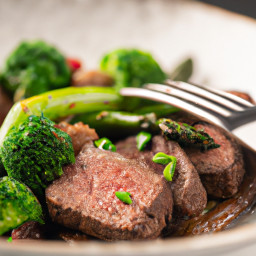
1 lb (450 g) flank steak or sirloin, thinly sliced against the grain
1 large head broccoli (about 4 cups florets)
2–3 tablespoons neutral oil (vegetable, canola, or peanut), divided
2 cloves garlic, minced
1 teaspoon fresh ginger, minced (optional)
Marinade: 1 tablespoon soy sauce, 1 tablespoon Shaoxing wine or dry sherry, 1 teaspoon cornstarch, 1/2 teaspoon baking soda (optional, for tenderness), 1 teaspoon sesame oil
Sauce: 1/2 cup low-sodium beef or chicken broth, 3 tablespoons low-sodium soy sauce, 1 tablespoon oyster sauce, 1 tablespoon dark soy sauce (optional), 1 tablespoon brown sugar, 2 teaspoons cornstarch, 1/4 teaspoon white or black pepper, 1 teaspoon sesame oil
Prep the beef: Pat the steak dry and slice thinly against the grain. In a bowl, toss with the marinade (soy sauce, Shaoxing wine, cornstarch, baking soda if using, and sesame oil). Marinate 15–30 minutes while you prepare the rest.
Prep the broccoli: Cut into bite-size florets. Peel and slice the thick stem if desired.
Par-cook the broccoli: Bring a pot of water to a boil and blanch broccoli for 45–60 seconds until bright green and crisp-tender. Drain well and set aside. (Alternatively, microwave the florets with a splash of water, covered, for 2 minutes, then drain.)
Make the sauce: In a small bowl, whisk together broth, soy sauce, oyster sauce, dark soy (if using), brown sugar, cornstarch, pepper, and sesame oil until smooth.
Stir-fry the beef: Heat 1 tablespoon oil in a large wok or skillet over high heat until shimmering. Add half the beef in a single layer; sear 45–60 seconds per side until just browned but not fully cooked. Transfer to a plate and repeat with another 1 tablespoon oil and remaining beef.
Aromatics and broccoli: Add remaining 1/2–1 tablespoon oil if the pan looks dry. Add garlic and ginger; stir-fry 10–15 seconds until fragrant. Add broccoli and toss 30–60 seconds to heat through.
Combine: Return beef and any juices to the pan. Whisk the sauce again and pour it in. Stir-fry 1–2 minutes until the sauce boils and thickens and the beef is just cooked through.
Finish and serve: Taste and adjust seasoning with a splash of soy sauce or a pinch of sugar if needed. Serve hot over steamed rice; garnish with sliced scallions or sesame seeds if you like.

1 large English cucumber, thinly sliced (about 12 oz / 340 g)
1 bunch radishes, thinly sliced (about 5 oz / 140 g)
1 small shallot, very thinly sliced (about 1.5 oz / 40 g)
2 tbsp fresh dill, finely chopped, plus fronds for garnish
2 tbsp fresh lemon juice (from about 1/2 lemon)
1 tsp finely grated lemon zest
1–2 tsp prepared horseradish, to taste
1 tsp Dijon mustard
1/2 tsp honey or sugar
3 tbsp neutral oil or light olive oil
1/2 tsp kosher salt, plus a pinch for salting vegetables
1/4 tsp freshly ground black pepper
2 tbsp toasted sunflower seeds
Place the sliced cucumber and radishes in a colander set over a bowl. Sprinkle with a pinch of salt, toss, and let drain for 10 minutes to draw out excess moisture. Pat dry with paper towels.
In a small bowl, whisk together lemon juice, lemon zest, horseradish, Dijon, honey, 1/2 tsp kosher salt, and black pepper. Slowly whisk in the oil until emulsified, then stir in the chopped dill.
Combine the drained cucumber, radishes, and shallot in a mixing bowl. Add about half the vinaigrette and toss gently. Taste and add more dressing as desired.
Transfer to a chilled platter. Sprinkle with toasted sunflower seeds and garnish with dill fronds. Serve immediately for maximum crunch.

1.5 lb (680 g) boneless, skin-on chicken thighs (skinless also works)
1 teaspoon neutral oil (use only if chicken is skinless)
1/4 cup soy sauce (preferably Japanese-style shoyu)
1/4 cup mirin
1/4 cup sake (or water or unsalted chicken stock)
2 tablespoons granulated sugar (or 1 tablespoon sugar + 1 tablespoon honey)
1 teaspoon fresh ginger, finely grated
1 small garlic clove, finely grated (optional)
1 teaspoon cornstarch mixed with 1 tablespoon water (optional, for thicker glaze)
2 scallions, thinly sliced, for garnish
1 teaspoon toasted sesame seeds, for garnish
Steamed rice and vegetables, for serving (optional)
In a small bowl, whisk together soy sauce, mirin, sake, sugar, ginger, and garlic (if using) until the sugar dissolves; set aside.
Pat the chicken dry and trim excess fat. If using skinless thighs, rub them lightly with the neutral oil. Do not salt; the sauce provides enough seasoning.
Place a large nonstick or stainless skillet over medium heat. If using skin-on thighs, place them skin-side down in the cold pan, then turn on the heat to medium to render fat gradually. Cook without moving until the skin is deeply golden and much of the fat has rendered, about 8–10 minutes. Pour off excess fat as needed.
Flip the chicken and cook the second side for 2–3 minutes to lightly brown.
Reduce heat to medium-low. Pour the sauce into the pan around the chicken. Simmer, turning and basting occasionally, until the chicken is cooked through (165°F/74°C) and the sauce reduces to a glossy glaze, about 3–6 minutes.
If you prefer a thicker glaze, stir in the cornstarch slurry and simmer, stirring, for 30–60 seconds until shiny and syrupy.
Transfer chicken to a board and rest 2–3 minutes. Slice into strips, return to the pan, and toss to coat in the glaze.
Serve over steamed rice with vegetables. Spoon extra sauce over the top and garnish with scallions and sesame seeds.

1 large bunch celery, cut into 3-inch sticks (reserve tender leaves for garnish)
4 oz blue cheese, crumbled
3 oz cream cheese, softened
2 tbsp sour cream
1 tsp lemon zest
1 tbsp fresh lemon juice
1 tsp honey, plus more to taste
1 tbsp finely sliced fresh chives
1 small Granny Smith apple, finely diced
1/3 cup walnuts, roughly chopped
1 tsp unsalted butter
1 tbsp maple syrup or honey
Pinch cayenne or Aleppo pepper (optional)
Pinch kosher salt
Freshly ground black pepper
Flaky sea salt for finishing (optional)
Candy the walnuts: In a small skillet over medium heat, melt the butter. Add walnuts, maple syrup (or honey), a pinch of cayenne (optional), and a pinch of salt. Cook, stirring, until glossy and lightly toasted, 2–3 minutes. Transfer to parchment to cool, then chop finely.
Make the whipped blue cheese: In a bowl, combine blue cheese, cream cheese, sour cream, lemon zest, lemon juice, honey, and a few grinds of black pepper. Mash and whip with a fork until creamy but slightly chunky. Fold in half the chives. Adjust seasoning with more honey or lemon to balance salt and tang.
Prep celery and apple: Pat celery sticks dry. Dice the apple just before assembling to retain freshness.
Assemble: Spoon or pipe the whipped blue cheese into the celery "canoes." Top with diced apple, sprinkle the candied walnut crumble and remaining chives. Finish with flaky sea salt and a crack of pepper if desired.
Serve chilled alongside the Buffalo wings to provide a cool, crisp, tangy counterpoint to the heat.

4 tilapia fillets (5–6 oz each), patted dry
2 tablespoons olive oil, plus more for oiling grill grates
1 tablespoon fresh lemon juice
1 teaspoon lemon zest
2 garlic cloves, finely minced
1 teaspoon paprika (sweet or smoked)
1/2 teaspoon ground cumin (optional)
1/4 teaspoon cayenne or red pepper flakes (optional)
3/4 teaspoon kosher salt
1/2 teaspoon freshly ground black pepper
1 tablespoon chopped fresh parsley or cilantro, plus more for garnish
Lemon wedges, for serving
Preheat an outdoor grill to medium-high heat (about 400–450°F / 205–230°C). Clean the grates well, then oil them by rubbing a folded, oil-dampened paper towel with tongs.
In a small bowl, whisk together olive oil, lemon juice, lemon zest, garlic, paprika, cumin (if using), cayenne (if using), salt, and black pepper.
Pat the tilapia very dry. Brush both sides of each fillet with the marinade. Let stand at room temperature for 10–15 minutes while the grill heats. Reserve chopped herbs for finishing.
For extra insurance against sticking, lightly oil the fish just before grilling. If your grates tend to stick or the fillets are very thin, use a well-oiled fish basket or a piece of lightly oiled foil.
Place the tilapia on the grill. Close the lid and cook until the underside is lightly charred and the edges turn opaque, about 2–3 minutes.
Carefully flip with a thin, wide spatula. Grill the second side until the fish is opaque, flakes easily, and reaches 145°F (63°C) at the thickest part, about 2–3 minutes more depending on thickness.
Transfer to a platter and rest 2 minutes. Sprinkle with chopped parsley or cilantro and squeeze fresh lemon over the top. Serve immediately with lemon wedges.
Notes: If using foil, lightly oil it and grill 3–4 minutes per side. For richer flavor, melt 1 tablespoon butter with a splash of lemon and brush over the fillets in the last minute of cooking.

2 large Belgian endives, leaves separated
1 small fennel bulb, fronds reserved for garnish
2 oranges, segmented (reserve 1 tbsp juice)
1 tsp orange zest
1 tbsp champagne vinegar
1 tsp Dijon mustard
2 tsp honey, divided
3 tbsp extra-virgin olive oil
1/3 cup hazelnuts, toasted and roughly chopped
6 Castelvetrano olives, pitted and chopped (optional)
Kosher salt and freshly ground black pepper
Toast hazelnuts in a dry skillet over medium heat until fragrant, 3–4 minutes. While warm, toss with 1 tsp honey and a pinch of salt; set aside to cool, then roughly chop.
Whisk together reserved 1 tbsp orange juice, orange zest, champagne vinegar, Dijon, and remaining 1 tsp honey. Slowly whisk in olive oil until emulsified; season with salt and black pepper.
Thinly shave the fennel bulb with a mandoline or knife. Toss fennel with 1–2 tablespoons of the dressing to lightly soften and season.
Separate endive leaves and arrange as individual “petals” on a platter.
Divide the dressed fennel among the endive leaves. Top with pieces of orange segments and, if using, chopped olives.
Drizzle lightly with remaining dressing, sprinkle with honeyed hazelnuts and fennel fronds, and finish with a crack of black pepper. Serve immediately.
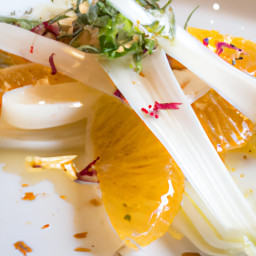
1 large fennel bulb, fronds reserved
2 oranges, segmented (plus any juice reserved)
1 small shallot, very thinly sliced
1 tablespoon fresh lemon juice
1 teaspoon finely grated lemon zest
3 tablespoons extra-virgin olive oil
1/2 teaspoon honey
1 small garlic clove, finely grated
1 teaspoon fresh rosemary, very finely chopped
Kosher salt and freshly ground black pepper
1/3 cup shaved Parmesan
2 tablespoons toasted sliced almonds
Toast the sliced almonds in a dry skillet over medium heat until golden and fragrant, 3–4 minutes; cool.
Trim fennel, reserving fronds. Using a mandoline or sharp knife, shave the bulb very thinly. Place in cold water for 5 minutes to crisp, then drain and pat dry.
Segment the oranges over a bowl to catch juices; set segments aside and reserve 1 tablespoon of the juice.
Whisk lemon juice, lemon zest, reserved orange juice, honey, grated garlic, chopped rosemary, a pinch of salt, and a few grinds of pepper. Slowly whisk in olive oil until emulsified.
In a large bowl, toss shaved fennel and shallot with just enough vinaigrette to lightly coat. Gently fold in orange segments.
Plate the salad and finish with shaved Parmesan, toasted almonds, torn fennel fronds, and a final crack of black pepper. Adjust salt to taste and serve immediately.

1.3 kg (about 2.9 lb) skin-on pork belly, in one slab
1 tablespoon white vinegar (for the skin)
250 g (about 1 1/4 cups) coarse sea salt (for the salt crust)
1 1/2 teaspoons kosher salt (for meat-side rub)
2 teaspoons sugar
2 teaspoons Chinese five-spice powder
1 teaspoon ground white pepper
3 cloves garlic, grated or minced
2 teaspoons Shaoxing wine (or dry sherry)
Optional to serve: Chinese hot mustard, hoisin sauce, or a quick dip of 1 tablespoon soy sauce mixed with 1 teaspoon rice vinegar and sliced scallions
Pat the pork belly very dry with paper towels. Using a meat-pricking tool, metal skewer, or the tines of a fork, prick the skin all over to create many shallow holes without piercing into the meat.
Flip the belly meat-side up. Mix together the kosher salt, sugar, five-spice, white pepper, garlic, and Shaoxing wine to form a paste. Rub the paste evenly over the meat side and the sides, keeping the skin completely clean. Wipe off any paste that gets on the skin.
Place the pork belly on a wire rack set over a tray, skin side up. Brush the skin with the white vinegar. Refrigerate uncovered for 12–24 hours to dry the skin thoroughly.
Preheat the oven to 180°C/350°F. Line a rimmed baking sheet with foil. Create a snug foil “boat” around the pork that rises to just below the skin level to protect the meat and sides from direct heat.
Pack the coarse sea salt evenly over the skin in a layer about 0.5 cm (1/4 inch) thick. Roast for 60 minutes.
Remove the pork from the oven. Carefully lift off and discard the salt crust. Brush or scrape away any loose salt from the skin. Increase oven temperature to 230°C/450°F (or use the broiler/grill on medium-high).
Return the pork to the oven, skin side up and uncovered. Roast 20–30 minutes, rotating the pan every 5–10 minutes, until the skin is blistered, puffed, and deep golden. Watch closely to prevent scorching; if using a broiler, adjust distance as needed.
Transfer to a board and rest 15 minutes. For clean slices, use a heavy, sharp knife: cut crosswise into 1.5–2 cm (1/2–3/4 inch) slices, then into bite-size pieces, keeping the crackling on top.
Serve hot with your preferred sauce (mustard, hoisin, or the soy–vinegar dip). Great with steamed rice and pickled vegetables.
Leftovers: Re-crisp under a hot broiler for 3–5 minutes or in a 220°C/425°F oven until the crackling revives.

1.2 kg (2.5–3 lb) skin-on pork belly, in one slab
2 tsp kosher salt (for meat-side rub)
2 tsp granulated sugar (or light brown sugar)
1 tsp Chinese five-spice powder
1 tsp ground white or black pepper
3 cloves garlic, grated or finely minced
1 tbsp neutral oil (such as canola or vegetable)
2 tsp kosher salt (for skin)
1 tsp baking powder
1 tbsp white vinegar
1 cup (240 ml) hot water (for the roasting pan)
Trim and score: If the pork belly skin is not already scored, use a very sharp knife to lightly score the skin in parallel lines about 1 cm apart, cutting just through the skin and into the fat but not into the meat. Alternatively, prick the skin all over with a sharp skewer or meat pricker. Pat the belly completely dry with paper towels.
Season the meat side: In a small bowl, mix 2 tsp kosher salt, sugar, five-spice powder, pepper, garlic, and oil into a paste. Flip the pork belly skin-side down and rub the paste evenly over the flesh and sides, keeping the skin clean and dry.
Dry overnight: Place the pork belly on a wire rack set over a rimmed tray, skin-side up. Refrigerate uncovered for 12–24 hours to dry the skin thoroughly.
Preheat: When ready to cook, preheat the oven to 150°C (300°F). Boil some water for the roasting pan.
Season the skin: Pat the skin dry again. Brush the skin lightly with white vinegar. Mix 2 tsp kosher salt with 1 tsp baking powder and rub or sprinkle it evenly over the skin, brushing off any visible clumps so there’s a thin, even coating.
Roast low and slow: Pour about 1 cup (240 ml) hot water into the tray under the rack (to catch drips and reduce smoking). Roast the pork belly at 150°C (300°F) for 1 hour 45 minutes to 2 hours, until the meat is tender and a probe inserted into the center reads roughly 82–90°C (180–195°F). Add more hot water to the tray if it dries out.
Crisp the crackling: Increase oven temperature to 230°C (450°F) and roast 20–30 minutes more, rotating the tray as needed, until the skin is blistered, golden, and audibly crisp. For extra blistering, you may switch to the broiler for 2–5 minutes at the end, watching constantly to prevent burning.
Rest: Transfer the pork belly to a cutting board and rest 15 minutes so the juices settle and the crackling firms up.
Slice and serve: Use a serrated knife to cut the crackling cleanly. Slice into bite-sized pieces or thick slabs. Serve hot with steamed rice and greens, or at room temperature in sandwiches or wraps.

1/2 cup raw pepitas (pumpkin seeds)
1 tsp neutral oil
1 tsp finely grated lime zest
1/2 tsp ancho chili powder or Tajín
1/4 tsp ground cumin
1/8 tsp cayenne (optional)
Pinch of kosher salt
1/2 tsp sugar (optional, for extra crisp)
2 cups jicama, peeled and cut into thin matchsticks
2 navel oranges, segmented (reserve 2 tbsp juice)
4 radishes, thinly sliced
1/4 small red onion, very thinly sliced and rinsed
1 small cucumber, halved lengthwise, seeded, thinly sliced
1 small serrano or jalapeño, thinly sliced (optional)
1/3 cup fresh cilantro leaves
2 tbsp fresh lime juice
2 tbsp reserved orange juice
1 tsp agave or honey
1 tbsp extra-virgin olive oil
1/4 tsp kosher salt, plus more to taste
Freshly ground black pepper
Make the chili-lime pepitas: Heat a small skillet over medium. Toss pepitas with neutral oil, lime zest, ancho chili powder (or Tajín), cumin, cayenne (if using), salt, and sugar. Toast, stirring, until puffed and fragrant, 3–4 minutes. Spread on a plate to cool and crisp.
Prepare the dressing: In a small bowl, whisk lime juice, reserved orange juice, agave (or honey), olive oil, 1/4 tsp salt, and a few grinds of black pepper until emulsified.
Assemble the salad: In a large bowl, combine jicama, orange segments, radishes, red onion, cucumber, serrano (if using), and cilantro. Drizzle with dressing and toss gently to coat. Taste and adjust salt or lime as needed.
Finish and serve: Sprinkle the cooled chili-lime pepitas over the top just before serving for maximum crunch. Serve chilled or cool to brighten and balance the richness of Chile Colorado.

4 cups low-sodium chicken stock (or water)
1 cup coarse yellow polenta (cornmeal)
1 teaspoon kosher salt, plus more to taste
1/4 teaspoon freshly ground black pepper
1/2 cup finely grated Parmigiano-Reggiano
2 tablespoons extra-virgin olive oil (stirred into polenta)
3 tablespoons extra-virgin olive oil (for searing)
1/2 cup finely chopped flat-leaf parsley
2 tablespoons capers, rinsed and finely chopped
1 small garlic clove, finely grated
Zest of 1 lemon
1 tablespoon fresh lemon juice
1/2 teaspoon finely chopped fresh sage (optional, to echo the entrée)
Pinch red pepper flakes (optional)
Line an 8-inch square pan with parchment, leaving overhangs for easy lifting. Lightly oil the parchment.
Bring the stock to a boil in a medium saucepan. Whisk in polenta and 1 teaspoon salt. Reduce heat to low and cook, stirring frequently, until thick and creamy, 15–20 minutes.
Off heat, stir in black pepper, Parmigiano-Reggiano, and 2 tablespoons olive oil. Taste and adjust seasoning.
Spread polenta into the prepared pan about 1/2 inch thick. Smooth the top, let cool to room temperature, then refrigerate until firm, 45–60 minutes.
Lift the slab onto a board and cut into 1- to 1 1/2-inch squares.
Heat 3 tablespoons olive oil in a large nonstick skillet over medium-high. Sear polenta squares in batches until deeply golden and crisp, 3–4 minutes per side. Transfer to a warm platter.
Make the gremolata: In a small bowl, combine parsley, capers, garlic, lemon zest, lemon juice, sage (if using), red pepper flakes (if using), a pinch of salt, and a drizzle of olive oil if needed to loosen. Stir to combine.
Spoon a little gremolata over each warm polenta square and serve immediately.

- 1 lb carrots, peeled and sliced diagonally (or baby carrots)
- 2 tbsp butter
- 2 tbsp honey
- Salt and freshly ground black pepper, to taste
- 1 tbsp chopped fresh parsley (optional)
1. Place carrots in a saucepan, cover with water, add a pinch of salt, and simmer until just tender (8–12 minutes); drain.
2. Return pan to medium heat, add butter and honey, and stir until butter melts and begins to foam.
3. Add carrots and toss to coat, cooking 2–3 minutes until glaze thickens and coats carrots.
4. Season with salt and pepper, sprinkle with parsley if using, and serve warm.

1.2 kg skin-on pork belly, boneless
1 tablespoon rice vinegar, for brushing the skin
1 tablespoon kosher salt
1 teaspoon baking powder
1½ teaspoons Chinese five-spice powder
1 teaspoon ground white pepper
1 teaspoon brown sugar
1 tablespoon light soy sauce
1 tablespoon Shaoxing wine or dry sherry
2 garlic cloves, finely grated
2 tablespoons rice vinegar, for dipping sauce
1 tablespoon light soy sauce, for dipping sauce
1 teaspoon granulated sugar, for dipping sauce
1 small red chili, thinly sliced (optional, for dipping sauce)
Pat the pork belly very dry. Using a sharp knife or meat skewer, prick the skin all over without piercing into the meat, or lightly score the skin in a crosshatch with very shallow cuts.
Set the belly on a rack over the sink and slowly pour a kettle of boiling water over the skin to tighten it. Pat completely dry, then place skin-side up.
Mix the five-spice, white pepper, brown sugar, light soy sauce, Shaoxing wine, and grated garlic into a paste. Rub this only on the meat side and edges, keeping the skin clean and dry. Wipe any paste off the skin if it gets on.
Brush the skin lightly with 1 tablespoon rice vinegar. Combine the kosher salt and baking powder, then rub evenly over the skin.
Place the pork belly uncovered on a rack over a tray and refrigerate skin-side up for 12–24 hours to dry the skin.
Preheat the oven to 160°C (320°F). Set the pork belly skin-side up on a rack over a foil-lined tray to catch drips.
Roast for 80–90 minutes, until the meat is tender and an instant-read thermometer in the thickest part reads at least 70°C (160°F).
Increase the oven to 230°C (450°F) and roast 20–30 minutes more, until the skin is blistered and crackling. Rotate the tray as needed for even crisping. If needed, broil/grill on high for 2–4 minutes, watching closely to avoid burning.
Transfer to a board and rest 15 minutes. If there’s excess surface salt, gently scrape it off. Slice across the grain into bite-size pieces with a sharp knife or cleaver.
Make the dipping sauce: Stir together 2 tablespoons rice vinegar, 1 tablespoon light soy sauce, 1 teaspoon sugar, and the sliced chili (if using) until the sugar dissolves.
Serve the pork belly hot and crispy with the dipping sauce. Pair with steamed rice and quick pickles if desired.

3 Persian cucumbers (about 12 oz), ends trimmed
1 cup daikon radish, peeled and shaved into thin ribbons
3/4 teaspoon kosher salt, divided
1 1/2 tablespoons Chinese black vinegar (Zhenjiang)
1 tablespoon unseasoned rice vinegar
1 tablespoon light soy sauce
1 teaspoon toasted sesame oil
1 teaspoon granulated sugar
1 teaspoon finely grated fresh ginger
1 small clove garlic, finely grated
1 teaspoon chili crisp or chili oil (optional)
2 scallions, thinly sliced
2 tablespoons cilantro leaves
1 tablespoon toasted sesame seeds
1 tablespoon roasted peanuts, coarsely chopped (optional)
Lightly smash the cucumbers with the flat of a knife or rolling pin until cracked, then tear or cut into bite-size chunks.
Toss the cucumbers with 1/2 teaspoon of the salt and set in a colander over a bowl for 10–15 minutes to drain.
Meanwhile, toss the daikon ribbons with the remaining 1/4 teaspoon salt and let sit 5 minutes, then gently squeeze out excess moisture.
Whisk together black vinegar, rice vinegar, light soy sauce, toasted sesame oil, sugar, grated ginger, grated garlic, and chili crisp (if using).
Pat the cucumbers dry with paper towels. In a bowl, combine cucumbers, daikon ribbons, scallions, and cilantro.
Pour the dressing over and toss to coat evenly. Chill for 10 minutes to let flavors meld.
Transfer to a serving plate and finish with toasted sesame seeds and roasted peanuts (if using). Serve cold alongside the ribs to cut richness with crisp acidity and aromatics.
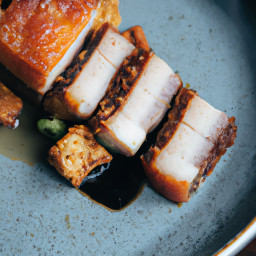
Pork belly, skin-on, 2 to 2.5 lb (900 g to 1.1 kg)
Kosher salt, 1 tablespoon, divided
Baking powder (or baking soda), 1 teaspoon
Chinese five-spice powder, 1 teaspoon
Ground black pepper, 1 teaspoon
Granulated sugar, 2 teaspoons
Rice vinegar, 1 tablespoon (for skin)
Neutral oil, 1 tablespoon
Low-sodium soy sauce, 2 tablespoons (for glaze)
Honey or brown sugar, 1 tablespoon (for glaze)
Rice vinegar, 1 tablespoon (for glaze)
Toasted sesame oil, 1 teaspoon (for glaze)
Fresh ginger, grated, 1 teaspoon (for glaze)
Garlic, minced, 2 cloves (1 for rub, 1 for glaze)
Water, 1 tablespoon (for glaze)
Scallions, thinly sliced, for serving (optional)
Lime wedges, for serving (optional)
Prep the pork belly: Pat the pork belly completely dry with paper towels. Using a sharp knife, score the skin in a crosshatch pattern with shallow cuts about 1/4 inch apart, taking care not to cut into the meat. Alternatively, prick the skin all over with a fork or skewer.
Season the meat side: In a small bowl, mix half the kosher salt (1 1/2 teaspoons), the five-spice, black pepper, sugar, and half the minced garlic (1 clove). Rub this mixture evenly over the meat side and edges, avoiding the skin.
Dry the skin: Brush the skin with 1 tablespoon rice vinegar. Sprinkle the remaining salt (1 1/2 teaspoons) evenly over the skin, then dust the skin lightly with the baking powder. Gently rub to distribute without wetting the meat side.
Chill uncovered: Set the pork belly skin-side up on a rack over a tray and refrigerate uncovered for at least 6 hours, ideally overnight, to dry the skin. If short on time, chill at least 1 to 2 hours.
Heat the oven: Place a rack in the lower-middle position. Preheat the oven to 300°F (150°C). Line a roasting pan with foil and set a rack inside. Add 1 cup hot water to the pan (under the rack) to prevent smoking.
Roast low and slow: Place the pork belly skin-side up on the rack. Roast at 300°F (150°C) for 1 3/4 to 2 1/4 hours, until the meat is tender and an instant-read thermometer in the thickest part reaches at least 185°F (85°C). Add more water to the pan if it dries.
Make the glaze: In a small saucepan combine soy sauce, honey (or brown sugar), 1 tablespoon rice vinegar, sesame oil, grated ginger, the remaining minced garlic, and water. Simmer over medium heat 3 to 5 minutes until slightly syrupy. Remove from heat.
Crisp the skin: Increase oven temperature to 475°F (245°C). Lightly brush the skin with neutral oil. Return the pork belly to the oven and roast 15 to 25 minutes, rotating the pan as needed, until the skin puffs, blisters, and is deeply crisp. Watch closely to prevent burning.
Rest: Transfer the pork belly to a cutting board and rest 10 to 15 minutes. For maximum crispness, keep the skin side dry and avoid covering.
Glaze and slice: Brush the glaze over the meat side only to keep the skin crisp. Slice with a sharp or serrated knife into bite-size pieces.
Serve: Top with sliced scallions and serve with lime wedges. Pair with steamed rice, quick pickles, or sautéed greens. Any leftover glaze can be served on the side.

3 cups corn kernels (from 4 ears fresh or frozen, thawed and patted dry)
1 tablespoon unsalted butter
1 tablespoon olive oil
1 small jalapeño, seeded and minced (optional)
2 cloves garlic, minced
1/4 cup finely chopped scallions
1/4 cup Mexican crema or sour cream
1/4 cup mayonnaise
1 lime, zested and juiced
1/2 teaspoon chili powder (such as ancho)
1/4 teaspoon smoked paprika
1/4 teaspoon ground cumin
1/3 cup crumbled Cotija cheese, plus extra for garnish
2 tablespoons chopped cilantro (optional)
2 tablespoons toasted pepitas (pumpkin seeds)
24 sturdy corn tortilla chips or mini tostada rounds
Fine sea salt and freshly ground black pepper
Hot sauce, for serving (optional)
Heat a large skillet over medium-high. Add olive oil and butter; when sizzling, add corn. Cook, stirring occasionally, until lightly charred and fragrant, 5–7 minutes.
Stir in jalapeño (if using) and garlic; cook 1 minute until fragrant. Remove skillet from heat and let cool 2 minutes.
Add scallions, crema, mayonnaise, lime zest, and 1 tablespoon lime juice. Sprinkle in chili powder, smoked paprika, and cumin; season with salt and pepper to taste and stir to coat the corn evenly.
Fold in the Cotija. Taste and adjust lime, salt, and chili as desired.
Spoon warm corn mixture onto the tortilla chips or mini tostadas. Top with a pinch of extra Cotija, cilantro (if using), and toasted pepitas.
Dust lightly with additional chili powder and drizzle with hot sauce if desired. Serve immediately while warm and crisp.

2 to 2.5 lb (900 g to 1.1 kg) skin-on pork belly, in one slab
1 1/2 teaspoons kosher salt (for meat side)
1 teaspoon granulated sugar
1 teaspoon ground white or black pepper
1 teaspoon Chinese five-spice powder
2 cloves garlic, finely grated (optional)
1 tablespoon Shaoxing wine or dry sherry (optional)
1 cup (150 g) kosher salt (for salt cap on skin)
1 teaspoon baking powder (optional; mix into salt cap to aid crisping)
1 to 2 teaspoons rice vinegar or distilled white vinegar (for brushing skin)
Neutral oil, for greasing rack/pan
Pat the pork belly very dry. If the skin isn’t scored, lightly score it in a shallow crosshatch or poke many holes with a skewer, taking care not to pierce into the meat.
Pour a kettle of boiling water slowly over the skin to tighten it, then pat completely dry.
Mix 1 1/2 tsp kosher salt, sugar, pepper, five-spice, and garlic. Rub this only on the meat side and edges. If using Shaoxing wine, brush it on the meat side only. Keep the skin clean and dry.
Place the belly skin-side up on a rack over a tray and refrigerate uncovered 8 to 24 hours to dry the skin.
Preheat oven to 325°F (160°C). Line a rimmed baking sheet with foil and set a lightly oiled rack over it.
Set the pork skin-side up on the rack. Create a snug foil border around the slab, about 1/2 inch (1.3 cm) taller than the skin, to hold the salt. Mix 1 cup kosher salt with baking powder (if using). Lightly brush the skin with vinegar, then cover the skin evenly with the salt mixture to form a flat, even 1/4-inch (6 mm) cap.
Roast at 325°F (160°C) for 75 to 90 minutes, until the meat is tender and an instant-read thermometer in the thickest part reads at least 165°F (74°C).
Remove from the oven. Lift off and discard the hardened salt cap and brush away any loose salt from the skin. Increase oven temperature to 450°F (230°C).
Return pork to the oven and roast 15 to 25 minutes, rotating once, until the skin is blistered and glassy. If needed, finish under the broiler for 1 to 3 minutes, watching closely.
Rest 10 minutes. Slice with a serrated knife into bite-size pieces, using gentle sawing motions through the crackling.
Serve as-is or with steamed rice and greens, or in pancakes with hoisin, cucumbers, and scallions.

20 large white or cremini mushrooms (about 1 lb / 450 g)
2 tablespoons olive oil, divided
2 tablespoons unsalted butter
1 small shallot, finely minced (or 1/4 small onion)
3 garlic cloves, minced
1/4 cup dry white wine or vegetable broth (optional)
4 ounces (115 g) cream cheese, softened
1/2 cup (50 g) finely grated Parmesan cheese, divided
1/2 cup (30 g) panko or fresh breadcrumbs, divided
2 tablespoons chopped fresh parsley, plus more for serving
1 teaspoon lemon zest
1/2 teaspoon kosher salt, plus more to taste
1/4 teaspoon freshly ground black pepper
Pinch red pepper flakes (optional)
Heat oven to 400°F (200°C). Line a rimmed baking sheet with parchment.
Clean the mushrooms with a damp towel. Twist out the stems and finely chop them; set the caps hollow-side up on the tray.
Toss caps with 1 tablespoon olive oil, a pinch of salt, and pepper. Roast 8 minutes to release moisture, then drain off any liquid and return caps hollow-side up.
Meanwhile, melt butter with remaining 1 tablespoon olive oil in a skillet over medium heat. Add shallot and cook until translucent, 3 to 4 minutes. Stir in chopped mushroom stems and cook until their moisture evaporates and they begin to brown, 4 to 6 minutes. Add garlic and cook 30 seconds.
Deglaze with white wine or broth (if using) and simmer until nearly dry, 1 to 2 minutes. Transfer mixture to a bowl and let cool 2 minutes.
Stir in cream cheese, 1/3 cup of the Parmesan, 1/3 cup of the breadcrumbs, parsley, lemon zest, salt, pepper, and red pepper flakes. Taste and adjust seasoning.
Spoon or pipe the filling into the mushroom caps, mounding slightly.
In a small bowl, combine the remaining Parmesan and breadcrumbs with a pinch of salt. Sprinkle over the stuffed caps.
Bake until tops are golden and mushrooms are tender, 15 to 18 minutes. For extra color, broil 1 to 2 minutes at the end, watching closely.
Garnish with more parsley and serve warm.

1 large English cucumber
6 red radishes, thinly sliced
2 scallions, thinly sliced
1 tablespoon fresh ginger, finely grated
3 tablespoons rice vinegar
2 tablespoons ponzu sauce
1 teaspoon sugar or honey
1 teaspoon toasted sesame oil
1 tablespoon toasted sesame seeds
Pinch of red pepper flakes (optional)
Kosher salt
Using a vegetable peeler, shave the cucumber lengthwise into thin ribbons. Place ribbons in a colander, sprinkle with 1/2 teaspoon kosher salt, toss, and let drain 10 minutes. Pat dry with paper towels.
In a small bowl, whisk together rice vinegar, ponzu, sugar or honey, grated ginger, sesame oil, and red pepper flakes (if using) until the sugar dissolves.
In a mixing bowl, combine cucumber ribbons, radishes, and scallions. Pour the dressing over and toss gently to coat.
Chill for 10–15 minutes to lightly pickle and meld flavors.
Transfer to small bowls or appetizer spoons and finish with toasted sesame seeds. Serve cold.

4 mahi-mahi fillets (5–6 oz each, about 1 inch thick)
1 cup panko breadcrumbs
1/3 cup finely grated Parmesan cheese
2 tablespoons finely chopped fresh parsley
1 tablespoon finely chopped fresh dill (optional)
1 teaspoon lemon zest
1 small garlic clove, finely minced (or 1/2 teaspoon garlic powder)
1/2 teaspoon smoked paprika
1/2 teaspoon kosher salt, plus more to season fish
1/4 teaspoon black pepper
3 tablespoons olive oil, divided
2 tablespoons mayonnaise (or 1 tablespoon Dijon mustard + 1 tablespoon mayonnaise)
1 tablespoon unsalted butter, melted (optional, for richer crust)
Lemon wedges, for serving
Preheat the oven to 425°F (220°C). Line a rimmed baking sheet with parchment and lightly oil it.
Make the crust: In a bowl, combine panko, Parmesan, parsley, dill (if using), lemon zest, garlic, smoked paprika, 1/2 teaspoon salt, and 1/4 teaspoon pepper. Add 2 tablespoons olive oil and the melted butter (if using), tossing until the crumbs are evenly moistened.
Pat the mahi-mahi dry. Lightly season both sides with a pinch of salt and pepper.
Spread a thin layer of the mayonnaise (or the Dijon–mayo mixture) over the top side of each fillet to help the crumbs adhere.
Press the crumb mixture firmly onto the coated tops of the fillets, dividing evenly (about 1/4 to 1/3 cup per fillet).
Place the fillets, crust side up, on the prepared baking sheet. Drizzle the remaining 1 tablespoon olive oil around the fish.
Bake until the fish flakes easily and the crust is golden, 10–14 minutes depending on thickness (internal temperature 130–135°F/54–57°C). For extra browning, broil for 1–2 minutes at the end, watching closely.
Rest 2 minutes. Serve with lemon wedges and, if desired, a sprinkle of fresh herbs.
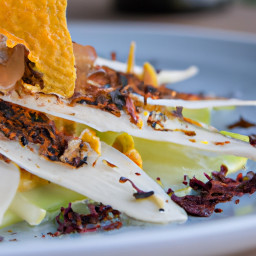
1 large fennel bulb, fronds reserved
1 large orange, segmented, plus 1/2 teaspoon finely grated zest
2 tablespoons fresh lemon juice
2 tablespoons extra-virgin olive oil
1 teaspoon honey (or sugar)
6 to 8 green olives (Castelvetrano), pitted and thinly sliced
2 tablespoons toasted sliced almonds
1 tablespoon chopped fresh parsley
1/4 teaspoon red pepper flakes
Sea salt, to taste
Freshly ground black pepper, to taste
Trim and core the fennel, reserving fronds. Thinly shave the bulb with a mandoline or sharp knife; soak shavings in ice water for 5 minutes to crisp, then drain and pat dry.
In a mixing bowl, whisk together lemon juice, orange zest, honey, a pinch of salt, and black pepper. Slowly stream in the olive oil while whisking to emulsify.
Add the shaved fennel, orange segments, and sliced olives to the bowl; toss to coat and let sit 5 to 10 minutes to lightly marinate.
Taste and adjust seasoning with more salt, pepper, or lemon as needed.
Plate the salad and top with toasted almonds, chopped parsley, and a few chopped fennel fronds. Finish with a pinch of red pepper flakes and a light drizzle of olive oil, if desired.

For the tartar sauce:
1/2 cup mayonnaise
2 tablespoons finely chopped dill pickles or cornichons
1 tablespoon capers, chopped (optional)
1 tablespoon fresh lemon juice
1 teaspoon Dijon mustard
1 tablespoon finely chopped fresh dill or parsley
1/2 teaspoon hot sauce (optional)
Pinch of kosher salt and black pepper
For the fish:
4 skinless grouper fillets (4 to 6 ounces each, about 1/2 to 3/4 inch thick)
1 cup all-purpose flour
1 teaspoon kosher salt, plus more for finishing
1/2 teaspoon black pepper
1 teaspoon paprika (smoked or sweet)
1/2 teaspoon garlic powder
1/4 teaspoon cayenne pepper
2 large eggs
2 tablespoons milk or water
1 1/2 cups panko breadcrumbs (or crushed saltines)
1/2 cup fine cornmeal (optional, for extra crunch)
Neutral oil for frying (about 3 cups), such as peanut, canola, or vegetable
Lemon wedges, for serving
For assembly:
4 brioche or potato buns
2 tablespoons unsalted butter, softened
Lettuce leaves
Sliced ripe tomato
Thinly sliced red onion
Dill pickle chips
Make the tartar sauce: In a small bowl, combine mayonnaise, chopped pickles, capers, lemon juice, Dijon, dill or parsley, hot sauce if using, and a pinch of salt and pepper. Mix until smooth, cover, and refrigerate until ready to use.
Set up breading stations: In one shallow dish, whisk flour with 1 teaspoon salt, black pepper, paprika, garlic powder, and cayenne. In a second dish, beat the eggs with the milk or water. In a third dish, combine panko and cornmeal (if using).
Prep the fish: Pat the grouper fillets dry with paper towels. Working one piece at a time, dredge in seasoned flour (shake off excess), dip in egg, then press into the panko mixture to coat all sides. Transfer to a wire rack and let sit 5 to 10 minutes to help the crust adhere.
Heat the oil: Pour 1 to 1.5 inches of oil into a heavy skillet or Dutch oven and heat to 350 F over medium-high heat. Adjust heat as needed to maintain temperature.
Fry the fillets: Fry 2 at a time without crowding, 3 to 4 minutes per side, until deep golden and the fish flakes easily and reaches 135 to 140 F internal temperature. Transfer to a wire rack set over a sheet pan and sprinkle lightly with salt. Keep warm in a 250 F oven while you cook the remaining fillets.
Toast the buns: Split the buns and spread the cut sides with butter. Toast cut-side down in a skillet or under a broiler until golden.
Assemble the sandwiches: Spread tartar sauce on both sides of each bun. Layer lettuce and tomato on the bottom bun, add a fried grouper fillet, then top with red onion and pickle chips. Add a squeeze of lemon, cap with the top bun, and serve immediately with extra tartar sauce and lemon wedges.

2 lb (900 g) thin slices beef top round (about 8 slices)
Kosher salt and freshly ground black pepper, to taste
3 tbsp German or Dijon mustard
8 slices bacon
2 medium dill pickles, cut lengthwise into 8 spears
2 medium yellow onions (1 thinly sliced for filling, 1 chopped for sauce)
2 tbsp neutral oil (plus more as needed)
1 carrot, chopped
1 celery stalk, chopped
2 cloves garlic, minced
1 tbsp tomato paste
1 cup dry red wine (or use more beef broth)
3 cups beef broth
2 bay leaves
1 tsp dried thyme or marjoram
1 tsp sweet paprika (optional)
2 tbsp unsalted butter
2 tbsp all-purpose flour
2 tbsp chopped fresh parsley (optional, for serving)
2 tbsp sour cream (optional, to finish the sauce)
Prep the beef: If the slices are thicker than 1/4 inch, lightly pound between sheets of plastic wrap to about 1/8–1/4 inch for easy rolling. Pat dry and season both sides with salt and pepper.
Fill and roll: Lay a slice flat, spread a thin layer of mustard over it, then place 1 slice of bacon, a few onion slices, and 1 pickle spear along the short end. Roll up tightly, tucking in the sides as you go. Secure with toothpicks or kitchen twine. Repeat with remaining slices.
Brown the rouladen: Heat the oil in a large heavy pot or Dutch oven over medium-high. Sear the rouladen on all sides until well browned, 6–8 minutes total in batches. Transfer to a plate.
Build the braise: Reduce heat to medium. Add the chopped onion, carrot, and celery; cook, stirring, until softened and lightly browned, 5–7 minutes. Add the garlic and cook 30 seconds. Stir in tomato paste and cook 1 minute to caramelize.
Deglaze: Pour in the red wine, scraping up browned bits. Simmer 2–3 minutes to reduce slightly.
Braise: Return the rouladen and any juices to the pot. Add the beef broth, bay leaves, thyme (or marjoram), and paprika if using. Liquid should come about two-thirds up the rolls; add a splash more broth if needed. Bring to a simmer, then cover and cook gently on low heat until very tender, 60–90 minutes, turning once halfway.
Make the gravy: Transfer the rouladen to a plate and tent with foil. Discard bay leaves. For a smooth sauce, strain the braising liquid and press on solids; for a rustic sauce, leave vegetables in. In a separate small saucepan, melt the butter over medium heat, whisk in the flour, and cook 1–2 minutes to form a blond roux. Gradually whisk in 2–3 cups of the hot braising liquid until smooth. Simmer 3–5 minutes until glossy and thick enough to coat a spoon. Season with salt and pepper; swirl in sour cream off heat if using.
Serve: Remove toothpicks/twine from rouladen. Return them to the sauce to warm through. Sprinkle with parsley if desired and serve with the gravy over top. Classic sides include potato dumplings, spätzle, or mashed potatoes with braised red cabbage.

4 small heads Belgian endive, leaves separated and trimmed
1 firm ripe pear (Bosc or Anjou), 1/4-inch dice
1 teaspoon fresh lemon juice
4 ounces goat cheese, softened
2 tablespoons plain Greek yogurt or softened cream cheese
1 teaspoon finely chopped fresh thyme, plus extra leaves for garnish
1 teaspoon lemon zest
1 tablespoon honey, plus more for drizzling
1/4 cup toasted pecans, finely chopped
Pinch of kosher salt
Freshly ground black pepper
Toast the pecans in a dry skillet over medium heat until fragrant, 3–4 minutes; cool and chop finely.
In a bowl, whip the goat cheese with the yogurt, thyme, lemon zest, honey, a pinch of salt, and a few grinds of black pepper until smooth and fluffy (1–2 minutes).
Toss the diced pear with lemon juice to prevent browning.
Arrange endive leaves on a platter. Pipe or spoon about 1 teaspoon of the whipped goat cheese into each leaf.
Top each with a small spoonful of pear, then sprinkle with toasted pecans.
Finish with a light drizzle of honey, a few thyme leaves, and a crack of black pepper. Chill 10 minutes to set and serve shortly thereafter.

2 large eggplants (about 2 lb/900 g total)
2 tbsp extra-virgin olive oil, for brushing
2 tbsp extra-virgin olive oil, for the filling
1 tbsp extra-virgin olive oil, for drizzling (optional)
1 medium onion, finely chopped
3 garlic cloves, minced
8 oz (225 g) ground beef or lamb
1 tsp ground cumin
1 tsp smoked paprika
1/4 tsp ground cinnamon
1/4 tsp red pepper flakes (optional)
2 tbsp tomato paste
1 cup (240 g) canned crushed tomatoes
1/4 cup (60 ml) dry white wine or water
1/4 cup (15 g) chopped fresh parsley
2 tbsp chopped fresh mint (optional)
1/4 cup (30 g) toasted pine nuts (optional)
1/2 cup (75 g) crumbled feta
1/2 cup (50 g) shredded mozzarella or grated Parmesan
1/3 cup (35 g) panko breadcrumbs
Zest of 1/2 lemon
Kosher salt and freshly ground black pepper
Preheat the oven to 425°F (220°C). Line a rimmed baking sheet with parchment.
Halve the eggplants lengthwise. Score the flesh in a crosshatch pattern, taking care not to pierce the skin. Brush the cut sides with 2 tbsp olive oil and season generously with salt and pepper. Arrange cut-side up on the baking sheet.
Roast until the flesh is tender and lightly browned, 25–30 minutes. Remove and let cool just enough to handle. Reduce oven temperature to 400°F (200°C).
Using a spoon, scoop out the flesh, leaving a 1/4-inch (6 mm) border to keep the shells intact. Roughly chop the scooped eggplant flesh and set aside. Place the empty shells in a baking dish.
Heat 2 tbsp olive oil in a large skillet over medium heat. Add the onion and cook, stirring, until softened and translucent, 4–5 minutes. Add the garlic and cook until fragrant, 30 seconds.
Add the ground beef or lamb, season with salt and pepper, and cook, breaking it up with a spoon, until browned and no longer pink, 5–6 minutes. Spoon off excess fat if needed.
Stir in cumin, smoked paprika, cinnamon, and red pepper flakes (if using); cook 30 seconds. Add tomato paste and cook, stirring, 1 minute.
Add crushed tomatoes and wine (or water). Simmer until slightly thickened, 3–4 minutes.
Stir in the chopped eggplant flesh and cook until most moisture evaporates and the mixture is cohesive, 3–4 minutes. Remove from heat and fold in parsley, mint (if using), pine nuts (if using), and lemon zest. Taste and adjust salt and pepper.
Spoon the filling evenly into the eggplant shells. Top with crumbled feta, then sprinkle with mozzarella or Parmesan. Scatter panko over the top and drizzle with the remaining 1 tbsp olive oil (if using).
Bake at 400°F (200°C) until the cheese is melted and the tops are golden and crisp, 15–18 minutes. For extra color, broil 1–2 minutes, watching closely.
Let rest 5 minutes before serving. Garnish with extra parsley if desired. Serves 4.

1 baguette, sliced 1/2-inch thick (16–20 slices)
3 tablespoons extra-virgin olive oil, divided
1 cup whole-milk ricotta
2–3 teaspoons prepared horseradish, drained
1 teaspoon lemon zest
1 tablespoon fresh lemon juice
1 teaspoon honey
1/4 teaspoon kosher salt, plus more to taste
Freshly ground black pepper, to taste
1 cup watercress (or baby arugula) leaves
Flaky sea salt, for finishing (optional)
2 small shallots, thinly sliced
1/3 cup red wine vinegar
2 tablespoons water
1 teaspoon sugar
1/2 teaspoon kosher salt
1 tablespoon chopped chives or dill (optional)
Quick-pickle the shallots: In a small bowl, combine red wine vinegar, water, sugar, and 1/2 teaspoon salt. Stir to dissolve, then add sliced shallots. Let sit 15 minutes, stirring once or twice; drain just before using.
Toast the crostini: Heat oven to 400°F/205°C. Arrange baguette slices on a baking sheet and brush both sides with 2 tablespoons olive oil. Bake 8–10 minutes, flipping once, until golden and crisp. Cool slightly.
Whip the ricotta: In a bowl, combine ricotta, horseradish, lemon zest, lemon juice, honey, remaining 1 tablespoon olive oil, 1/4 teaspoon salt, and a few grinds of black pepper. Whisk until smooth and airy; adjust seasoning to taste.
Assemble: Spread a generous spoonful of whipped ricotta on each toast. Top with a few watercress leaves and some pickled shallots. Finish with black pepper, flaky sea salt, and chopped chives or dill if using.
Serve immediately while the toasts are crisp.

1 1/2 pounds large raw shrimp, peeled and deveined (tails optional)
1 tablespoon Creole seasoning
1 teaspoon kosher salt, divided
1/2 teaspoon black pepper, divided
2 tablespoons unsalted butter
1 tablespoon vegetable oil
1 large yellow onion, diced
1 green bell pepper, diced
2 ribs celery, diced
4 cloves garlic, minced
1 tablespoon tomato paste
1 can (28 ounces) crushed tomatoes (or 2 cans 14.5 ounces diced tomatoes with juices)
1 cup seafood or chicken stock
2 bay leaves
1 teaspoon dried thyme (or 1 tablespoon fresh thyme leaves)
1 teaspoon paprika (smoked or sweet)
1/4 to 1/2 teaspoon cayenne pepper, to taste
1 teaspoon Worcestershire sauce
1 teaspoon hot sauce, plus more to taste
1 teaspoon sugar (optional, to balance acidity)
2 tablespoons chopped fresh parsley, plus more for garnish
2 tablespoons sliced green onions, for garnish
1 tablespoon fresh lemon juice
Cooked white rice, for serving
Optional: 1 teaspoon cornstarch mixed with 2 teaspoons cold water (if you prefer a thicker sauce)
Season the shrimp: Pat shrimp dry. Toss with Creole seasoning, 1/2 teaspoon of the salt, and 1/4 teaspoon of the black pepper. Set aside while you start the sauce.
Sauté the aromatics: In a large skillet or Dutch oven, heat butter and oil over medium heat. Add onion, bell pepper, and celery with a pinch of salt. Cook, stirring occasionally, until softened and lightly golden, 6 to 8 minutes. Add garlic and cook 30 seconds until fragrant.
Caramelize the tomato paste: Stir in tomato paste and cook, stirring, 1 to 2 minutes until it darkens slightly.
Build the sauce: Add crushed tomatoes, stock, bay leaves, thyme, paprika, cayenne, Worcestershire, hot sauce, sugar (if using), and the remaining 1/2 teaspoon salt and 1/4 teaspoon black pepper. Stir to combine and bring to a gentle simmer.
Simmer to develop flavor: Reduce heat to medium-low and simmer uncovered 15 to 20 minutes, stirring occasionally, until slightly thickened and flavorful. Taste and adjust salt, pepper, cayenne, and hot sauce as desired.
Cook the shrimp: Add the seasoned shrimp to the simmering sauce in an even layer. Simmer gently, stirring once or twice, until shrimp are just opaque and curled, 3 to 5 minutes. Do not overcook.
Finish the dish: Remove bay leaves. Stir in lemon juice and parsley. If you prefer a thicker sauce, stir in the cornstarch slurry and simmer 1 to 2 minutes more until glossy.
Serve: Spoon Shrimp Creole over hot cooked white rice. Garnish with green onions and additional parsley. Serve with extra hot sauce on the side.
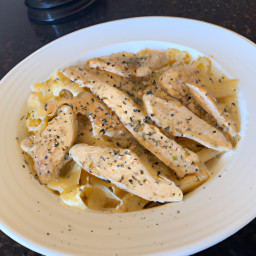
12 oz (340 g) fettuccine
1 lb (450 g) boneless, skinless chicken breasts, thinly sliced
1 1/2 tsp kosher salt, divided
3/4 tsp freshly ground black pepper, divided
1/2 tsp garlic powder (optional)
2 tbsp olive oil
3 tbsp unsalted butter, divided
3 cloves garlic, minced
1 1/2 cups (360 ml) heavy cream
1 cup (100 g) freshly grated Parmesan cheese, plus more for serving
1/4–1/2 cup (60–120 ml) reserved pasta water, as needed
Pinch of freshly grated nutmeg (optional)
2 tbsp chopped fresh parsley
1–2 tsp lemon juice or a little lemon zest (optional)
1. Bring a large pot of well-salted water to a boil. Cook the fettuccine until just al dente. Reserve 1/2 cup of the pasta water, then drain.
2. Pat the chicken dry. Season with about 1 tsp salt, 1/2 tsp pepper, and the garlic powder if using.
3. Heat the olive oil and 1 tbsp butter in a large skillet over medium-high heat. Cook the chicken in a single layer (in batches if needed) until golden and cooked through, 4–6 minutes total. Transfer to a plate and tent loosely.
4. Reduce heat to medium-low. Add the remaining 2 tbsp butter to the skillet. Stir in the garlic and cook until fragrant, 30–60 seconds (do not brown).
5. Pour in the heavy cream. Bring to a gentle simmer, stirring, for 2–3 minutes until slightly thickened. Season with the remaining 1/2 tsp salt, 1/4 tsp pepper, and a pinch of nutmeg if using.
6. Whisk in the Parmesan a handful at a time until melted and smooth. If the sauce is too thick, loosen gradually with reserved pasta water; if too thin, simmer briefly to reduce.
7. Return the chicken and any accumulated juices to the skillet. Add the drained fettuccine and toss to coat evenly. Cook 1 minute so the pasta absorbs the sauce.
8. Taste and adjust seasoning. Add a squeeze of lemon juice or a little zest if you want extra brightness.
9. Remove from heat. Sprinkle with parsley and extra Parmesan. Serve immediately.

1 small jicama, peeled and cut into matchsticks (about 3 cups)
1 large cucumber, seeded and diced
1/2 small red onion, very thinly sliced
1 small orange, zested and juiced (about 1/4 cup juice)
2 tablespoons fresh lime juice
1 tablespoon extra-virgin olive oil
1 teaspoon honey (optional)
1 small jalapeño, seeded and minced (optional)
1/3 cup chopped fresh cilantro
1/3 cup toasted pepitas (pumpkin seeds)
1/2 teaspoon chili powder or Tajín
1/2 teaspoon kosher salt, plus more to taste
1 head butter lettuce or 2 heads endive, leaves separated
Lime wedges, for serving (optional)
In a large bowl, whisk together orange zest and juice, lime juice, olive oil, honey (if using), chili powder or Tajín, and salt until combined.
Add jicama, cucumber, red onion, jalapeño (if using), and cilantro to the bowl. Toss to coat evenly. Let stand 10 minutes to lightly marinate and soften.
Fold in toasted pepitas. Taste and adjust seasoning with more salt or lime juice as needed.
Spoon the crunchy mixture into lettuce or endive leaves to form bite-size cups.
Serve immediately with lime wedges for squeezing over the top.
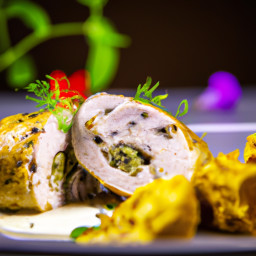
For the chicken:
4 boneless, skinless chicken breasts (6–8 oz/170–225 g each)
3/4 teaspoon kosher salt
1/2 teaspoon freshly ground black pepper
1 teaspoon smoked or sweet paprika
1 teaspoon Italian seasoning (or 1/2 tsp dried oregano + 1/2 tsp dried basil)
2 tablespoons olive oil
6–8 toothpicks
For the filling:
4 oz (113 g) cream cheese, softened
1 cup (30 g) fresh spinach, chopped (or 1/2 cup thawed frozen, well-drained)
1/2 cup (56 g) shredded mozzarella
1/4 cup (20 g) grated Parmesan
2 cloves garlic, minced
2 tablespoons finely chopped sun-dried tomatoes (oil-packed, drained; optional)
1/4 teaspoon red pepper flakes (optional)
1/4 teaspoon kosher salt
1 tablespoon chopped fresh parsley or basil (optional)
Optional pan sauce:
1/2 cup (120 ml) low-sodium chicken broth
1 tablespoon fresh lemon juice
1 teaspoon Dijon mustard (optional)
1 tablespoon unsalted butter
1. Preheat the oven to 400°F (200°C). Place a rack in the center position.
2. Make the filling: In a bowl, mix the cream cheese, spinach, mozzarella, Parmesan, garlic, sun-dried tomatoes (if using), red pepper flakes (if using), 1/4 teaspoon salt, and herbs until well combined.
3. Prepare the chicken: Pat the chicken dry. Using a sharp knife, slice a pocket horizontally into the thickest side of each breast, keeping the opposite side intact. Lightly season the inside of each pocket with a pinch of salt.
4. Season the outside: In a small dish, combine the 3/4 teaspoon salt, black pepper, paprika, and Italian seasoning. Rub the mixture all over the outside of the chicken.
5. Stuff: Divide the filling among the breasts, spooning it into the pockets. Fold the top flap over and secure the opening with toothpicks.
6. Sear: Heat an oven-safe skillet over medium-high heat and add the olive oil. When shimmering, sear the chicken 2–3 minutes per side until golden.
7. Bake: Transfer the skillet to the oven and bake 12–18 minutes, depending on thickness, until the internal temperature reaches 165°F (74°C). If you don’t have an oven-safe skillet, transfer the seared chicken to a preheated baking dish before baking.
8. Rest: Move the chicken to a plate and rest 5 minutes. Carefully remove toothpicks.
9. Optional pan sauce: Place the hot skillet over medium heat. Add chicken broth, lemon juice, and Dijon (if using), scraping up browned bits. Simmer 2–3 minutes to reduce slightly, then whisk in butter until glossy. Season to taste.
10. Serve: Slice the chicken across the grain and spoon pan sauce over the top. Garnish with chopped parsley or basil, if desired.

1 small crisp apple (e.g., Honeycrisp), cored and thinly sliced
6 radishes, thinly sliced
2 cups baby arugula or watercress
1 tablespoon chopped fresh chives
2 tablespoons toasted sliced almonds
1 tablespoon Dijon mustard
1 teaspoon honey
1 tablespoon fresh lemon juice
1 tablespoon apple cider vinegar
3 tablespoons extra-virgin olive oil
1/4 teaspoon kosher salt
1/8 teaspoon freshly ground black pepper
Whisk together Dijon, honey, lemon juice, and apple cider vinegar until smooth. Slowly stream in olive oil while whisking to emulsify. Season with salt and pepper.
In a large bowl, combine arugula (or watercress), apple slices, radishes, and chives.
Drizzle about half the vinaigrette over the salad and toss gently to coat. Add more dressing to taste.
Top with toasted sliced almonds and a final crack of pepper. Serve immediately.

12 dry lasagna noodles (no-boil or regular)
1 tablespoon olive oil
1 medium yellow onion, finely diced
4 garlic cloves, minced
1.5 pounds (680 g) ground beef
1 teaspoon kosher salt, plus more for pasta water
1/2 teaspoon freshly ground black pepper
1/4 teaspoon red pepper flakes (optional)
2 tablespoons tomato paste
1/2 cup (120 ml) dry red wine or beef stock
1 can (28 oz/800 g) crushed tomatoes
1 teaspoon dried oregano
1 teaspoon dried basil
1 teaspoon sugar (optional)
1 bay leaf
4 tablespoons (56 g) unsalted butter
1/4 cup (30 g) all-purpose flour
3 cups (720 ml) whole milk, warmed
1/4 teaspoon ground nutmeg
1/2 teaspoon kosher salt (for béchamel)
1/4 teaspoon white or black pepper (for béchamel)
3 cups (300 g) shredded low-moisture mozzarella
1.5 cups (150 g) freshly grated Parmesan or Pecorino Romano
2 tablespoons chopped fresh parsley or basil (optional, for serving)
Preheat the oven to 375°F (190°C). Lightly grease a 9×13-inch (23×33 cm) baking dish.
Make the meat sauce: Heat olive oil in a large skillet over medium heat. Add onion and cook until translucent, 4–5 minutes. Stir in garlic for 30 seconds.
Add ground beef, breaking it up. Cook until browned, 6–8 minutes; drain excess fat if needed. Season with 1 teaspoon salt, 1/2 teaspoon pepper, and red pepper flakes (if using).
Stir in tomato paste and cook 1 minute. Pour in wine or stock and simmer 1–2 minutes to reduce slightly, scraping up browned bits.
Add crushed tomatoes, oregano, basil, sugar (if using), and bay leaf. Simmer gently, partially covered, 20–30 minutes, stirring occasionally. Remove bay leaf and adjust seasoning to taste.
Make the béchamel: In a saucepan, melt butter over medium heat. Whisk in flour and cook, whisking, 1–2 minutes until foamy but not browned.
Gradually whisk in warm milk, a little at a time, until smooth. Simmer, whisking, 5–8 minutes until thick enough to coat the back of a spoon. Season with nutmeg, 1/2 teaspoon salt, and 1/4 teaspoon pepper. Keep warm (press plastic wrap directly on the surface to prevent a skin).
Cook the noodles if using regular: Boil a large pot of well-salted water. Cook noodles until very al dente (1–2 minutes shy of package time). Drain and lay flat on lightly oiled sheet pans. If using no-boil noodles, skip boiling (optional: soak in hot water 10 minutes to soften).
Assemble: Spread a thin layer of meat sauce (about 1/2 cup) in the baking dish. Add a layer of noodles to cover.
Layer 1: Spread about 1/3 of the meat sauce, then about 3/4 cup béchamel, then sprinkle about 3/4 cup mozzarella and 1/3 cup Parmesan.
Layer 2: Add noodles, another 1/3 of meat sauce, about 3/4 cup béchamel, and the same amounts of mozzarella and Parmesan.
Layer 3: Add noodles, remaining 1/3 of meat sauce, about 3/4 cup béchamel, and the same amounts of cheeses.
Top: Add a final layer of noodles, spread the remaining béchamel evenly, and top with the remaining mozzarella and Parmesan.
Cover the dish tightly with foil (lightly oil the underside so cheese doesn’t stick). Bake for 25 minutes.
Uncover and bake 20–25 minutes more, until bubbling around the edges and golden on top. Broil 1–2 minutes if you want extra browning.
Rest the lasagna 15–20 minutes before slicing so it sets.
Garnish with chopped parsley or basil, slice, and serve.

Unsalted butter, 8 tbsp (113 g), softened
Garlic, 2–3 cloves, finely minced
Fresh parsley, 2 tbsp, finely chopped
Fresh dill, 1 tbsp, finely chopped
Fresh chives, 1 tbsp, finely chopped (optional)
Lemon zest, 1 tsp
Fine salt, 1/2 tsp (plus more for seasoning)
Black pepper, 1/4 tsp (plus more for seasoning)
4 large boneless, skinless chicken breasts
All-purpose flour, 1 cup
Eggs, 2 large
Dijon mustard, 1 tsp (optional)
Water or milk, 1 tbsp
Fine dry breadcrumbs or panko, 2 cups
Paprika, 1 tsp (optional)
Neutral frying oil (such as sunflower or canola), 2–3 cups
Lemon wedges, for serving
Fresh parsley or dill, for garnish
Make the herb butter: In a bowl, mix the softened butter with garlic, parsley, dill, chives (if using), lemon zest, 1/2 tsp salt, and 1/4 tsp pepper until smooth.
Shape and chill butter: Divide the butter into 4 equal portions. Roll each into a tight log about 3 inches long on parchment or plastic wrap. Freeze until very firm, 30–45 minutes.
Prepare chicken: Trim any tenders. Butterfly each breast if thick, then place between sheets of plastic or parchment and gently pound to about 1/4 inch thickness.
Season chicken: Lightly season both sides of each pounded breast with salt and pepper.
Fill and roll: Place a frozen butter log near the lower third of each breast. Fold the sides over the butter, then roll up tightly from the bottom to enclose it completely. Keep seams down. Wrap each roll tightly in plastic wrap or secure with toothpicks. Freeze or chill until quite firm, 20–30 minutes.
Set up breading: Place flour in one shallow dish and season lightly with salt and pepper. In a second dish, beat eggs with the water (and Dijon, if using). In a third dish, combine breadcrumbs with a pinch of salt and paprika (if using).
Bread the rolls: Unwrap chicken. Dredge each roll in flour, shaking off excess. Dip in egg, then coat thoroughly in breadcrumbs, pressing to seal the ends. For extra insurance, dip again in egg and coat in breadcrumbs a second time.
Chill to set: Transfer breaded rolls to a plate or rack and refrigerate 30 minutes (up to 2 hours). This helps prevent leaks.
Preheat: Heat oven to 375°F/190°C. Line a baking sheet with a rack or paper towels. In a deep skillet, heat 1/2 inch of oil to 350°F/175°C.
Fry until golden: Fry 2–3 rolls at a time, seam side down first, turning as needed, until evenly golden, about 2–4 minutes total per roll. Transfer to the rack to drain.
Finish in oven: Move fried rolls to the oven and bake until the thickest part reaches 160–165°F/71°C, about 12–18 minutes depending on size.
Rest and serve: Let rest 5–10 minutes to allow the butter to settle. Remove any toothpicks. Serve hot with lemon wedges and garnish with parsley or dill.

2 medium fennel bulbs, fronds reserved
2 navel oranges, peeled and segmented (juice reserved)
2 cups baby arugula
1/3 cup shaved Pecorino Romano
1/3 cup sliced almonds
1 small shallot, finely minced
2 tablespoons fresh lemon juice
1 tablespoon white wine vinegar
1 teaspoon Dijon mustard
1/2 teaspoon honey
1/4 cup extra-virgin olive oil
Sea salt and freshly ground black pepper
Toast the sliced almonds in a dry skillet over medium heat, stirring until golden and fragrant, 3–4 minutes. Transfer to a plate to cool.
Trim fennel bulbs, reserving tender fronds. Using a mandoline or sharp knife, shave fennel very thin. Optional: soak shaved fennel in ice water 5 minutes for extra crispness, then drain and pat dry.
Supreme the oranges over a bowl to catch juice; set segments aside and reserve 1 tablespoon of the collected juice for the dressing.
In a small bowl, whisk lemon juice, white wine vinegar, Dijon, honey, minced shallot, reserved orange juice, a pinch of salt, and black pepper. Slowly whisk in olive oil until emulsified.
In a large bowl, combine shaved fennel and arugula. Add just enough dressing to lightly coat and toss gently. Fold in orange segments.
Plate the salad and finish with toasted almonds, shaved Pecorino, and chopped fennel fronds. Season with a final pinch of salt and pepper to taste.

6 bone-in, skin-on chicken thighs (about 2 to 2.5 lb / 900 g to 1.1 kg)
1 tablespoon olive oil
1 1/2 teaspoons kosher salt
1 teaspoon freshly ground black pepper
2 teaspoons paprika (sweet or smoked)
1 teaspoon garlic powder
1 teaspoon onion powder
1 teaspoon dried thyme or Italian seasoning
Lemon wedges, for serving (optional)
Chopped fresh parsley, for serving (optional)
Preheat oven to 425°F (220°C). Line a rimmed sheet pan with foil for easy cleanup and set a wire rack on top, or lightly oil the pan if not using a rack.
Pat the chicken thighs very dry with paper towels. Dry skin is key to crispiness.
In a small bowl, mix the salt, pepper, paprika, garlic powder, onion powder, and thyme. Add the olive oil and stir to form a loose paste.
Rub the seasoning paste all over the thighs, lifting the skin gently to season some of the meat underneath while keeping the skin attached. Place thighs skin-side up on the prepared pan, spaced apart.
Bake until the skin is browned and crisp and the internal temperature in the thickest part (near but not touching bone) reaches at least 165°F (74°C), about 35 to 45 minutes depending on size. For the most tender thighs, aim for 175°F to 185°F (79°C to 85°C).
If you want extra crisp skin, broil on high for 1 to 3 minutes, watching closely to avoid burning.
Rest the chicken 5 to 10 minutes. Serve with lemon wedges and a sprinkle of parsley, if using.
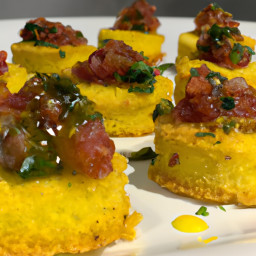
1 cup coarse cornmeal (polenta)
3 cups low-sodium chicken broth (or water)
1/2 teaspoon kosher salt, plus more to finish
2 tablespoons grated Parmesan cheese
1 tablespoon unsalted butter or olive oil (for the polenta)
2-3 tablespoons olive oil (for frying)
3/4 cup whole-milk ricotta
1 teaspoon finely grated lemon zest
1 tablespoon fresh lemon juice
1 tablespoon chopped fresh parsley
1/2 teaspoon dried oregano
Freshly ground black pepper, to taste
1 cup cherry tomatoes, finely diced
1 tablespoon capers, rinsed and chopped
1 small shallot, minced
1 tablespoon red wine vinegar
1 tablespoon extra-virgin olive oil
Pinch red pepper flakes (optional)
Fresh basil or parsley, for garnish (optional)
Extra grated Parmesan, for finishing (optional)
Line a rimmed sheet pan with parchment. In a medium saucepan, bring the broth and 1/2 teaspoon salt to a simmer. Whisk in the cornmeal in a slow stream. Reduce heat to low and cook, stirring often, until thick and creamy, 10-15 minutes.
Off heat, stir in the Parmesan and butter. Spread the polenta 1/2-inch thick on the prepared pan. Chill until firm, at least 30 minutes (or up to overnight).
In a small bowl, combine ricotta, lemon zest, lemon juice, parsley, dried oregano, a pinch of salt, and black pepper. Cover and refrigerate.
Make the tomato-caper relish: In another bowl, mix the diced tomatoes, capers, shallot, red wine vinegar, extra-virgin olive oil, red pepper flakes (if using), and a pinch of salt. Set aside to marinate.
Once firm, cut the polenta into 1- to 1.5-inch squares or rounds. Heat 2-3 tablespoons olive oil in a large nonstick skillet over medium-high heat. Fry the polenta pieces in batches until golden and crisp on both sides, 2-3 minutes per side. Transfer to a rack or paper towel and lightly salt.
To serve, top each warm polenta bite with a small dollop of lemon-herb ricotta and a spoonful of tomato-caper relish. Garnish with basil or parsley and a sprinkle of Parmesan, if desired. Serve immediately.

2 pounds beef steak tips (sirloin tips), cut into 1 1/2- to 2-inch pieces
3 tablespoons olive oil
3 tablespoons soy sauce
1 tablespoon Worcestershire sauce
1 tablespoon balsamic vinegar or lemon juice
1 tablespoon brown sugar or honey
2 teaspoons Dijon mustard
3 cloves garlic, minced
1 teaspoon kosher salt, plus more to finish
1 teaspoon freshly ground black pepper
1 teaspoon smoked paprika (optional)
1/2 teaspoon red pepper flakes (optional)
1 tablespoon unsalted butter, for finishing (optional)
1 tablespoon chopped fresh parsley or chives, for serving
Neutral oil for grill grates
Metal skewers or soaked wooden skewers (optional)
Make the marinade: In a large bowl, whisk together olive oil, soy sauce, Worcestershire, balsamic or lemon juice, brown sugar, Dijon, garlic, salt, pepper, smoked paprika, and red pepper flakes if using.
Marinate the steak: Pat steak tips dry, add to the bowl, and toss to coat well. Marinate 30 minutes at room temperature or up to 2–12 hours refrigerated. If using wooden skewers, soak them in water for at least 30 minutes.
Preheat the grill to high heat (450–550°F). Clean and oil the grates with a paper towel dipped in neutral oil and held with tongs.
Prep for grilling: Remove steak tips from the marinade, letting excess drip off; discard any leftover marinade. For kebab-style, thread onto skewers, leaving a little space between pieces. Lightly pat the surface dry for better searing.
Grill direct over high heat: Place steak tips on the hot grates. Cook 2–3 minutes per side, turning every 1–2 minutes to build an even crust, about 6–8 minutes total for medium-rare (pull at 125–130°F). For medium, cook to 135–140°F; for medium-well, 145–150°F. Move pieces to a cooler zone if flare-ups occur.
Optional finish: During the last minute, add the butter to the grill-safe surface or a pan and toss the steak tips in it, or transfer the hot steak tips to a bowl with the butter and herbs to coat.
Rest the meat: Transfer to a plate and tent loosely with foil for 5 minutes.
Finish and serve: Sprinkle with a pinch of kosher or flaky salt and the chopped herbs. Serve with grilled vegetables, salad, rice, or potatoes; chimichurri or garlic butter pairs well.
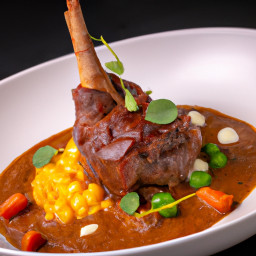
4 lamb shanks (about 12 to 16 oz / 340 to 450 g each)
2 teaspoons kosher salt, plus more to taste
1 teaspoon freshly ground black pepper
2 tablespoons olive oil
1 large onion, diced
2 carrots, diced
2 celery stalks, diced
6 garlic cloves, smashed
2 tablespoons tomato paste
1 tablespoon all-purpose flour (optional, for thickening)
1 1/2 cups dry red wine (about 360 ml)
2 1/2 cups beef or chicken stock (about 600 ml)
1 cup crushed tomatoes or passata (about 240 ml, optional)
2 sprigs fresh rosemary
4 sprigs fresh thyme (or 1 teaspoon dried thyme)
2 bay leaves
1 teaspoon smoked paprika (optional)
1 tablespoon balsamic vinegar or 2 teaspoons Worcestershire sauce (optional, to finish)
Zest of 1 lemon and 2 tablespoons chopped flat-leaf parsley (optional, for gremolata)
For serving: mashed potatoes, creamy polenta, or couscous
Preheat oven to 325 F (160 C). Pat the lamb shanks dry and season all over with 2 teaspoons salt and 1 teaspoon pepper.
Heat the olive oil in a large, heavy Dutch oven over medium-high heat. Sear the shanks until deeply browned on all sides, 3 to 4 minutes per side. Transfer to a plate.
Reduce heat to medium. Add onion, carrot, and celery with a pinch of salt. Cook, stirring, until softened and lightly browned, 6 to 8 minutes. Add the garlic and cook 1 minute more.
Stir in tomato paste and the flour (if using). Cook, stirring, until the paste darkens slightly and the vegetables are coated, 1 to 2 minutes.
Pour in the red wine, scraping up any browned bits from the bottom. Simmer until reduced by about half, 3 to 5 minutes.
Add the stock, crushed tomatoes (if using), rosemary, thyme, bay leaves, and smoked paprika (if using). Return the shanks and any accumulated juices to the pot, nestling them into the liquid. The liquid should come about halfway up the meat; add a bit more stock or water if needed. Bring to a gentle simmer.
Cover and transfer to the oven. Braise for 2 1/2 to 3 hours, turning the shanks once halfway through, until the meat is very tender and nearly falling off the bone.
Transfer the shanks to a warm platter and tent with foil. Discard herb stems and bay leaves. Skim excess fat from the surface of the sauce. For a smoother sauce, blend it with an immersion blender or pass through a sieve.
Place the pot back over medium heat and simmer the sauce 5 to 10 minutes to reduce to a glossy, spoon-coating consistency. Adjust seasoning with salt and pepper; add balsamic vinegar or Worcestershire (or a squeeze of lemon) to brighten, if desired.
Optional gremolata: Toss the lemon zest with the chopped parsley.
Serve the lamb shanks over mashed potatoes, polenta, or couscous. Spoon plenty of sauce over the top and finish with the gremolata if using.

4 small heads Belgian endive, leaves separated
1 medium fennel bulb, cored and very thinly sliced (about 2 cups)
1 crisp apple (e.g., Honeycrisp), cut into fine matchsticks
1 celery stalk, thinly sliced
1 teaspoon fresh thyme leaves, chopped
1/3 cup toasted walnuts, chopped
1 ounce aged sharp cheddar, shaved or finely grated (optional)
Fennel fronds, for garnish (optional)
1 tablespoon apple cider vinegar
1 tablespoon fresh lemon juice
1 teaspoon Dijon mustard
1 teaspoon maple syrup or honey
3 tablespoons extra-virgin olive oil
1/4 teaspoon fine sea salt, plus more to taste
1/8 teaspoon freshly ground black pepper
Toast the walnuts in a dry skillet over medium heat, stirring, until fragrant and lightly browned, 3–4 minutes. Cool and chop.
In a small bowl, whisk together the apple cider vinegar, lemon juice, Dijon, and maple syrup. Slowly whisk in the olive oil until emulsified; season with the salt and pepper.
In a mixing bowl, combine the sliced fennel, apple matchsticks, celery, thyme, and half the walnuts. Add just enough vinaigrette to lightly coat and toss gently. Taste and adjust seasoning.
Arrange endive leaves on a platter. Spoon the slaw into each leaf, packing lightly so it holds but stays crisp.
Finish with the remaining walnuts, a sprinkle of cheddar (if using), and fennel fronds. Serve immediately or chill up to 30 minutes before serving.

2 lb large shrimp (16/20 count), shell-on, deveined
1 1/2 tsp kosher salt, divided
3/4 tsp baking soda (optional, for snappier texture)
2 tbsp olive oil
8 tbsp (1 stick) unsalted butter, cold, cubed, divided
6 garlic cloves, minced
2 tsp coarsely ground black pepper
2 tsp smoked paprika
1/2 tsp cayenne pepper (or to taste)
1 tsp Creole or Cajun seasoning (preferably low-sodium)
1 tsp dried oregano
1 tsp fresh thyme leaves (or 1/2 tsp dried)
1 small rosemary sprig (optional)
3 tbsp Worcestershire sauce
1/2 cup lager beer or low-sodium chicken stock
2 tbsp fresh lemon juice
Zest of 1 lemon
2 tsp hot sauce (e.g., Crystal or Tabasco)
1 tsp light brown sugar (optional, balances heat)
2 tbsp chopped fresh parsley
2 scallions, thinly sliced
Lemon wedges, for serving
Crusty bread or cooked rice, for serving
Prep the shrimp: Pat shrimp very dry with paper towels. Toss with 1 tsp of the kosher salt and the baking soda (if using). Refrigerate 15 minutes while you gather the remaining ingredients.
Start the pan: Heat a large skillet over medium-high until hot. Add olive oil and 2 tbsp of the butter. When butter foams, add shrimp in a single layer. Sear 45–60 seconds per side until just starting to turn pink; do not fully cook. Transfer to a plate.
Build the sauce: Reduce heat to medium. Add garlic and cook 30 seconds until fragrant. Sprinkle in black pepper, smoked paprika, cayenne, Creole seasoning, oregano, and thyme; stir 20–30 seconds to bloom spices.
Deglaze and reduce: Add beer (or stock), Worcestershire, lemon juice, lemon zest, hot sauce, and brown sugar (if using). Add rosemary sprig. Simmer 2–3 minutes, scraping up any browned bits, until slightly reduced.
Finish the shrimp: Return the par-cooked shrimp and any juices to the skillet. Toss and cook 1–2 minutes until shrimp are just opaque and cooked through. Remove rosemary.
Emulsify: Take the pan off heat. Whisk in the remaining 6 tbsp cold butter, a few cubes at a time, until the sauce turns glossy and slightly thick. Taste and adjust with remaining 1/2 tsp salt, more lemon, or hot sauce as desired.
Garnish and serve: Stir in parsley and most of the scallions. Transfer to a warm serving dish, sprinkle with remaining scallions, and serve immediately with lemon wedges and plenty of crusty bread (or over rice) to soak up the sauce.

3 heads Belgian endive, leaves separated and trimmed
1 medium crisp apple (e.g., Honeycrisp or Granny Smith), cored and matchsticked
1 small fennel bulb, cored and very thinly sliced (reserve fronds)
6 radishes, very thinly sliced
2 tablespoons lemon juice, divided
2 tablespoons extra-virgin olive oil
1 tablespoon Dijon mustard
2 teaspoons honey
1 tablespoon apple cider vinegar
1/4 teaspoon kosher salt, plus more to taste
Freshly ground black pepper, to taste
2 tablespoons chopped toasted walnuts (optional)
2 tablespoons chopped fresh parsley and/or fennel fronds
In a small bowl, whisk together olive oil, Dijon mustard, honey, apple cider vinegar, 1 tablespoon lemon juice, salt, and several grinds of black pepper until emulsified.
In a medium bowl, toss apple matchsticks with the remaining 1 tablespoon lemon juice to prevent browning. Add sliced fennel and radishes; gently toss with half the dressing to lightly coat. Taste and adjust seasoning with salt and pepper.
Arrange endive leaves on a platter. Spoon a small mound of the apple-fennel-radish mixture into each leaf.
Drizzle the remaining dressing over the filled leaves. Sprinkle with chopped toasted walnuts (if using) and the parsley/fennel fronds.
Serve immediately for optimal crunch.

1.5 lb (680 g) chicken tenderloins (or chicken breasts cut into strips)
1 teaspoon kosher salt
1/2 teaspoon black pepper
1 teaspoon garlic powder
1 teaspoon paprika (sweet or smoked)
1/2 cup (65 g) all-purpose flour
2 large eggs
2 tablespoons milk or water
1 1/2 cups (90 g) panko breadcrumbs
1/3 cup (30 g) finely grated Parmesan cheese (optional)
2 tablespoons olive oil (plus cooking spray or a little extra oil for the pan)
1/3 cup (110 g) honey
1/4 cup (60 g) Dijon mustard
1 tablespoon yellow mustard (optional)
1/4 cup (60 g) mayonnaise or plain Greek yogurt
1 tablespoon apple cider vinegar or lemon juice
1 small garlic clove, finely grated or minced (optional)
Pinch cayenne pepper or a few dashes hot sauce (to taste)
Salt and black pepper (to taste, for the sauce)
Preheat the oven to 425°F (220°C). Line a sheet pan with foil and set a wire rack on top. Lightly oil or spray the rack.
Pat the chicken dry. Season evenly with the salt, black pepper, garlic powder, and paprika.
Set up a breading station in three shallow bowls: (1) flour, (2) eggs whisked with the milk or water, (3) panko mixed with Parmesan (if using). Drizzle the olive oil over the panko and toss to evenly coat the crumbs.
Dredge each chicken piece in flour, shaking off excess; dip in egg, letting excess drip; then press into the oiled panko to coat thoroughly.
Arrange the breaded tenders on the prepared rack. Lightly mist or drizzle the tops with a little oil for extra crispness.
Bake 14–18 minutes, flipping once halfway, until golden and the internal temperature reaches 165°F (74°C). If needed, broil for 1–2 minutes at the end to deepen color.
While the chicken bakes, make the honey mustard: whisk together honey, Dijon, yellow mustard (if using), mayonnaise or Greek yogurt, vinegar or lemon juice, garlic (if using), and cayenne or hot sauce. Season to taste with salt and pepper.
Let the tenders rest 2–3 minutes. Serve warm with the honey mustard for dipping.

For the steaks:
4 beef cube steaks (4–6 oz each, about 1/2 inch thick)
1 1/2 teaspoons kosher salt, divided
1 teaspoon freshly ground black pepper, divided
2 cups all-purpose flour
1/2 cup cornstarch
1 teaspoon baking powder
1 teaspoon paprika
1 teaspoon garlic powder
1/2 teaspoon onion powder
1/4 to 1/2 teaspoon cayenne pepper (optional)
2 large eggs
1 cup buttermilk
1 tablespoon hot sauce (optional)
Neutral oil for frying (about 2 cups; enough for 1/4-inch depth)
For the cream gravy:
3 tablespoons pan drippings (or vegetable oil/butter)
3 tablespoons all-purpose flour
2 to 2 1/2 cups whole milk, warmed
1/2 teaspoon kosher salt, plus more to taste
1 teaspoon freshly ground black pepper, or to taste
Pinch of cayenne or paprika (optional)
Prep the steaks: Pat the cube steaks dry. Season both sides with about 1 teaspoon salt and 1/2 teaspoon pepper. Let sit 10 minutes at room temperature. If using non-tenderized round steak, pound to about 1/2 inch thick.
Set up dredging station: In a shallow dish, combine the flour, cornstarch, baking powder, paprika, garlic powder, onion powder, cayenne (if using), and the remaining 1/2 teaspoon salt and 1/2 teaspoon pepper. In a second dish, whisk the eggs, buttermilk, and hot sauce (if using). Place a wire rack over a sheet pan.
Dredge: Working one steak at a time, press into the flour mixture to coat, shake off excess, dip into the egg mixture, let excess drip, then press firmly back into the flour mixture, packing it on for a craggy crust. Set on the rack and repeat with remaining steaks.
Rest the breaded steaks: Let the coated steaks rest on the rack 10–15 minutes so the crust adheres. Meanwhile, heat the oven to 200°F to keep finished steaks warm.
Heat the oil: In a large heavy skillet (cast iron preferred), add oil to about 1/4-inch depth and heat over medium to medium-high until 350°F. If you don’t have a thermometer, a pinch of flour should sizzle immediately and turn light golden in about 60 seconds.
Fry: Cook 1–2 steaks at a time without crowding, 3–4 minutes per side, until deep golden brown and crisp. Adjust heat to maintain 325–350°F. Transfer to a clean rack and keep warm in the 200°F oven. Repeat with remaining steaks.
Make the gravy: Pour off all but 3 tablespoons of pan drippings. Sprinkle in 3 tablespoons flour and whisk over medium heat for 1–2 minutes until foamy and blond. Gradually whisk in 2 cups warm milk until smooth.
Thicken and season: Simmer, whisking, until thick and silky, 3–5 minutes. Thin with more milk as needed. Season with 1/2 teaspoon salt, plenty of black pepper, and a pinch of cayenne or paprika to taste.
Serve: Plate the steaks and ladle hot cream gravy over the top. Serve immediately, ideally with mashed potatoes and green beans.
Tip for extra crispness: If needed, re-crisp steaks on the rack in a 425°F oven for 3–5 minutes before saucing.

2 English cucumbers (or 6 to 8 Persian cucumbers), ends trimmed
1/2 teaspoon kosher salt
1 1/2 tablespoons Chinkiang black vinegar (or 1 tablespoon rice vinegar plus 1/2 teaspoon balsamic)
1 tablespoon low-sodium soy sauce
1 teaspoon granulated sugar or honey
1 teaspoon toasted sesame oil
1 teaspoon finely grated fresh ginger
1 small garlic clove, finely grated
1 to 2 teaspoons chili crisp or chili oil (optional)
2 tablespoons roasted peanuts, coarsely chopped
2 scallions, thinly sliced
1 tablespoon toasted sesame seeds
Small handful cilantro leaves (optional)
Use a vegetable peeler to shave cucumbers into long ribbons (or slice thinly into coins). Place in a colander, sprinkle with the salt, and toss. Let drain 10 to 15 minutes to draw out excess water.
Meanwhile, whisk together the black vinegar, soy sauce, sugar or honey, toasted sesame oil, ginger, garlic, and chili crisp or chili oil (if using) until the sugar dissolves.
Gently squeeze the cucumbers to remove excess moisture, then pat dry with paper towels.
Toss cucumbers with the dressing until evenly coated. Chill for 10 minutes to let flavors meld.
Taste and adjust: add a splash more vinegar for brightness, soy for salt, or chili for heat.
Transfer to a serving plate and top with roasted peanuts, scallions, sesame seeds, and cilantro (if using). Serve chilled within 30 minutes for best crunch.
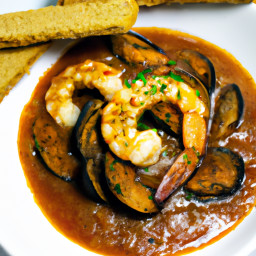
1/2 cup neutral oil (vegetable or canola)
1/2 cup all-purpose flour
1 large yellow onion, diced (about 2 cups)
1 green bell pepper, diced (about 1 cup)
3 ribs celery, diced (about 1 cup)
4 cloves garlic, minced
2 cups sliced okra (fresh or frozen)
6 cups seafood stock (or a mix of stock and water)
1 lb large shrimp, peeled and deveined (shells reserved)
8–12 oz lump crabmeat, picked free of shells
1 pint shucked oysters with liquor, liquor reserved
8 oz firm white fish (such as snapper or grouper), cut into 1-inch pieces (optional)
2 bay leaves
1 teaspoon dried thyme
2 teaspoons paprika
1/2 teaspoon cayenne pepper, plus more to taste
1 teaspoon freshly ground black pepper
1 1/2 teaspoons kosher salt, plus more to taste
2 teaspoons Worcestershire sauce
1 tablespoon hot sauce, plus more to serve
2 tablespoons chopped fresh parsley, plus more for garnish
4 green onions, thinly sliced
2 teaspoons filé powder, plus more to serve
1 tablespoon lemon juice
1 tablespoon neutral oil (for sautéing okra)
Cooked long-grain white rice, for serving
Prep the seafood: Peel and devein the shrimp, reserving the shells. Pat shrimp dry and keep chilled. Pick through the crabmeat for shell fragments. If using fish, cut into 1-inch pieces. Drain oysters and reserve their liquor.
Warm the stock: In a saucepan, combine the seafood stock with the reserved shrimp shells and gently simmer 15 minutes to boost flavor. Strain and keep the stock warm over low heat.
Make the roux: In a heavy pot or Dutch oven over medium to medium-low heat, whisk together 1/2 cup oil and 1/2 cup flour. Cook, stirring constantly and scraping the bottom, until the roux reaches a deep chocolate/mahogany color, 30–45 minutes. Adjust heat as needed to prevent scorching.
Build the base: Stir in the onion, bell pepper, and celery. Cook, stirring, until softened and fragrant, 5–7 minutes. Add the garlic and cook 1 minute more.
Add liquid gradually: While whisking, slowly ladle in the warm stock (and the reserved oyster liquor, if using), stirring to smooth out the roux. Bring to a gentle simmer.
Season and simmer: Add bay leaves, thyme, paprika, cayenne, black pepper, Worcestershire, and 1 1/2 teaspoons kosher salt. Simmer uncovered on low, stirring occasionally, 30–45 minutes to develop flavor.
Cook the okra: In a separate skillet, heat 1 tablespoon oil over medium-high. Add okra and sauté until lightly browned and most of the viscosity is reduced, 8–10 minutes. Stir the okra into the simmering pot.
Add seafood in stages: If using fish, add it first and simmer 5–6 minutes. Add shrimp and cook until pink and just opaque, 3–4 minutes. Gently fold in crab and oysters and cook 2–3 minutes more, just until oysters curl and crab is heated through. Avoid vigorous boiling.
Finish the gumbo: Remove from heat. Stir in filé powder, parsley, lemon juice, and half the green onions. Taste and adjust seasoning with more salt, cayenne, and hot sauce as desired. Remove bay leaves.
Serve: Spoon gumbo over warm cooked white rice. Garnish with remaining green onions and additional parsley. Offer extra filé powder and hot sauce at the table.

3 heads Belgian endive, leaves separated
1 small English cucumber, seeded and finely diced
1 Granny Smith apple, finely diced
6 radishes, thinly sliced or cut into matchsticks
2 tablespoons very finely minced red onion
2 tablespoons fresh dill, chopped, divided
1 tablespoon fresh chives, thinly sliced
1 lemon, zested and juiced
1 tablespoon extra-virgin olive oil
1/4 teaspoon caraway seeds, lightly crushed (optional)
Kosher salt and freshly ground black pepper
1/2 cup Greek yogurt (or sour cream)
1 to 2 teaspoons prepared horseradish, to taste
1 teaspoon Dijon mustard
1/2 teaspoon honey (optional, to balance)
2 tablespoons toasted walnuts, finely chopped (optional)
Separate and rinse the endive leaves; pat dry and refrigerate to keep crisp.
Make the dill-horseradish yogurt: In a small bowl, whisk Greek yogurt, horseradish, Dijon, lemon zest, 1 teaspoon lemon juice, honey (if using), a pinch of salt, and a few grinds of pepper. Adjust horseradish and lemon to taste; set aside.
Prepare the salad: In a medium bowl, combine cucumber, apple, radishes, red onion, chives, half the dill, and caraway (if using). Add 1 to 2 tablespoons lemon juice, olive oil, 1/4 teaspoon salt, and pepper to taste; toss well and let stand 5 minutes to lightly marinate.
Assemble: Spread a small smear of the dill-horseradish yogurt inside each endive leaf. Spoon the cucumber-apple radish salad into the leaves. Drizzle or dot with a little more yogurt.
Finish with remaining dill and toasted walnuts (if using). Serve immediately while crisp and chilled.

2 to 2.5 lb beef chuck, cut into 1-inch cubes
2 tablespoons neutral oil (vegetable or canola)
1 large yellow onion, diced
1 green bell pepper, diced
3 cloves garlic, minced
2 medium tomatoes, diced (or 1 can diced tomatoes, 14.5 oz, drained)
1–2 jalapeños, seeded and diced (optional)
2 cups low-sodium beef broth
1/2 cup water or beer
2 tablespoons tomato paste
2 teaspoons ground cumin
2 teaspoons chili powder
1 teaspoon dried oregano (preferably Mexican oregano)
1 teaspoon smoked paprika (optional)
1 bay leaf
1 1/2 teaspoons kosher salt, divided, plus more to taste
3/4 teaspoon freshly ground black pepper
2 medium russet potatoes, peeled and cut into 1-inch cubes (optional)
1 tablespoon Worcestershire sauce (optional)
2 tablespoons all-purpose flour
1/3 cup cold water (for slurry)
1 tablespoon apple cider vinegar or fresh lime juice, to finish
Chopped cilantro, for garnish (optional)
Pat the beef dry with paper towels. Season with 1 teaspoon of the salt and all of the black pepper.
Heat the oil in a heavy pot or Dutch oven over medium-high heat. Sear the beef in batches until well browned on at least two sides, 6–8 minutes per batch. Transfer browned beef to a plate.
Reduce heat to medium. Add the onion, bell pepper, and jalapeño (if using). Sauté until softened and lightly golden, 5–7 minutes. Add the garlic and cook 30–60 seconds until fragrant.
Stir in the tomato paste, cumin, chili powder, oregano, and smoked paprika (if using). Cook, stirring, 1 minute to bloom the spices.
Pour in the beef broth and water or beer, scraping up any browned bits from the bottom. Return the beef and any accumulated juices to the pot. Add the tomatoes, bay leaf, and Worcestershire (if using). Bring to a gentle boil.
Reduce to a low simmer, cover, and cook until the beef is beginning to get tender, about 1 1/2 hours, stirring occasionally.
Add the potatoes (if using) and the remaining 1/2 teaspoon salt. Continue simmering, covered, until the beef and potatoes are very tender, 30–40 minutes more.
Make a slurry by whisking the flour with the 1/3 cup cold water until smooth. Stir the slurry into the stew and simmer uncovered, stirring, until the gravy thickens and loses any raw flour taste, 5–10 minutes. If too thick, loosen with a splash of broth or water; if too thin, simmer a bit longer.
Remove the bay leaf. Stir in the vinegar or lime juice. Taste and adjust seasoning with additional salt and pepper as needed.
Serve hot with warm flour tortillas, rice, and beans. Garnish with chopped cilantro if desired.

1 1/2 pounds small squid, cleaned (bodies and tentacles)
1 cup buttermilk (or whole milk)
1 1/2 cups all-purpose flour
1/2 cup rice flour or fine cornmeal (for extra crispness)
1 teaspoon baking powder (optional)
1 teaspoon kosher salt, plus more for finishing
1/2 teaspoon freshly ground black pepper
1 teaspoon paprika (sweet or smoked)
1/2 teaspoon garlic powder
1/4 teaspoon cayenne pepper (optional)
Neutral high-heat oil for frying (peanut, canola, or vegetable; enough for 2–3 inches in the pot, about 1 1/2 to 2 quarts)
1 lemon, cut into wedges
2 tablespoons chopped fresh parsley (optional, for garnish)
Marinara sauce or garlic aioli, for serving
Prep the squid: If whole, pull the head from the mantle, remove the clear quill and innards, peel off the thin purple skin if desired, and trim out and discard the beak. Rinse well and pat very dry. Slice the bodies into 1/2-inch rings; leave tentacles whole. If using pre-cleaned squid, rinse and dry thoroughly.
Soak: Place the rings and tentacles in the buttermilk and refrigerate for 20–30 minutes (up to 2 hours). This tenderizes and helps the coating adhere.
Make the dredge: In a large bowl, whisk together the all-purpose flour, rice flour (or cornmeal), baking powder, 1 teaspoon kosher salt, black pepper, paprika, garlic powder, and cayenne (if using).
Heat the oil: Pour oil into a heavy pot or deep skillet to a depth of 2–3 inches. Heat to 350°F/175°C. Set a wire rack over a sheet pan and line with paper towels.
Dredge: Drain the squid from the buttermilk, letting excess drip off. Working in batches, toss the squid in the flour mixture until well coated. Shake off excess coating.
Fry: Fry in small batches without crowding until lightly golden and just cooked through, about 45–90 seconds per batch. Tentacles may cook slightly faster. Maintain the oil between 340–360°F, allowing it to return to temperature between batches.
Season: Use a spider or slotted spoon to transfer fried calamari to the prepared rack. Immediately sprinkle with a pinch of kosher salt (and a little extra paprika if desired).
Serve: Pile onto a warm platter. Garnish with chopped parsley and serve right away with lemon wedges and marinara or garlic aioli.

2 firm green tomatoes, sliced into 1/2-inch rounds
1 cup buttermilk
2 teaspoons hot sauce
1 cup fine yellow cornmeal
1/2 cup all-purpose flour
1 teaspoon kosher salt, plus more for finishing
1/2 teaspoon freshly ground black pepper
1/2 teaspoon smoked paprika
1/2 teaspoon garlic powder
Neutral oil for shallow frying (about 1 cup)
1/2 cup mayonnaise
1 tablespoon Creole or whole-grain mustard
1 tablespoon fresh lemon juice
1 teaspoon prepared horseradish (optional)
1 small garlic clove, finely grated
1 tablespoon capers, chopped
2 tablespoons fresh parsley, minced
1 teaspoon hot sauce
1/2 teaspoon paprika
1/4 teaspoon celery seed
Pinch of salt and pepper, to taste
2 tablespoons thinly sliced green onions (for garnish)
Lemon wedges, for serving
Make the rémoulade: In a bowl, whisk together mayonnaise, mustard, lemon juice, horseradish (if using), grated garlic, capers, parsley, hot sauce, paprika, celery seed, and a pinch of salt and pepper. Cover and refrigerate until serving.
Marinate the tomatoes: In a shallow dish, combine buttermilk and hot sauce. Add tomato slices and turn to coat; let sit 10 minutes while you prepare the dredge.
Prepare the dredge: In another shallow dish, mix cornmeal, flour, kosher salt, black pepper, smoked paprika, and garlic powder.
Dredge: Lift each tomato slice from the buttermilk, let excess drip off, then press into the cornmeal mixture to coat on both sides. Set on a wire rack for 5 minutes to help the crust adhere.
Fry: Pour oil into a large skillet to a depth of about 1/4 inch and heat to 350°F (175°C). Fry tomato slices in batches 2–3 minutes per side until deep golden and crisp. Transfer to a rack to drain and sprinkle lightly with salt.
Assemble the stacks: Place one fried tomato on a platter, add a small dollop of rémoulade, top with another tomato slice, then a small dot of sauce. Repeat to form 6–8 two-layer stacks.
Garnish and serve: Sprinkle with sliced green onions and serve immediately with lemon wedges and extra rémoulade for dipping.