

2 lb (900 g) bone-in chicken thighs and drumsticks (skin on or off as preferred)
2 tbsp neutral oil (vegetable or peanut)
6 garlic cloves, smashed
1 medium onion, thinly sliced (optional)
3 tbsp light soy sauce
3 tbsp fish sauce (or 2 tbsp fish sauce + 1 tbsp soy sauce to taste)
1/3 cup white vinegar or palm/rice vinegar
1 cup water or low-sodium chicken stock
2 tbsp palm sugar or light brown sugar (adjust to taste)
2 stalks lemongrass, bruised and tied in a knot (optional but Cambodian-style)
3 kaffir lime leaves, torn (optional)
1-inch piece galangal or ginger, sliced (optional)
1 tsp whole black peppercorns
2 bay leaves
1–2 bird’s eye chilies or 1 dried chili (optional for heat)
1/2 cup coconut milk (optional — for a richer Cambodian touch)
Chopped cilantro or sliced scallions for garnish
Steamed jasmine rice, for serving
Prep: Pat the chicken pieces dry. If using lemongrass, smash and knot the stalks; tear kaffir lime leaves; slice galangal/ginger and onion if using.
Marinate (quick): In a bowl combine chicken, soy sauce, fish sauce and half the smashed garlic. Mix and let sit 15–30 minutes (or up to 2 hours in the fridge) to absorb flavor.
Brown the chicken: Heat oil in a large heavy skillet or Dutch oven over medium-high heat. Remove chicken from marinade (reserve marinade). Brown chicken skin-side down until golden, 4–6 minutes per side. Work in batches if needed. Transfer browned chicken to a plate.
Sauté aromatics: Reduce heat to medium. Add remaining garlic (and sliced onion if using) to the pan and sauté until fragrant and translucent, about 1–2 minutes. Add sliced galangal/ginger and briefly fry to release aroma.
Deglaze and combine: Pour reserved marinade, vinegar, and water or stock into the pan. Stir to deglaze, scraping up browned bits. Stir in palm sugar, whole peppercorns, bay leaves, lemongrass and kaffir lime leaves. Return the browned chicken to the pan, skin side up. Add chilies if using.
Simmer gently: Bring to a gentle boil, then reduce heat to low, cover partially, and simmer for 20–30 minutes, or until the chicken is cooked through and tender. Turn chicken occasionally to coat in sauce.
Optional coconut finish: If using coconut milk, stir it in during the last 5–8 minutes of cooking and simmer uncovered until the sauce slightly thickens. Taste and adjust balance of salty, sour and sweet — add a splash more vinegar for brightness, soy/fish sauce for salt, or sugar for sweetness.
Reduce sauce (optional): For a thicker glaze, remove the chicken and increase heat to medium-high to reduce the sauce until syrupy, then return chicken to coat.
Finish and serve: Discard lemongrass stalks, bay leaves and large pieces of galangal. Garnish with chopped cilantro or scallions. Serve hot with steamed jasmine rice.
Notes: Adjust vinegar and sugar to preference — Cambodian versions often balance fish sauce and palm sugar with aromatics like lemongrass and kaffir lime. You can use boneless chicken, but reduce simmer time to avoid drying.

For the coconut rice:
2 cups jasmine rice, rinsed until water runs clear
1 1/2 cups canned coconut milk
1 cup water (adjust slightly as needed)
1 teaspoon salt
2 pandan leaves, tied in a knot (optional) or 1-2 slices of ginger

For the sambal:
12–15 dried red chilies, seeds removed and soaked in hot water 15–20 minutes (or 6–8 fresh red chiles for less heat)
6 shallots, peeled
3 cloves garlic, peeled
1 tablespoon belacan (shrimp paste) or 1 tablespoon Filipino bagoong alamang (adjust to taste)
1–2 tablespoons tamarind paste (or 1 tablespoon lime juice)
2 tablespoons palm sugar or dark brown sugar (adjust to taste)
2 tablespoons neutral oil (vegetable or sunflower) plus more as needed
1/2 cup water (or stock) to loosen the sauce
Salt to taste

For the accompaniments:
150 g (about 1 1/2 cups) dried anchovies (ikan bilis or Filipino dilis), rinsed and drained
1/2 cup raw peanuts
4 large eggs
1 medium cucumber, thinly sliced
Optional: fried chicken, grilled tuna, or salted fish (for serving)

Garnish (optional):
Lime or calamansi wedges, extra sliced chilies or fried shallots
Prepare the rice: Rinse the jasmine rice well under cold water until the water runs clear. Drain.
Combine the rinsed rice, coconut milk, water, and salt in a rice cooker or a medium pot. Add the pandan leaves if using.
Cook the rice: If using a rice cooker, cook on the normal setting until done. If using a pot, bring to a gentle boil over medium heat, then reduce to low, cover, and simmer 15–18 minutes until liquid is absorbed. Let rest covered 10 minutes, then remove pandan leaves and fluff with a fork.
Soak chilies for sambal: While the rice cooks, soak the dried chilies in hot water for 15–20 minutes until softened. Drain and reserve a little soaking liquid if needed.
Make the chili paste: In a blender or mortar and pestle, combine the softened chilies (or fresh chiles), shallots, and garlic. Add a splash of the soaking liquid or water and blitz/pound to a coarse paste.
Cook the sambal base: Heat 2 tablespoons oil in a medium skillet over medium heat. Add the belacan/shrimp paste and fry for 30–60 seconds, stirring, until fragrant to temper the paste.
Add the chili-shallot-garlic paste to the skillet and sauté over medium-low heat for 6–8 minutes, stirring frequently, until the raw smell dissipates and the oil separates slightly.
Add sugar and tamarind (or lime juice) and 1/2 cup water (or stock). Simmer gently for 8–12 minutes, stirring occasionally, until the mixture reduces to a thick, glossy sambal. Season with salt and adjust sugar or acidity to taste. If it gets too dry, add a splash of water.
Crisp the anchovies: Heat about 1/2 inch of oil in a small skillet over medium-high heat. When hot, add the drained dried anchovies in a single layer. Fry, stirring or tossing, for 2–4 minutes until crisp and golden. Transfer to a paper towel-lined plate and drain. (To reduce splatter, fry in batches if needed.)
Roast the peanuts: In a dry skillet over medium heat, toast the raw peanuts, stirring frequently until golden and fragrant, about 4–6 minutes. Alternatively, fry peanuts in a tablespoon of oil until golden. Drain on paper towels.
Cook the eggs: Place eggs in a saucepan and cover with cold water. Bring to a gentle boil, then simmer 7–8 minutes for slightly soft-centered hard-boiled eggs or 9–10 minutes for fully hard-cooked yolks. Transfer to an ice bath, peel, and halve.
Slice the cucumber: Thinly slice the cucumber and set aside chilled.
Optional protein: If serving with fried chicken or grilled fish, prepare and cook to desired doneness while other components finish.
Assemble the nasi lemak: On individual plates or a communal platter, mound a serving of coconut rice. Arrange a spoonful of sambal on the side, a handful of crispy anchovies, a portion of roasted peanuts, cucumber slices, and a halved egg. Add optional protein if using. Garnish with lime or calamansi wedges and fried shallots or extra sliced chilies if desired.
Serve immediately: Nasi lemak is best served warm with the sambal freshly made and the anchovies still crisp. Leftover sambal keeps well refrigerated for several days and intensifies in flavor.

1 whole chicken (about 1.4–1.8 kg / 3–4 lb), giblets removed
1 1/2 tablespoons kosher salt (for rubbing chicken)
2 tablespoons vegetable oil or chicken fat
2–3 liters water (enough to fully submerge chicken for poaching)
6–8 slices fresh ginger (2–3 cm pieces)
4–5 scallions (white and light green parts), halved
2 pandan leaves (optional) or 2 bay leaves
2 cups jasmine rice, rinsed until water runs clear and drained
3 tablespoons chicken fat or vegetable oil (for rice)
3 cups reserved chicken stock (from poaching) plus extra as needed
1 teaspoon salt (for cooking rice) plus to taste
1 cucumber, thinly sliced (for serving)
Fresh cilantro or coriander leaves (for garnish)
Ice and cold water (for an ice bath)

Ginger-Scallion Oil Sauce:
3 tablespoons fresh ginger, finely grated
4 scallions, finely sliced (white and green parts separated if desired)
1/2 teaspoon salt
4–5 tablespoons neutral oil (heated until very hot)

Chili-Garlic Sauce:
6–8 red chilies (adjust for heat) or 3 red bird’s eye chilies for heat + 3 red long chilies for body
3 cloves garlic
1 small piece ginger (about 1 tsp grated)
1
1 tablespoon lime juice or white vinegar
1 teaspoon sugar
1/2 teaspoon salt
1–2 tablespoons reserved chicken stock or water (to loosen)

Soy Dipping Sauce:
2 tablespoons light soy sauce
1 teaspoon dark soy sauce (for color, optional)
1 teaspoon toasted sesame oil (optional)
Prepare the chicken: Pat the chicken dry. Rub the skin and cavity all over with kosher salt and rinse briefly if desired; pat dry again. Stuff the cavity with ginger slices and halved scallions and, if using, a pandan leaf. Tie the legs together with kitchen twine if available for even cooking.
Poach the chicken: Place the chicken in a large pot and cover with cold water (about 2–3 liters) until fully submerged. Add the extra ginger slices, scallion halves and pandan/bay leaves to the water. Bring to a gentle simmer over medium heat. Once it reaches a gentle simmer (small bubbles rising, not a rolling boil), reduce heat to low so the surface barely moves. Poach gently for 30–40 minutes depending on size (a 1.5 kg chicken ~30–35 min). To check doneness, pierce the thickest part of thigh—juices should run clear or a thermometer should read about 74°C / 165°F in the thigh.
Ice bath and resting: While the chicken is poaching, prepare a large bowl with ice and cold water. When poaching is complete, immediately transfer the chicken to the ice bath for 8–12 minutes to stop cooking and tighten the skin. After the ice bath, lift chicken from water and let drain and rest at room temperature for 10–15 minutes. For glossy skin, rub a little sesame oil on the skin before carving.
Reserve and clarify the stock: Strain the poaching liquid through a fine sieve or cheesecloth into a bowl or pot and discard solids. Skim fat if desired. This is your chicken stock—set aside 3 cups for cooking rice and save extra for serving as soup.
Prepare the rice: Heat 3 tablespoons chicken fat or vegetable oil in a saucepan over medium heat. Add 2–3 tablespoons grated ginger and 2 smashed garlic cloves (optional) and sauté briefly until fragrant (about 30–45 seconds). Add the drained jasmine rice and stir to coat and toast lightly for 1–2 minutes.
Cook the rice: Add 3 cups reserved chicken stock and 1 teaspoon salt (adjust to taste). Add a pandan leaf if you like. Bring to a boil, then reduce heat to low, cover tightly and simmer for 12–15 minutes until liquid is absorbed. Remove from heat and let stand, covered, for 10 minutes. Fluff with a fork before serving.
Make the ginger-scallion oil sauce: Place the grated ginger, finely sliced scallions and 1/2 tsp salt in a heatproof bowl. Heat 4–5 tablespoons neutral oil until very hot (almost smoking). Carefully pour the hot oil over the ginger and scallions to release aroma and mellow raw bite. Stir and set aside.
Make the chili-garlic sauce: In a blender or mortar and pestle, combine chilies, garlic, grated ginger, lime juice (or vinegar), sugar and salt. Pulse until relatively smooth, adding 1–2 tablespoons reserved warm chicken stock to loosen to a saucy consistency. Adjust sugar, salt and lime to balance heat and acidity.
Make the soy dipping sauce: Mix light soy sauce, dark soy (if using) and sesame oil. Keep this simple savory sauce on the side.
Carve the chicken: Place the rested chicken on a cutting board. Remove twine, separate the legs, thighs, wings and then slice the breast meat against the grain into bite-sized pieces. Arrange skin-on pieces on a platter. For a traditional presentation keep pieces intact (halves, quarters) then slice.
Warm the reserved stock for soup: Reheat remaining strained stock, adjust seasoning with salt, and serve as a light clear soup alongside the rice and chicken. Add sliced scallions or cilantro if desired.
Serve: Plate fragrant chicken rice with a few slices of cucumber, fresh cilantro, and small dishes of ginger-scallion oil, chili-garlic sauce and soy dipping sauce. Spoon some hot chicken oil over the sliced chicken for extra gloss and flavor if desired.
Notes and tips: - Poach gently—vigorous boiling will make the skin and meat tough. - The rice is the hallmark: toasty aromatics and cooking with rich chicken stock give it depth. - If you don’t have pandan, a bay leaf or extra ginger will work. - Adjust chilies and salt to taste; prepare sauces ahead and refrigerate for up to 3 days.

1 tbsp neutral oil (vegetable, canola, or coconut oil)
3–4 tbsp green curry paste (store-bought or homemade; adjust to taste)
400 ml (1 can) full‑fat coconut milk, shaken
150–200 ml water or light coconut milk (optional—to thin the curry)
500 g boneless chicken thighs, thinly sliced (or 400 g firm tofu, cubed, for vegetarian)
6–8 small Thai eggplants, quartered (or 1 medium globe eggplant, cut into 2–3 cm pieces)
150 g bamboo shoots, drained and rinsed (about 1/2 cup)
6–8 kaffir lime leaves, torn (or 1 tsp lime zest if unavailable)
1–2 tbsp fish sauce (or 2 tbsp soy sauce for vegetarian/vegan)
1 tbsp palm sugar (or brown sugar)
8–12 fresh Thai basil leaves (or 1 cup loosely packed Thai/holy basil leaves)
2–3 long green chilies, sliced lengthwise (optional, for extra heat)
Juice of 1 lime (optional, to finish)
Fresh cilantro leaves and extra sliced chilies for garnish (optional)
Steamed jasmine rice, to serve
Prepare ingredients: slice chicken or tofu, quarter the eggplants, drain bamboo shoots, tear kaffir lime leaves, and rinse basil. Measure curry paste and seasonings.
Separate the coconut milk (optional): if using a can where cream separates, scoop out the thick cream for step 3 and reserve the thinner liquid for later. This gives a richer start.
Heat the oil in a wide skillet or saucepan over medium heat. Add 2–3 tablespoons of the green curry paste and fry, stirring constantly, for 1–2 minutes until fragrant. This blooms the spices and deepens the flavor.
Add about half of the coconut milk (or the reserved thick cream) and stir to combine with the paste. Bring to a gentle simmer and cook 2–3 minutes so the sauce becomes aromatic and slightly thickened.
Add the sliced chicken (or tofu) and stir to coat. Simmer 3–5 minutes until the chicken is mostly cooked through (or tofu is heated).
Pour in the remaining coconut milk and 150–200 ml water or light coconut milk if you want a looser sauce. Stir in the eggplant, bamboo shoots, and torn kaffir lime leaves. Bring back to a gentle simmer.
Cook uncovered for 6–8 minutes, stirring occasionally, until the eggplant is tender and the chicken is fully cooked (internal temperature 74°C / 165°F) or tofu is heated through. If the curry reduces too much, add a splash more water or coconut milk.
Season the curry with fish sauce (or soy sauce) and palm sugar. Taste and adjust: more fish sauce/soy for saltiness, more sugar for sweetness, or extra curry paste for heat.
Add the Thai basil leaves and sliced green chilies in the last 1–2 minutes of cooking so the basil wilts but stays bright.
Remove from heat and finish with lime juice if using. This brightens the flavors.
Serve immediately over steamed jasmine rice and garnish with cilantro and extra sliced chilies or basil leaves.
Notes: For a vegetarian/vegan version, use tofu, vegetable stock or water, and soy sauce in place of fish sauce. Traditional Thai ingredients (Thai eggplant, kaffir lime leaves, Thai basil) give the authentic flavor—substitute with available local equivalents if necessary.

500 g very thinly sliced beef ribeye or sirloin (for sukiyaki; partially frozen for easier slicing)
200 g firm tofu, cut into 2 cm cubes
1 medium onion, thinly sliced
200 g shiitake or other mushrooms, stems removed and caps halved
200 g Chinese cabbage (or napa cabbage), cut into 3–4 cm pieces
150 g negi (Japanese long green onion) or scallions, cut into 4–5 cm lengths
200 g shirataki noodles (konnyaku noodles), rinsed and briefly boiled, cut into bite-sized lengths
1–2 bunches enoki mushrooms, ends trimmed (optional)
100 g chrysanthemum greens (shungiku) or spinach (optional)
120 ml soy sauce
120 ml mirin
120 ml sake (or additional mirin + a splash of water if unavailable)
60–80 g granulated sugar (adjust to taste)
2 tbsp sesame oil or neutral oil (for the pot)
4 raw eggs, lightly beaten for dipping (optional and only if consuming raw eggs is safe)
Sesame seeds or chopped scallions for garnish (optional)
Prepare the warishita (sukiyaki sauce): In a small saucepan combine soy sauce, mirin, sake, and sugar. Warm over low heat and stir until the sugar dissolves. Taste and adjust sweetness or salt to preference. Remove from heat and set aside.
Prepare ingredients: Arrange the sliced beef, tofu, mushrooms, cabbage, negi/scallions, shirataki noodles, enoki (if using), and greens on separate plates for easy access. Beat the eggs in small individual bowls if you plan to dip cooked items in raw egg.
Heat the sukiyaki pot or a wide, shallow skillet (cast-iron skillet or electric hot plate works well): Add 1–2 tablespoons of sesame or neutral oil and heat over medium-high until shimmering.
Start with aromatics and a little beef: Add a few slices of beef and sear briefly to render some fat and flavor the pan (about 20–30 seconds per side). Push the beef to one side or remove briefly. Add a few onion slices and cook until slightly translucent.
Add some warishita: Pour about 120–180 ml (1/2–3/4 cup) of the prepared warishita into the pot so it begins to simmer. You can add more later as ingredients are cooked.
Layer vegetables and tofu: Arrange some tofu, cabbage, mushrooms, shirataki, and negi in the pot so they can soak up the simmering sauce. Allow them to simmer for 3–5 minutes until tender.
Cook more beef in batches: Add more thin beef slices to the simmering pot, laying them flat so they briefly poach in the sauce. Beef cooks very quickly—typically 30–60 seconds depending on thickness. Remove cooked beef to serving plates or leave in the pot for people to pick up.
Continue adding and simmering: Keep adding ingredients in batches—more vegetables, tofu, noodles, and beef—replenishing the warishita as needed so there is always a flavorful simmering broth. Taste the broth occasionally and adjust with a little soy, mirin, or sugar if necessary.
Serve family-style: Sukiyaki is traditionally served at the table with the pot kept simmering. Diners take cooked items from the pot and may dip them into beaten raw egg before eating (optional). Provide small bowls for each diner with a bit of raw egg, or serve without if you prefer.
Finish and enjoy: As the meal winds down, the remaining broth will be richly flavorful—add leftover rice or udon noodles to the pot to soak up the sauce and finish the meal if desired. Garnish with toasted sesame seeds or extra chopped scallions before serving.
Safety note: If using raw eggs for dipping, ensure eggs are very fresh and handled safely. Alternatively, skip the raw egg and serve plain or with a little citrus ponzu as a dip.

Servings: 4
Green curry paste (homemade) — makes about 1 cup:
  - 8–10 fresh green Thai chilies (bird's eye or serrano), seeded for less heat (about 30–40 g)
  - 3–4 large green chilies or jalapeños (for color and volume) (optional)
  - 4 shallots, roughly chopped
  - 4 cloves garlic
  - 1 thumb (about 30 g) galangal (or ginger if unavailable), peeled and sliced
  - 2 stalks lemongrass (white inner part only), thinly sliced
  - 1/4 cup fresh cilantro stems (reserve leaves for finishing)
  - 1 tsp ground coriander or 1 tsp coriander seeds, toasted
  - 1/2 tsp cumin or 1/2 tsp cumin seeds, toasted
  - 1 tsp shrimp paste (belacan/terasi) or 1–2 tsp fish sauce (use 0 for vegetarian)
  - Zest of 1 lime (or 1 kaffir lime leaf finely shredded)
  - 1/2 tsp white pepper (or black pepper)
  - 1 tsp salt
  - 1–2 tbsp neutral oil or 1–2 tbsp water (to help blend)

Curry:
  - 2 tbsp vegetable oil or coconut oil
  - 1 can (400 ml) coconut milk (use 400–600 ml total; for richer curry use 2 cans)
  - 300–500 g boneless chicken thighs, cut into bite-size pieces (or firm tofu for vegetarian)
  - 1 cup Thai eggplants or small globe eggplants, quartered (or sliced aubergine)
  - 1 red bell pepper, thinly sliced
  - 100 g long beans or green beans, cut into 4–5 cm pieces (optional)
  - 1 cup canned bamboo shoots, drained (optional)
  - 2–4 kaffir lime leaves, torn (or strips of lime zest)
  - 1–2 tbsp fish sauce (or soy sauce for vegetarian)
  - 1–2 tsp palm sugar or brown sugar (adjust to taste)
  - 1 handful Thai basil (or holy basil if available) plus reserved cilantro leaves
  - Juice of 1/2 lime (to finish, optional)
  - 100–200 ml water or chicken stock (as needed to adjust consistency)

Pantry/Indonesia-friendly substitutions and notes:
  - Shrimp paste: use Indonesian terasi (lightly toasted) or skip for vegetarian.
  - If kaffir lime leaves unavailable, use lime zest and extra lime juice at the end.
  - For deeper color, add extra fresh green chilies or a small handful of spinach blended into the paste.
1) Make the green curry paste (skip and use 3–4 tbsp store-bought green curry paste if short on time):
   - Toast coriander and cumin seeds in a dry pan over medium heat until aromatic (30–60 seconds). Grind or crush lightly.
   - In a mortar and pestle or a blender/food processor, combine green chilies, shallots, garlic, galangal (or ginger), lemongrass, cilantro stems, toasted spices, shrimp paste (or fish sauce), lime zest, white pepper and salt.
   - Pound or blitz until a smooth, bright green paste forms. Add 1–2 tbsp oil or a bit of water to help the mixture come together. Taste and adjust salt/heat.

2) Prepare ingredients:
   - Cut the chicken (or tofu) and vegetables. Tear kaffir lime leaves, pick basil leaves and cilantro leaves, and measure coconut milk and seasonings.

3) Cook the curry base:
   - Heat 2 tbsp oil in a wide, shallow saucepan or wok over medium heat.
   - Add about 2–3 tbsp of the green curry paste (use more for a stronger curry) and fry gently for 1–2 minutes until fragrant. Be careful not to burn it.
   - Pour in about 200 ml of coconut milk and stir to dissolve and 'bloom' the paste. Continue to simmer until the oil slightly separates and the mixture smells aromatic (2–3 minutes).

4) Add protein and vegetables:
   - Add the chicken pieces (or tofu) and stir to coat with the paste-coconut mixture. Cook for 2–3 minutes.
   - Add remaining coconut milk and 100 ml water or stock if needed to loosen. Bring to a gentle simmer.
   - Add eggplant, bamboo shoots, and long beans. Simmer uncovered for 6–10 minutes until the chicken is cooked through and vegetables are tender. If using tofu, simmer gently to absorb flavors (4–6 minutes).

5) Season and finish:
   - Stir in fish sauce (or soy sauce) and palm sugar. Start with 1 tbsp fish sauce and 1 tsp palm sugar, then adjust—Thai green curry should be a balance of salty, sweet, and aromatic heat.
   - Add torn kaffir lime leaves and sliced red bell pepper in the last 1–2 minutes of cooking to keep color and crunch.
   - Taste and adjust seasoning: add more fish sauce for saltiness, more sugar for sweetness, more lime juice for brightness, or extra curry paste for heat.
   - Stir in Thai basil and a handful of cilantro leaves just before turning off the heat. Cover for a minute to let herbs wilt.

6) Serve:
   - Serve hot with steamed jasmine rice or coconut rice. Garnish with additional basil leaves, cilantro, and a wedge of lime.

Tips and variations:
  - Vegetarian: omit shrimp paste and fish sauce; increase soy sauce and add a splash of mushroom sauce for umami. Use tofu and extra vegetables.
  - Make-ahead: curry paste keeps refrigerated for up to 1 week or frozen for 2–3 months. Cooked curry stores 2–3 days refrigerated; reheat gently (coconut milk may separate—stir well).
  - Spiciness: remove seeds from chilies to reduce heat; add more chilies for extra heat.

Enjoy your Indonesia – Gaeng Keow Wan (Thai Green Curry) — fragrant, creamy, and adaptable to pantry ingredients commonly found in Indonesia.

400 g (14 oz) minced beef (preferably lean chuck or sirloin)
1 tbsp neutral oil (vegetable or canola)
2 tbsp uncooked glutinous (sticky) rice or jasmine rice (for toasted rice powder)
1 small shallot, thinly sliced
2–3 small fresh bird's-eye chiles or 1–2 serranos, finely chopped (adjust to taste)
2–3 stalks green onion, thinly sliced on the bias
1/2 cup fresh cilantro leaves and tender stems, roughly chopped
1/2 cup fresh mint leaves, roughly chopped (or 4–6 shiso leaves for a Japanese twist)
2 tbsp fish sauce
2 tbsp fresh lime juice (about 1–2 limes)
1–2 tsp palm sugar or light brown sugar (to taste)
1–2 tsp toasted rice powder (see instructions to make)
Optional Japanese twist: 1 tsp light soy sauce and 1/2–1 tsp toasted sesame oil (for a subtle umami note)
Vegetables for serving: lettuce leaves, cucumber slices, and steamed sticky rice or plain steamed rice
Salt and freshly ground black pepper to taste
Make toasted rice powder (khao khua): Heat a dry skillet over medium heat. Add 2 tbsp uncooked glutinous rice (or jasmine rice) and dry-toast, stirring constantly, until the grains are golden brown and fragrant, 4–6 minutes. Transfer to a mortar and pestle or spice grinder and pulse to a coarse powder. Set aside.
Prep aromatics and herbs: Thinly slice the shallot and chill briefly in cold water for 5 minutes if you prefer milder flavor, then drain. Finely chop the chiles and green onions. Roughly chop cilantro and mint (or shiso if using).
Sear the beef: Heat 1 tbsp neutral oil in a heavy skillet over high heat until shimmering. Add the minced beef and spread it into an even layer. Let it sear without disturbing for 30–45 seconds, then break up with a spatula and continue to cook until just browned but still juicy, about 2–3 minutes total. Avoid overcooking; laab is best with tender, slightly moist meat. Drain any excess fat if necessary. (If you prefer traditional raw laab, do not sear; use only beef from a trusted source and follow safe raw‑meat handling practices—this recipe uses searing for safety.)
Make the dressing: In a large mixing bowl whisk together 2 tbsp fish sauce, 2 tbsp fresh lime juice, 1–2 tsp palm sugar, and the optional 1 tsp light soy sauce and 1/2–1 tsp toasted sesame oil if using the Japanese twist. Taste and adjust balance—laab should be salty, sour, slightly sweet and spicy.
Combine warm beef with dressing: Transfer the hot cooked beef directly into the dressing and toss to combine. The heat from the beef will slightly wilt the shallots and herbs and help absorb flavors.
Add aromatics, herbs and rice powder: Immediately stir in the sliced shallot, chopped chiles, green onion, cilantro and mint (or shiso). Sprinkle 1–2 tsp toasted rice powder over the mixture and toss gently to combine. Season with freshly ground black pepper and more lime or fish sauce if needed. Taste and adjust seasoning—add more chili for heat, more lime for acidity or more toasted rice powder for nuttiness and texture.
Rest briefly and serve: Let the laab rest 5 minutes so flavors marry. Serve warm or at room temperature with lettuce leaves for wrapping, cucumber slices and steamed sticky rice (or plain rice). Garnish with extra herbs and a wedge of lime.
Notes and variations: For a closer Lao/Isan version, omit soy and sesame, use only fish sauce and fresh herbs, and use glutinous rice for the toasted powder. For a Japanese-inspired variation (suggested by the title), replace some mint with shiso leaves and add the small amount of soy sauce and toasted sesame oil listed above. Leftovers: keep refrigerated up to 24 hours; best eaten the same day. Do not freeze due to herb texture changes.

500 g minced chicken (or minced pork/beef/tofu for vegetarian)
1 tbsp vegetable oil
1 tsp toasted belacan (shrimp paste) or 1/2 tsp fish sauce as alternative (optional, for Malaysian umami)
2 tbsp fish sauce (or 2 tbsp light soy sauce for a less fishy option)
3–4 tbsp freshly squeezed lime juice (about 2–3 limes), to taste
1–2 tbsp palm sugar or brown sugar, to taste
3 shallots, thinly sliced
3 cloves garlic, minced
2–3 red bird’s eye chilies, finely chopped (adjust to heat preference) or 1–2 tsp dried chili flakes
3 tbsp toasted rice powder (khao khua) — see instructions to make
1/2 cup fresh mint leaves, roughly chopped
1/2 cup fresh cilantro (coriander) leaves, roughly chopped
3 green onions, thinly sliced (both white and green parts)
1 small cucumber, thinly sliced or cut into rounds, for serving
Lettuce leaves (Boston, romaine or cabbage leaves) for wrapping, for serving
Optional: 1–2 tbsp toasted grated coconut (lightly toasted) for Malaysian twist
Optional garnish: extra lime wedges, toasted sesame seeds, extra chilies
Make toasted rice powder (khao khua): Heat a small dry skillet over medium heat. Add 3–4 tbsp sticky rice or jasmine rice and toast, stirring constantly, until the rice is golden brown and aromatic (3–6 minutes). Remove from heat, let cool, then grind to a coarse powder in a spice grinder or mortar and pestle. Set aside.
Prep aromatics and herbs: Thinly slice shallots, mince garlic, chop chilies, and roughly chop mint, cilantro and green onions. Have cucumber and lettuce ready for serving.
Optional step for belacan: If using belacan (shrimp paste), quickly dry-toast a small piece in a hot pan for 30–60 seconds until fragrant, then mash or dissolve it in the lime/fish sauce dressing (or skip for milder flavor).
Cook the minced meat: Heat 1 tbsp vegetable oil in a large skillet over medium-high heat. Add minced garlic and cook 30 seconds until fragrant. Add the minced meat and break it up with a spatula. Cook until the meat is just done and no longer pink, about 6–8 minutes. Drain any excess liquid/fat if there’s a lot.
Build the dressing: In a small bowl, mix fish sauce (or soy), lime juice, and palm sugar until the sugar dissolves. Taste and adjust to a balance of salty-sour-sweet. If using toasted belacan, stir it into the dressing now.
Combine meat with dressing and aromatics: Transfer the hot cooked meat into a mixing bowl. Pour the dressing over the meat while it’s still hot so it absorbs flavors. Add sliced shallots, chopped chilies, and most of the green onions. Toss to combine thoroughly.
Add toasted rice powder and herbs: Sprinkle in the toasted rice powder (start with 2 tbsp and add more to taste for texture), then fold in chopped mint and cilantro. If using toasted coconut, fold it in now for a Malaysian twist. Adjust seasoning — add more lime, fish sauce or sugar as needed.
Finish and rest briefly: Let the laab sit 5 minutes to allow flavors to marry. The texture should be a little crumbly and fragrant. If it seems dry, add a splash more lime or fish sauce; if too wet, add a little more toasted rice powder.
Serve: Transfer laab to a serving platter and garnish with extra herbs, sliced cucumber, and lime wedges. Serve immediately with lettuce leaves or cabbage for wrapping, and steamed rice or rice crackers on the side.
Notes and variations: For vegetarian laab, substitute minced tofu or finely chopped mushrooms, and use soy sauce in place of fish sauce. To make it spicier, add extra fresh chilies or a spoonful of sambal. Toasted coconut adds a Malaysian flavor; belacan adds traditional Malaysian umami—use sparingly if unfamiliar.

500 g (1.1 lb) beef, minced or very thinly sliced (flank, sirloin or chuck)
1–2 tbsp neutral oil (vegetable or peanut)
3 shallots, thinly sliced
2 garlic cloves, minced
2–4 Thai bird’s-eye chilies, finely chopped (adjust to heat preference) or 1 tsp dried chili flakes
3 tbsp fish sauce (or 2 tbsp fish sauce + 1 tbsp light soy for a Taiwanese-adapted flavor)
3 tbsp fresh lime juice (about 2 limes)
1 tsp palm sugar or granulated sugar
3 tbsp toasted rice powder (khao khua) — see note for how to make
1/4 cup fresh mint leaves, roughly torn
1/4 cup cilantro leaves and tender stems, chopped
3 scallions (spring onions), thinly sliced on the diagonal
1 small cucumber, thinly sliced (for serving)
Lettuce leaves or cabbage leaves (for wrapping), optional steamed sticky rice or jasmine rice (for serving)
1 tsp toasted sesame oil (optional, Taiwanese-style touch)
Optional garnish: extra mint, cilantro, toasted ground chili, lime wedges
Make the toasted rice powder (if you don't have ready-made): Heat a dry skillet over medium heat. Add 3 tbsp glutinous (sticky) rice and toast, stirring constantly, until the rice turns golden brown and fragrant (3–5 minutes). Remove, let cool, then grind to a coarse powder in a spice grinder or mortar and pestle. Set aside.
Prepare the aromatics and herbs: Thinly slice the shallots, mince the garlic and chilies, chop the cilantro and scallions, and tear the mint. Juice the limes.
Heat a wok or large skillet over high heat until hot. Add 1–2 tbsp neutral oil and swirl to coat.
Add the minced or thinly sliced beef in a single layer. Let it sear for about 1 minute, then toss and break up with a spatula. Cook just until the meat is browned but still juicy — 2–4 minutes total depending on cut and size. Avoid overcooking; larb should be moist.
Push the meat to the side or remove pan from direct heat briefly and add shallots and garlic to the hot pan for 20–30 seconds to soften (you can mix them quickly into the meat). If using very thinly sliced beef, you can briefly sauté shallots and garlic first, then add beef.
Turn off the heat (to preserve fresh herb flavors) or reduce to the lowest heat. Immediately add fish sauce (and soy if using), lime juice, and sugar. Toss quickly to combine. Taste and adjust: it should be salty, sour and slightly sweet; add more fish sauce for saltiness or more lime for brightness.
Add the chopped chilies (or chili flakes) to heat the mixture to your liking. Stir in 3 tbsp toasted rice powder. The rice powder will thicken the juices and give the characteristic nutty crunch.
Fold in the mint, cilantro and scallions; finish with 1 tsp toasted sesame oil if using. Mix gently until herbs are just wilted but still bright.
Taste and adjust seasoning again (fish sauce, lime, sugar, chilies). If you want a Taiwanese-accented tang, add 1–2 tsp of black vinegar or extra light soy to balance.
Transfer to a serving platter and garnish with extra herbs, toasted chili or lime wedges. Serve immediately with lettuce or cabbage leaves for wraps, thinly sliced cucumber, and steamed sticky or jasmine rice.
Serving notes: Larb is best eaten fresh at room temperature. Leftovers can be refrigerated for up to 2 days but will lose some of the herb freshness; re-tighten flavors with fresh lime juice and more herbs before serving.

1.2 kg (2½ lb) pork shoulder, cut into 2–3 cm / 1-inch pieces
1/3 cup (80 ml) coconut vinegar or white vinegar
1/3 cup (80 ml) dark soy sauce
2 tbsp light soy sauce or fish sauce (optional)
6–8 garlic cloves, crushed
2 shallots, thinly sliced
1 tbsp fresh ginger, grated
2 tbsp brown sugar or jaggery, packed
1 cup (240 ml) water or low-sodium stock
1 cup (240 ml) full-fat coconut milk
2–3 dried red chilies, torn (or 1 tsp red chili flakes)
1 cinnamon stick
4 green cardamom pods, lightly crushed
4 whole cloves
1 tsp whole black peppercorns, lightly crushed
8–12 curry leaves (fresh if possible)
1 pandan leaf, tied in a knot (optional)
1 tsp Sri Lankan roasted curry powder (or mild curry powder)
1 tbsp tamarind paste or 1 small piece of goraka (optional)
2 tbsp vegetable oil
Salt to taste
Fresh cilantro or sliced green onion for garnish
Lime wedges, for serving
Cooked steamed rice or string hoppers, to serve
Marinate: In a large bowl combine the vinegar, dark soy sauce, light soy/fish sauce (if using), crushed garlic, grated ginger and brown sugar. Add the pork pieces, mix so each piece is coated, cover and refrigerate for at least 30 minutes and up to overnight for best flavor.
Prepare spices: If using whole spices that aren’t pre-crushed, lightly crush the peppercorns, cardamom pods and cloves with the flat side of a knife or a spice muddler so they release aroma.
Brown the pork: Heat 1 tablespoon of oil in a heavy-bottomed pot or Dutch oven over medium-high heat. Remove pork from the marinade (reserve the marinade) and pat pieces dry with paper towel. In batches, brown the pork on all sides to develop color, 3–4 minutes per batch. Transfer browned pork to a plate.
Sauté aromatics: Reduce heat to medium and add the remaining 1 tablespoon oil to the same pot. Add sliced shallots, torn dried chilies, curry leaves and pandan (if using). Sauté until the shallots soften and become translucent, about 3–4 minutes. Add the reserved marinade and stir, scraping up any browned bits from the bottom of the pot.
Add liquids and spices: Return the browned pork to the pot. Add the water (or stock), cinnamon stick, crushed cardamom, cloves and peppercorns. Stir in tamarind paste/goraka if using. Bring to a gentle simmer, then reduce heat to low, cover and cook until the pork is tender, about 45–60 minutes (time will vary with cut and size). Check once or twice and skim any excess foam or fat from the surface.
Finish with coconut milk: When the pork is tender, remove the lid and stir in the coconut milk and roasted curry powder. Increase heat to medium-low and simmer uncovered until the sauce reduces and thickens into a glossy glaze that coats the pork, 10–20 minutes. Stir occasionally to prevent sticking. Taste and adjust seasoning with salt and a little extra sugar or vinegar if you prefer it sweeter or tangier.
Optional oven method: After browning and adding liquids, you may transfer the covered pot to a 160°C / 325°F oven and braise for 1–1½ hours until tender. Then finish on the stovetop with coconut milk to reduce the sauce.
Serve: Spoon the pork and its glossy sauce over steamed rice or string hoppers. Garnish with chopped cilantro or green onion and serve with lime wedges on the side.
Tips: For a deeper Sri Lankan flavor, use fresh curry leaves and Sri Lankan roasted curry powder. Goraka gives a distinct fruity tartness similar to tamarind; if unavailable, tamarind paste is a good substitute. Leftovers taste even better the next day.

2 lb (900 g) beef shank or beef brisket, cut into 1½–2 inch (4–5 cm) chunks
1 lb (450 g) beef soup bones or marrow bones (optional, for richer broth)
2 tbsp vegetable oil
1 large onion, quartered
1 large tomato, cut into wedges (optional but traditional in Taiwanese beef noodle)
2-inch (5 cm) piece ginger, smashed and sliced
6 cloves garlic, smashed
4 scallions (green onions), white and green parts separated, whites tied into a knot
3 tbsp light soy sauce
2 tbsp dark soy sauce (for color)
2–3 tbsp Shaoxing wine (or dry sherry)
1 tbsp oyster sauce (or 1 tsp fish sauce/patis for a Filipino touch)
1–2 tbsp rock sugar or brown sugar (adjust to taste)
3 whole star anise
1 cinnamon stick
4 whole cloves
1 tsp sichuan peppercorns (optional)
8 cups (2 L) water (or a mix of water and low-sodium beef broth)
2 medium tomatoes, chopped (adds bright acidity and body; optional if already using 1 tomato above)
1–2 heads bok choy or pechay (Filipino bok choy), trimmed and separated
Fresh egg noodles or fresh Chinese wheat noodles, enough for 4 servings (or dried ramen/egg noodles)
Pickled mustard greens (suan cai) or preserved vegetables, chopped (optional garnish)
Fresh cilantro and sliced scallion greens, for garnish
Chili oil or homemade chili crisp, for serving
Calamansi or lime wedges, for serving (Philippine twist)
Salt and freshly ground black pepper, to taste
1) Prepare and blanch the beef and bones: Put the beef chunks and beef soup bones in a large pot. Cover with cold water and bring to a rolling boil over high heat. Boil 5–8 minutes until scum rises. Drain and rinse the meat and bones under running water; clean the pot. This removes impurities for a clearer broth.
2) Brown aromatics and tomatoes: In the cleaned pot or a heavy Dutch oven, heat 2 tbsp vegetable oil over medium-high heat. Add the quartered onion and smashed garlic and stir until fragrant and lightly browned, about 2–3 minutes. Add the sliced ginger and tied scallion whites; continue to sauté 1–2 minutes. Add the tomato wedges and cook until softened and starting to break down, 3–4 minutes. Browning builds flavor for the braising liquid.
3) Add beef, seasonings and liquid: Return the blanched beef and bones to the pot. Add the light soy sauce, dark soy sauce, Shaoxing wine, oyster sauce (or patis if using), rock or brown sugar, star anise, cinnamon stick, cloves and sichuan peppercorns. Pour in 8 cups (2 L) water or a mix of water and low-sodium beef broth until the meat is mostly submerged. Bring to a simmer over medium-high heat.
4) Simmer and braise: Reduce heat to low so the liquid maintains a gentle simmer (not a hard boil). Cover partially and simmer for 1.5–2 hours, until the beef is fork-tender. Skim any surface fat or foam occasionally. If you prefer a very rich broth, simmer up to 3 hours. If using large bone pieces for marrow, you can break them near the end to add more depth.
5) Add chopped tomatoes mid-simmer (optional): If you included the additional chopped tomatoes for bright acidity, add them after the first hour of simmering so they break down and enrich the broth without becoming mushy.
6) Remove solids and strain the broth: When the beef is tender, remove the beef chunks and bones with a slotted spoon. Discard the bones, cinnamon stick, star anise pods and tied scallion whites. Strain the braising liquid through a fine mesh sieve into a clean pot to remove sediment and onion/ginger pieces. Taste and adjust seasoning with salt, pepper, a little more soy, sugar or a splash of fish sauce/patis for umami as needed.
7) Prepare noodles and greens: While finishing the broth, cook the noodles in a separate pot of boiling water according to package instructions until just al dente. Drain and rinse lightly with hot water to remove excess starch if desired. Blanch the bok choy or pechay briefly in boiling water (30–60 seconds) until bright green and tender-crisp, then drain.
8) Reheat beef into broth (optional): Slice larger beef chunks into serving-size portions. Return the beef to the strained broth and gently reheat together for a few minutes so the flavors fuse; keep warm over low heat.
9) Assemble bowls: Divide cooked noodles among bowls. Place beef pieces and a few blanched greens on top of the noodles. Ladle hot broth over the noodles and beef until the bowl is nearly full.
10) Garnish and serve: Top with sliced scallion greens, fresh cilantro, chopped pickled mustard greens if using, and a spoonful of chili oil or chili crisp. Serve with calamansi or lime wedges on the side for squeezing over each bowl. Offer extra soy, chili oil, or fish sauce at the table.
11) Storage and reheating: Refrigerate leftover broth and beef separately from noodles. Broth will keep 3–4 days chilled (fat may solidify on top and can be skimmed when reheating). Reheat gently on the stove and add fresh noodles and greens when serving for best texture.
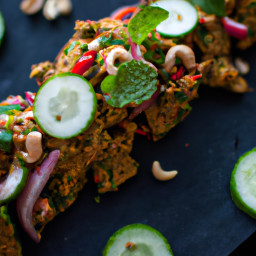
500 g (1.1 lb) ground chicken (or turkey/minced chicken breast)
1½ tsp salt, divided
1 tbsp coconut oil (or neutral oil)
3 shallots, thinly sliced (about 3/4 cup)
2 cloves garlic, finely minced
1 tbsp fresh ginger, minced
3–4 fresh green chilies, thinly sliced (adjust to heat preference)
2–3 tbsp fish sauce (or soy sauce for vegetarian/vegan)
3 tbsp lime juice (about 2 limes), plus extra to taste
1 tsp palm sugar or brown sugar (optional)
2 tbsp toasted rice powder (see note), plus extra to sprinkle
1 tsp ground roasted coriander (or toasted coriander seeds, ground)
4–6 curry leaves, torn (optional but Sri Lankan aromatic touch)
1/2 cup freshly grated coconut, lightly toasted (optional, Sri Lankan twist)
1/2 cup fresh mint leaves, roughly chopped
1/2 cup fresh cilantro (coriander) leaves, roughly chopped
2–3 green onions (scallions), thinly sliced
1 medium tomato, seeded and diced (optional)
Lettuce leaves (butter, romaine or red leaf) or cabbage leaves to serve
Lime wedges and extra herbs for serving
Prepare toasted rice powder: heat a small dry skillet over medium heat. Add 2 tablespoons of uncooked jasmine or glutinous rice and toast, shaking the pan, until the rice is golden and fragrant (2–4 minutes). Remove from heat, cool, then grind to a coarse powder in a spice grinder or mortar and pestle. Set aside.
Toast and grind spices (optional): if using whole coriander seeds, toast 1 teaspoon in the dry skillet briefly until aromatic and crush or grind to a coarse powder. This adds a warm Sri Lankan note.
Heat a large skillet or wok over medium-high heat and add the coconut oil. When hot, add the sliced shallots and a pinch of salt. Fry, stirring frequently, until the shallots are soft and starting to brown at the edges (5–7 minutes). Remove half the shallots to a bowl — these crisped shallots will be used as garnish and to add texture.
To the pan with remaining shallots, add the minced garlic, ginger, and torn curry leaves (if using). Stir for 30–60 seconds until fragrant.
Add the ground chicken to the pan and break it up with a spatula. Season with 1 teaspoon salt and cook, stirring occasionally, until the meat is fully cooked through and beginning to brown in places (6–8 minutes). Drain any excess liquid if necessary.
While the meat finishes, combine in a mixing bowl the fish sauce, lime juice, palm sugar (if using), and sliced green chilies. Taste and adjust to a balance of salty-sour-sweet: larb should be bright and tangy.
Once the chicken is cooked, transfer it (hot) to the mixing bowl with the dressing. Immediately add the toasted rice powder, ground roasted coriander (if using), and the toasted grated coconut (if using). Toss thoroughly so the rice powder and dressing coat the meat. The toasted rice powder should give a slightly nutty, grainy texture.
Add the chopped mint, cilantro, sliced green onions, and the diced tomato (if using). Mix gently but thoroughly. Adjust seasoning with more fish sauce or lime juice and a little more sugar if needed. The finished mixture should be savory, tangy and slightly crunchy from the toasted rice and onions.
Stir in half of the reserved crispy shallots, reserving the rest for garnish. Taste one more time and adjust seasoning.
Serve the Laap Gai warm or at room temperature on a platter surrounded by lettuce or cabbage leaves for wrapping. Sprinkle the remaining crispy shallots and extra herbs on top. Provide lime wedges on the side.
Notes and variations: For a vegetarian version, substitute minced firm tofu or crumbled tempeh and use soy sauce instead of fish sauce. For a more Sri Lankan flavor profile add a pinch of roasted curry powder or a few flakes of dried red chili (malu miris) and use freshly toasted grated coconut. Toasted rice powder is essential for texture — do not skip it.
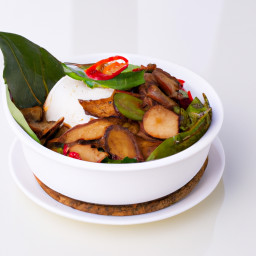
For the green curry paste (makes ~1 cup):
12–15 green Thai chilies, stemmed (adjust for heat; deseed to reduce heat)
3 shallots, peeled and roughly chopped
3 garlic cloves
1 stalk lemongrass (white part only), thinly sliced
1 thumb (about 2.5 cm / 1 in) galangal or young ginger, peeled and sliced
1 tsp ground coriander
1/2 tsp ground cumin
1 tsp shrimp paste (kapi) or 1 tbsp fish sauce (if avoiding shrimp paste)
Zest of 1 lime (or 2 kaffir lime leaves, finely shredded)
1/2 tsp salt
2–3 tbsp neutral oil (to help blend and fry the paste)

For the curry:
600 g (1.3 lb) boneless chicken thighs, thinly sliced (breast ok but thighs stay juicier)
400 ml (14 fl oz) full-fat coconut milk (1 can)
150 ml (1/2 cup) chicken stock or water (adjust for desired sauce consistency)
2–3 tbsp fish sauce (to taste)
1–2 tbsp palm sugar or light brown sugar (to taste)
6–8 small Thai eggplants, quartered (or 1 medium Japanese/Italian eggplant, cubed)
100–150 g (3–5 oz) long beans or green beans, cut into 4–5 cm / 1–2 in pieces (optional)
1 red bell pepper, thinly sliced (for color)
4–6 kaffir lime leaves, torn (optional but recommended)
A generous handful of Thai basil leaves (holy or sweet Thai basil)
Juice of 1 lime (to finish)
2 tbsp vegetable oil (for cooking)
Steamed jasmine rice, to serve
Make the green curry paste: In a blender or food processor (or mortar & pestle), combine the green chilies, shallots, garlic, lemongrass, galangal (or ginger), lime zest (or shredded kaffir lime leaves), ground coriander, ground cumin, shrimp paste (or fish sauce), and salt. Add 1–2 tbsp neutral oil to help emulsify and blend into a smooth paste. Scrape down sides and blitz to a fine paste. If using a mortar & pestle, pound until very smooth.
Prepare coconut milk: shake can and scoop off some of the thicker cream if present. Heat a wok or large saucepan over medium heat and add 1–2 tbsp oil.
Fry the paste: Add 3–4 tbsp of the green curry paste to the hot oil and fry, stirring, for 2–3 minutes until fragrant and the oil separates slightly from the paste. This step develops flavor — do not let it burn.
Brown the chicken: Add the sliced chicken to the pan and stir to coat with the paste. Cook 2–3 minutes until the pieces are sealed and start to change color.
Add coconut milk and stock: Pour in the coconut milk and chicken stock (or water). Stir to combine, bring to a gentle simmer, and scrape any browned bits from the pan. Reduce heat to maintain a gentle simmer.
Simmer with vegetables: Add the eggplant (and beans if using). Simmer for 8–10 minutes until the eggplant is tender and the chicken is cooked through. Add the red bell pepper in the last 2–3 minutes so it stays bright and slightly crisp.
Season: Stir in fish sauce and palm sugar. Taste and adjust — the curry should be balanced salty, sweet, and slightly spicy. Add more fish sauce for saltiness, sugar for sweetness, or a splash of water/stock to loosen the sauce.
Finish with aromatics: Tear in the kaffir lime leaves and stir through, then add the Thai basil leaves and simmer 30–60 seconds until wilted. Remove from heat and stir in the lime juice to brighten the flavors.
Serve: Spoon the Gaeng Keow Wan Gai over steamed jasmine rice. Garnish with extra basil leaves and torn kaffir lime leaf if desired. Enjoy while hot.
Notes and substitutions:
• Shrimp paste (kapi) is traditional and gives umami; substitute 1 tbsp fish sauce if you prefer no fermented shrimp. • Adjust chili quantity for desired heat. • For a richer curry, use full coconut cream for the initial frying step and the rest as coconut milk. • Leftovers keep well refrigerated 2–3 days; reheat gently (coconut milk can separate if boiled).

500 g (1.1 lb) ground pork (lean to medium fat)
1 tbsp neutral oil (vegetable or canola)
3 small shallots, very thinly sliced
2 cloves garlic, finely minced
2–3 bird's eye chilies (or 1 serrano), finely chopped (adjust to heat preference)
1–2 stalks lemongrass (white part only), finely minced (optional, for aromatic note)
1–2 kaffir lime leaves, very thinly sliced (optional)
2 tbsp fish sauce
3 tbsp fresh lime juice (about 1–2 limes), plus extra to taste
1 tsp palm sugar or light brown sugar (adjust to balance)
2–3 tbsp toasted rice powder (see method below)
1/4 cup (loosely packed) fresh mint leaves, roughly chopped
1/4 cup fresh cilantro (coriander) leaves, roughly chopped
2 green onions, thinly sliced
Freshly ground black pepper, to taste
Butterleaf lettuce, cabbage leaves or steamed rice for serving
Cucumber and extra lime wedges, for serving
Make toasted rice powder (khao khua): Heat a small dry skillet over medium heat. Add 3 tablespoons glutinous (sticky) rice or regular short-grain rice. Toast, stirring constantly, until the rice turns deep golden brown and fragrant (3–6 minutes). Remove from heat and let cool slightly. Grind the toasted rice in a mortar and pestle or small spice grinder to a coarse powder. Set aside.
Prepare aromatics: Thinly slice shallots, mince garlic and chilies, and finely chop the white part of the lemongrass if using. Thinly slice kaffir lime leaves if using. Chop mint, cilantro and slice green onions; set herbs aside to add at the end.
Cook the pork: Heat 1 tablespoon oil in a skillet over medium-high heat. Add the minced pork, breaking it up with a spatula. Cook until most of the liquid has evaporated and the pork is fully cooked through with no pink remaining, about 6–8 minutes. If using lemongrass, add it in the last 2 minutes of cooking to soften and release aroma.
Aromatics in pan: Push the pork to one side and add a tiny splash more oil if the pan is dry (optional). Add minced garlic and half of the sliced shallots and cook briefly (30–45 seconds) until fragrant but not browned. If using kaffir lime leaves, stir them in now. Mix everything together and remove the pan from heat.
Make the dressing: In a mixing bowl combine fish sauce, lime juice, palm sugar, and chopped chilies. Stir until the sugar dissolves. Taste and adjust seasoning—aim for a balance of salty (fish sauce), sour (lime), spicy (chilies) and a touch of sweet.
Combine meat and dressing off heat: Transfer the hot cooked pork (still warm, not piping hot) into the bowl with the dressing. Toss well so the pork absorbs the flavors. The residual heat will help bloom the aromatics without overcooking the herbs.
Finish with toasted rice and herbs: Stir in 2–3 tablespoons of the toasted rice powder until evenly distributed (reserve a little for garnish). Fold in the remaining raw shallots, chopped mint, cilantro and green onions. Season with freshly ground black pepper and additional lime or fish sauce if needed.
Rest briefly and serve: Let the laap rest 5 minutes to allow flavors to meld. Serve on a platter with butterleaf lettuce or cabbage leaves for wrapping, cucumber slices and extra lime wedges. Garnish with a sprinkle of toasted rice powder and extra herbs.
Notes and food safety: Laap is meant to use fully cooked meat when pork is used—do not serve ground pork raw. If you prefer a more Indonesian flavor, you can add 1 tsp kecap manis to the dressing (reduce sugar accordingly) or 1/2 tsp toasted shrimp paste (terasi/pekad) for umami; add sparingly and adjust fish sauce and lime to taste.
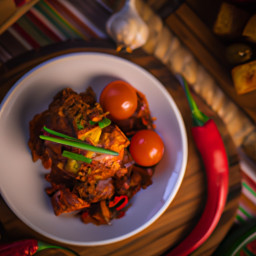
500 g (1.1 lb) beef chuck, lamb, or chicken, cut into 2–3 cm (1 in) cubes (use tofu or jackfruit for vegetarian)
400 ml (13.5 fl oz) canned coconut milk (about 1 can)
200 ml (7 fl oz) water or low-sodium stock
2 medium potatoes (about 400 g / 14 oz), peeled and cut into 3 cm / 1 in chunks
1 large onion, cut into wedges
3 tbsp vegetable oil (or coconut oil)
1–2 tbsp palm sugar or light brown sugar (adjust to taste)
2–3 tbsp fish sauce (or 3 tbsp soy sauce for vegetarian)
2 tbsp tamarind paste (or 2 tbsp lime juice mixed with 1 tbsp water as substitute)
60 g (½ cup) roasted peanuts (optional: lightly crushed)
2–3 kaffir lime leaves, torn (optional)
Salt, to taste
Fresh cilantro or Thai basil, for garnish

For the homemade Massaman curry paste (makes about ¾–1 cup; you’ll use ~3–4 tbsp):
  - 2 tsp coriander seeds
  - 1 tsp cumin seeds
  - 1 small cinnamon stick (or ½ tsp ground cinnamon)
  - 3 whole cloves
  - 3 green cardamom pods (or ½ tsp ground cardamom)
  - 1 star anise (optional)
  - 6–8 dried red chilies, soaked to soften (adjust for heat)
  - 4–6 shallots, peeled and roughly chopped
  - 4–6 cloves garlic
  - 1–2 stalks lemongrass (white part only), thinly sliced
  - 1 thumb-sized piece galangal or ginger, peeled and sliced
  - 1 tsp shrimp paste (or 1 tsp miso for vegetarian)
  - Zest of 1 lime or 1 tsp ground nutmeg (optional)
  - 1–2 tbsp neutral oil (to help blend)
Prepare the curry paste (if using store-bought paste, skip to step 6). Toast whole spices: heat a dry skillet over medium heat and toast coriander seeds, cumin seeds, cinnamon stick, cloves, cardamom pods and star anise until aromatic (1–2 minutes). Remove and let cool.
Grind spices: using a spice grinder or mortar and pestle, grind the toasted spices into a fine powder.
Blend paste: in a food processor or mortar, combine the ground spices with soaked chilies (drained), shallots, garlic, lemongrass, galangal (or ginger), shrimp paste (or miso), lime zest/nutmeg and 1–2 tbsp oil. Blend to a smooth paste, adding a teaspoon or two of water if necessary. Scrape down sides and taste — it should be fragrant and balanced (spicy, savory).
Prep remaining ingredients: cube the meat (or press and cube tofu), peel and chop potatoes, cut onion into wedges, measure coconut milk, peanuts, and seasonings.
Heat oil and bloom paste: in a heavy-bottomed pot or deep skillet, heat 2–3 tbsp oil over medium heat. Add 3–4 tbsp of the Massaman paste (or more for stronger flavor) and fry, stirring constantly, until fragrant and oil begins to separate from the paste (2–4 minutes).
Brown the meat: add the cubed meat (or tofu) to the pot and stir to coat with the paste. Cook until the edges are browned (3–5 minutes).
Add coconut milk: pour in about two-thirds of the coconut milk, reserve the rest. Stir to combine and bring to a gentle simmer. Scrape up any browned bits from the bottom.
Simmer gently: reduce heat to low, cover partially, and simmer for 30–40 minutes for beef (or 15–20 minutes for chicken/tofu), until meat is nearly tender. If using tougher cuts, simmer longer on low.
Add potatoes and onions: add potato chunks and onion wedges, the reserved coconut milk and 200 ml water or stock. Add torn kaffir lime leaves if using. Stir, cover, and simmer until potatoes are tender and meat is fully cooked, about 15–20 minutes.
Season and balance: stir in tamarind paste, palm sugar, and fish sauce (or soy sauce). Taste and adjust—aim for a balance of savory, sweet, and sour. Add a little salt if needed.
Finish with peanuts: stir in roasted peanuts and simmer 2–3 more minutes to heat through. If the curry is too thick, add a splash more water or stock; if too thin, simmer uncovered a few minutes to reduce.
Adjust heat and acidity: if you want brighter acidity, add a squeeze of lime juice. For more heat, stir in a pinch of chili flakes or a spoon of chili paste.
Serve: ladle Massaman curry over steamed jasmine rice or serve with roti. Garnish with fresh cilantro or Thai basil and extra roasted peanuts.
Make-ahead and storage: flavors improve the next day. Cool completely and store in an airtight container in the refrigerator for up to 3 days or freeze for up to 3 months. Reheat gently on the stove, adding a splash of water or coconut milk if needed.

2 cups Japanese short-grain rice (washed until water runs clear)
2 1/4 cups water (for cooking rice)
2 store-bought grilled unagi (pre-cooked eel) fillets (about 300–350 g total)
4 tablespoons light soy sauce
2 tablespoons kecap manis (Malaysian sweet soy sauce) — or substitute with 1 tbsp dark soy + 1 tbsp honey
2 tablespoons mirin
1 tablespoon sake (optional) or dry sherry
2 tablespoons palm sugar or brown sugar
1 teaspoon grated fresh ginger
1 small clove garlic, minced
1 tablespoon rice vinegar (optional, for slightly seasoned rice)
1 tablespoon toasted sesame oil (for finishing rice)
1 English cucumber, thinly sliced into half-moons
2 scallions (spring onions), thinly sliced
2 teaspoons toasted sesame seeds
2 tablespoons fried shallots (bawang goreng) or crispy fried onions
Sambal oelek or sambal belacan (to serve, optional, 1–2 tsp per bowl)
Pickled ginger or quick-pickled cucumber (optional)
Lime or calamansi wedges (optional, for serving)
Prepare the rice: Rinse the short-grain rice under cold water until the water runs clear. Drain and place in a rice cooker or saucepan with 2 1/4 cups water. If you like slightly seasoned rice, stir in 1 tablespoon rice vinegar before cooking. Cook according to your rice cooker instructions or bring to a boil on the stove, then reduce to a low simmer, cover and cook for 12–15 minutes until water is absorbed. Remove from heat and let rest, covered, for 10 minutes.
While the rice rests, fluff it with a fork and stir in 1 tablespoon toasted sesame oil. Keep covered and warm.
Make the Malaysian-style unagi sauce (tare): In a small saucepan combine 4 tablespoons light soy sauce, 2 tablespoons kecap manis, 2 tablespoons mirin, 1 tablespoon sake (if using), 2 tablespoons palm or brown sugar, 1 teaspoon grated ginger and the minced garlic. Bring to a gentle simmer over medium-low heat. Stir until the sugar dissolves and the sauce thickens slightly, about 5–7 minutes. Taste and adjust sweetness or soy by adding a little more kecap manis or sugar if you prefer a darker, sweeter glaze. Keep warm.
Prepare the unagi: If using store-bought pre-grilled unagi (typical), warm the fillets on a baking sheet in a preheated oven at 200°C (400°F) for 6–8 minutes or heat gently under a broiler for 1–3 minutes until hot. Brush both sides several times with the warm tare so the sauce forms a glossy glaze. If your fillets are raw (uncommon), fully cook according to package instructions before glazing.
Optional quick pickles: If you want quick-pickled cucumber, toss the thin cucumber slices with 1 tablespoon rice vinegar, 1/2 teaspoon sugar and a pinch of salt. Let sit while you finish the rest of the meal.
Assemble the bowls: Divide the warm sesame-scented rice between two donburi bowls. Lay a glazed unagi fillet over each bowl of rice. Spoon any remaining tare over the eel and rice (but not so much it soaks the rice completely—just a glossy finish).
Garnish and finish: Arrange thin cucumber slices and a little pickled ginger (if using) beside the eel. Sprinkle each bowl with 1 tablespoon fried shallots, 1 teaspoon toasted sesame seeds and the sliced scallions. Add a small dollop of sambal at the side of the bowl for heat, and a lime or calamansi wedge to squeeze over if desired.
Serve immediately: Serve the Malaysia–Unagi Don hot. Encourage guests to mix a little of the tare into the rice as they eat and add sambal to taste for a Malaysian spicy kick.

1 lb (450 g) beef, buffalo or chicken, cut into 1" (2.5 cm) pieces
1–2 tbsp neutral oil (vegetable or peanut)
4–5 stalks lemongrass, white bottoms bruised and sliced thin
1 thumb (about 1" / 2.5 cm) galangal (or ginger) sliced thin, smashed
4 shallots, peeled and halved
3 cloves garlic, smashed
2–4 dried red chilies or 2 fresh bird's-eye chilies (adjust to heat preference)
3 cups (700 ml) chicken or beef stock (or water + bouillon)
1/2 cup (about 60 g) toasted sticky rice powder (khao khua) — see note
2 tbsp padaek (Lao fermented fish) or 1–2 tbsp fish sauce (to taste)
1 cup small eggplants (Thai/Lao style) or regular eggplant, quartered
1 cup yardlong beans or green beans, cut into 2–3" (5–7 cm) lengths
1 medium taro or potato (optional), peeled and cut into chunks
4–6 kaffir lime leaves, torn (or zest of 1 lime)
Handful fresh Thai basil or cilantro leaves for garnish
Lime wedges to serve
Salt to taste
Make toasted sticky rice powder (khao khua) if you don't have it: dry-toast 1/2 cup glutinous (sticky) rice in a skillet over medium heat, stirring constantly, until deep golden and aromatic. Cool, then grind coarsely in a mortar and pestle or spice grinder.
Heat oil in a heavy pot over medium heat. Add shallots, garlic, chilies and galangal. Sauté until fragrant and shallots are softened, about 3–4 minutes.
Add the meat and sear briefly, stirring until the exterior is browned on all sides but not fully cooked through.
Add the bruised lemongrass, kaffir lime leaves (or lime zest) and stock. Bring to a gentle boil, then reduce heat to a simmer. Skim any foam from the surface.
Simmer uncovered for 20–30 minutes (longer for tougher meat) until the meat is tender. Add taro or potato now if using, and continue simmering until they are nearly cooked through, about 10–15 minutes.
Stir in the eggplant and beans and simmer for another 6–8 minutes until vegetables are tender but still hold shape.
Lower the heat to a gentle simmer. Sprinkle in the toasted sticky rice powder (khao khua) gradually while stirring to thicken the broth and develop a nutty, slightly grainy texture. Add only enough to reach desired thickness (about 1/2 cup will usually do).
Season with padaek (or fish sauce) and salt to taste. Taste and adjust: padaek gives a distinct savory, slightly funky Lao flavor—add a little at a time. If the stew is too salty, add a splash more stock or water.
Simmer briefly (2–3 minutes) to allow flavors to marry. Remove and discard large pieces of lemongrass if desired.
Turn off the heat and stir in fresh basil or cilantro leaves. Let sit for a minute to wilt the herbs.
Serve Or Lam hot with steamed jasmine rice or sticky rice and lime wedges on the side.

500 g (1.1 lb) pork shoulder or pork belly, thinly sliced
300 g (10.5 oz) ground pork (for patties)
4 cloves garlic, minced (divided)
2 shallots, finely chopped (divided)
3 tbsp fish sauce (divided)
2 tbsp sugar (divided)
1 tbsp soy sauce
1 tbsp honey or maple syrup
1 tsp freshly ground black pepper
1 tbsp vegetable oil (for grilling)
200–250 g (7–9 oz) rice vermicelli (bún)
1 small head of lettuce, washed and leaves separated
1 cucumber, thinly sliced (optional)
A handful each fresh herbs: Thai basil, mint, cilantro
For pickled carrots & daikon:
100 g carrot, julienned
100 g daikon (or daikon + more carrot), julienned
3 tbsp rice vinegar
2 tbsp sugar
1/2 tsp salt
80 ml (about 1/3 cup) warm water
For nuoc cham (dipping sauce):
120 ml (1/2 cup) warm water
3 tbsp sugar
4 tbsp fish sauce
2–3 tbsp fresh lime juice (or to taste)
1–2 cloves garlic, minced
1 fresh red chili, thinly sliced (optional)
Optional garnish: lime wedges, extra chilies
Prep the meats: Pat the sliced pork dry. In a bowl combine 2 tbsp fish sauce, 1 tbsp sugar, 1 tbsp soy sauce, 1 tbsp minced garlic, 1 tbsp chopped shallot, 1 tbsp honey, and 1 tsp black pepper. Add the sliced pork, toss to coat, cover and marinate at least 30 minutes (up to overnight) in the fridge.
Make the patties: In a separate bowl mix the ground pork with 1 tbsp fish sauce, 1 tbsp sugar, 1 clove minced garlic, 1/2 shallot finely chopped, and a pinch of pepper. Combine until tacky, then form into small flat patties (about 6–8 patties). Chill while other components are prepared.
Quick-pickle the carrots & daikon: Put julienned carrot and daikon into a bowl. Dissolve 2 tbsp sugar and 1/2 tsp salt in 3 tbsp rice vinegar + 80 ml warm water. Pour over the vegetables, let sit at least 10–15 minutes (longer for more tender pickles). Drain before serving.
Make the nuoc cham dipping sauce: In a small bowl dissolve 3 tbsp sugar in 120 ml warm water. Add 4 tbsp fish sauce and 2–3 tbsp lime juice to taste. Stir in 1–2 cloves minced garlic and sliced chili. Add a little of the pickled carrot for color if you like. Taste and adjust balance — it should be a balance of sweet, salty, sour and spicy.
Prepare the vermicelli and herbs: Cook the rice vermicelli according to package directions (usually soak or briefly boil 2–4 minutes). Drain and rinse under cold water to stop cooking. Drain well. Arrange lettuce, basil, mint, cilantro and cucumber on a platter.
Grill or pan-sear the pork: Heat a grill or heavy skillet to medium-high and brush with oil. Grill the marinated sliced pork until nicely charred and cooked through, 2–4 minutes per side depending on thickness. Grill or sear the pork patties until browned and cooked through, 3–5 minutes per side. If you have extra marinade, bring it to a boil in a small saucepan for a minute and brush over the cooked meat for extra glaze.
Assemble and serve (traditional style): Place a portion of rice vermicelli in a bowl or plate. Top with grilled sliced pork and 1–2 patties (or cut patties into pieces). Add some lettuce, herbs, cucumber, and a few pickled carrot/daikon strips. Pour a ladleful of nuoc cham into a separate small shallow bowl and add some pieces of grilled meat into that bowl (Hanoi-style often serves meat in the sauce). To eat, dip noodles, herbs and meat into the sauce or pour a little sauce over the noodles and combine to taste.
Notes and tips: Marinating the meat longer (several hours or overnight) deepens flavor. If you want a slightly Korean twist, add 1 tsp gochujang to the meat marinade or a splash of sesame oil to the patties. Adjust sugar, fish sauce and lime to suit your palate. Serve immediately while meat is hot and charred.

500 g (1 lb) ground chicken (or very finely chopped chicken breast/thigh)
1–2 tbsp neutral oil (vegetable/peanut)
3 garlic cloves, minced
2–3 shallots, very thinly sliced
3–4 fresh bird’s-eye chilies or 1–2 red Thai chiles, finely chopped (adjust to heat)
3 tbsp fish sauce (or to taste)
3 tbsp fresh lime juice (about 1–2 limes)
1 tsp palm sugar or granulated sugar (optional, to balance)
2 tbsp toasted rice powder (khao khua) — see note below
3 tbsp chopped fresh cilantro (coriander leaves)
3 tbsp chopped fresh mint leaves
2–3 green onions (scallions), thinly sliced
1/2 cup roughly chopped lettuce or cabbage (for serving and texture)
Cucumber slices and extra lettuce leaves, for serving
Lime wedges, for serving
Optional: 1 tsp ground white pepper or a pinch of toasted chili flakes for extra spice
Make the toasted rice powder (khao khua): heat a small dry skillet over medium heat. Add 3–4 tablespoons of uncooked glutinous (sticky) rice or jasmine rice and toast, stirring constantly, until the grains turn golden brown and give a nutty aroma (3–6 minutes). Let cool, then grind to a coarse powder in a spice grinder or mortar and pestle. Set aside.
Prepare aromatics and herbs: mince garlic, thinly slice shallots, chop chilies, and roughly chop cilantro, mint, and green onions. Slice cucumber and tear lettuce/cabbage leaves for serving.
Cook the chicken: heat 1–2 tbsp oil in a skillet over medium-high heat. Add the minced garlic and quickly sauté 20–30 seconds until fragrant (do not let it burn). Add the ground chicken and break it up with a spatula. Cook, stirring and crumbling, until the chicken is fully cooked through and no pink remains, about 6–8 minutes. (If you prefer, you can briefly poach the ground chicken in simmering water until cooked, then drain; either method is traditional.)
Assemble seasoning: while the chicken is hot and still in the pan, reduce heat to low and add fish sauce, lime juice, and palm sugar. Stir well so the hot chicken absorbs the flavors. Taste and adjust: add more fish sauce for saltiness or more lime for brightness.
Add raw elements off the heat: remove the pan from heat (this preserves the texture and sharpness of the shallots and herbs). Immediately stir in the thinly sliced shallots, chopped chilies, half of the toasted rice powder (reserve the rest for garnish), chopped cilantro, mint, and green onions. Toss thoroughly so the heat lightly wilts the herbs while keeping their freshness.
Finish and adjust seasoning: sprinkle in remaining toasted rice powder to absorb excess moisture and add nuttiness and texture. Add ground white pepper or toasted chili flakes if using. Taste and adjust one last time — balancing salty (fish sauce), sour (lime), sweet (sugar), and spicy (chilies).
Rest briefly: let the larb sit 3–5 minutes so flavors meld. If too wet, add a little more toasted rice powder; if too dry, a splash of lime or fish sauce will help.
Serve: pile the larb on a platter or individual plates. Garnish with extra mint and cilantro leaves and a final dusting of toasted rice powder. Serve with fresh cucumber slices, extra lettuce or cabbage leaves for scooping, and lime wedges on the side. Traditionally eaten with sticky rice or jasmine rice.
Notes and tips:
- Toasted rice (khao khua) is essential for authentic texture and a nutty flavor—do not skip. Use glutinous rice if available; jasmine rice works too.
- For a milder version, reduce or omit fresh chilies and use a small pinch of chili flakes instead.
- If using very lean chicken, a splash of sesame oil (a few drops) can add richness, but use sparingly so it does not overpower the dish.
- Food safety: ensure ground chicken is cooked to an internal temperature of 74°C (165°F) and no pink remains.
- Variations: you can make laap with minced pork (laap moo), beef (laap nuea), or mushrooms/tofu for a vegetarian version; adjust cooking time accordingly.

500 g (1.1 lb) ground chicken (or coarsely minced chicken breast/thigh)
1–2 tbsp neutral oil (for cooking)
1–2 tbsp toasted rice powder (khao khua) — see instructions to make
3–4 tbsp fish sauce (adjust to taste)
3–4 tbsp fresh lime juice (about 2–3 limes)
1 tsp palm sugar or brown sugar (adjust to taste)
3–4 Thai bird's-eye chilies, finely sliced (or 1–2 serranos / red chilies), or to taste
3–4 shallots, thinly sliced
2–3 scallions (spring onions), thinly sliced
1/2 cup fresh mint leaves, roughly chopped
1/2 cup fresh cilantro (coriander) leaves, roughly chopped
Optional Malaysian twist: 2 tbsp toasted desiccated coconut, lightly toasted and cooled
Optional: 4–5 kaffir lime leaves, very thinly sliced (for extra fragrance)
Fresh vegetables to serve: lettuce leaves, cucumber slices, raw cabbage or herbs
Steamed jasmine rice or sticky rice, for serving
Prepare toasted rice powder (khao khua): in a dry skillet over medium heat, add 2–4 tablespoons of uncooked glutinous (sticky) rice or jasmine rice. Toast, stirring or shaking the pan constantly, until the rice is golden brown and aromatic (5–8 minutes). Transfer to a mortar and pestle or spice grinder and grind to a coarse powder. Set aside.
Prepare aromatics and herbs: thinly slice the shallots and scallions, chop mint and cilantro, thinly slice chilies and (if using) kaffir lime leaves, and lightly toast the desiccated coconut in a dry pan until golden. Have everything ready — laab comes together quickly.
Cook the chicken: heat 1–2 tablespoons oil in a skillet over medium-high heat. Add the ground chicken and break it up with a spatula. Cook until the chicken is just cooked through but still moist (about 5–7 minutes). Avoid overcooking or browning heavily — you want tender, slightly juicy crumbles. Remove from heat and let the chicken rest for 1 minute.
Make the dressing: in a small bowl, combine fish sauce, lime juice and palm sugar. Taste and balance — laab should be a lively mix of salty, sour and a touch of sweet. Adjust quantities to your preference.
Combine while warm: transfer the cooked chicken to a mixing bowl. Immediately pour the dressing over the warm chicken so the flavors absorb. Add the sliced shallots, scallions, chilies and kaffir lime leaves (if using). Mix thoroughly so the shallots soften slightly from the heat and the dressing coats the meat.
Add herbs and textures: fold in the chopped mint and cilantro, toasted rice powder, and toasted desiccated coconut (if using). Toss gently until evenly distributed. Taste and adjust seasoning — add more fish sauce (salt), lime (acid) or sugar as needed.
Rest briefly and serve: allow the laab to sit 3–5 minutes so flavors meld. Serve at room temperature with lettuce leaves, cucumber slices, raw cabbage and steamed jasmine or sticky rice. Provide extra lime wedges and chilies on the side.
Notes and tips: use warm (not piping hot) chicken so herbs stay bright; toasted rice powder gives signature nuttiness and helps absorb dressing; for a smokier note, briefly char the cooked chicken in the pan; for a milder version, reduce chilies or remove seeds.
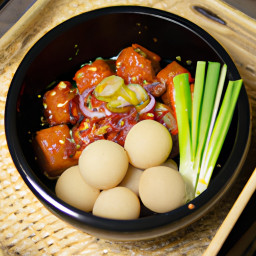
700 g (1.5 lb) boneless chicken thighs or pork loin, thinly sliced (or firm tofu for vegetarian)
2 tbsp red curry paste (store-bought or homemade)
1 tbsp vegetable oil
480 ml (2 cups) full-fat coconut milk
1 tbsp fish sauce (or soy sauce for vegetarian)
1 tbsp palm sugar or brown sugar
4–6 kaffir lime leaves, torn (or 1 tsp lime zest if unavailable)
1 cup bamboo shoots, rinsed and drained (optional)
1 small eggplant or 1 cup Thai eggplant, cut into bite-sized pieces
1 red bell pepper, thinly sliced
2 cloves garlic, minced
1 tsp grated galangal or ginger
6–8 Thai basil leaves (or sweet basil), plus extra for garnish
1–2 fresh red or green chilies, sliced (optional, for heat)
Juice of 1/2 lime
Cooked jasmine rice, for serving
Prepare ingredients: slice the meat or tofu, cut vegetables, mince garlic and grate galangal or ginger, tear kaffir lime leaves, and measure the curry paste and seasonings.
Heat 1 tablespoon vegetable oil in a wide skillet or medium pot over medium heat.
Add the red curry paste and sauté 1–2 minutes, stirring constantly until aromatic. Add the minced garlic and grated galangal (or ginger) and cook another 30 seconds.
Pour in about 1 cup (240 ml) of the coconut milk. Stir to combine with the paste and let it simmer gently for 2–3 minutes so the oil separates slightly and the paste blooms.
Add the sliced chicken (or pork/tofu) to the pot. Stir to coat the pieces in the curry-coconut mixture and cook for 3–5 minutes until the outside of the meat is mostly cooked.
Pour in the remaining coconut milk, then add the torn kaffir lime leaves and bamboo shoots (if using). Bring to a gentle simmer, reduce heat to medium-low, and cook 6–8 minutes until the meat is cooked through and vegetables are tender.
Add the eggplant and red bell pepper and continue to simmer 3–5 minutes until vegetables are soft but not mushy. If using fresh chilies, add them now to infuse heat.
Season the curry with fish sauce and palm sugar. Taste and adjust: add more fish sauce for saltiness, more sugar for sweetness, or a splash of water if the curry is too thick.
Stir in the Thai basil leaves and lime juice just before removing from the heat. The basil should wilt but retain its bright flavor.
Serve the Gaeng Daeng hot over steamed jasmine rice. Garnish with extra basil leaves and sliced chilies if desired.
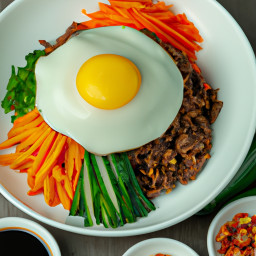
1 3/4 cups short-grain rice (or medium-grain), rinsed until water runs clear
1 cup canned coconut milk
1 1/4 cups water
1/2 teaspoon salt
2 tablespoons vegetable oil (plus extra for the stone pot)
400 g (about 14 oz) beef sirloin or flank, thinly sliced across the grain
2 tablespoons soy sauce
1 tablespoon kecap manis (sweet soy sauce)
1 tablespoon sambal oelek (or sambal belacan; adjust to taste)
1 tablespoon honey or palm sugar
2 cloves garlic, minced
1 teaspoon grated ginger
200 g (7 oz) shiitake or button mushrooms, sliced
2 medium carrots, julienned
200 g (7 oz) spinach, blanched and squeezed
1 cup bean sprouts, blanched
1 small cucumber, thinly sliced or julienned
2 tablespoons rice vinegar
1 teaspoon sugar
1/4 teaspoon salt (for quick-pickling cucumber)
4 large eggs
2 tablespoons toasted sesame oil (divided)
2 tablespoons vegetable oil (for stir-fries)
2 tablespoons sliced scallions
2 tablespoons fried shallots (bawang goreng) or toasted peanuts for crunch
2 tablespoons crispy ikan bilis (dried anchovies) or roasted peanuts (optional)
2 tablespoons sesame seeds, toasted
1 lime, cut into wedges
Optional: fresh cilantro or laksa leaf for garnish
Rice (coconut-style): Rinse the rice until the water runs clear. In a rice cooker or heavy saucepan combine rinsed rice, coconut milk, water and 1/2 teaspoon salt. If using a saucepan, bring to a simmer, cover and cook on low 12–15 minutes or until liquid is absorbed, then let rest off heat, covered, 10 minutes. Fluff and keep warm.
Quick-pickle cucumber (acar): Toss the sliced cucumber with rice vinegar, sugar and 1/4 teaspoon salt. Let sit at least 10 minutes while you prepare the rest (can be made up to 1 hour ahead and drained before serving).
Marinate beef: In a bowl combine soy sauce, kecap manis, sambal oelek, honey (or palm sugar), minced garlic and grated ginger. Add sliced beef, toss to coat and let sit 15–30 minutes (or up to 2 hours in fridge).
Make Malaysian sambal dressing (to drizzle): In a small bowl whisk 1 tablespoon sambal (or sambal to taste), 1 tablespoon kecap manis, 1 tablespoon lime juice, 1 teaspoon sugar and 1–2 teaspoons water to thin. Taste and adjust sweet/spicy balance.
Prepare vegetables and mushrooms: Heat 1 tablespoon vegetable oil in a skillet over medium-high heat. Add sliced mushrooms, a pinch of salt and a splash (1 teaspoon) of kecap manis or soy; sauté until browned and cooked through, about 4–5 minutes. Remove and keep warm. In the same skillet, add another teaspoon oil and quickly stir-fry julienned carrots with a pinch of salt for 2–3 minutes (they should be tender-crisp). Blanch spinach and bean sprouts separately in boiling water for 30–45 seconds, shock in cold water, squeeze out excess water and toss spinach with 1 teaspoon toasted sesame oil and a pinch of salt. Toss bean sprouts lightly with sesame oil and salt as well.
Cook the beef: Heat 1 tablespoon vegetable oil in the skillet over high heat. Add marinated beef in a single layer and sear, stirring quickly, until just cooked through and caramelized, about 2–4 minutes depending on thickness. Remove and keep warm.
Optional crispy ikan bilis/shallots: If using dried anchovies (ikan bilis) or want extra crunch, heat 1 tablespoon oil in a small pan and fry ikan bilis briefly until crisp (30–60 seconds), or toast peanuts and fried shallots until golden. Drain on paper towel.
Preheat the dolsot (stone pot) or a heavy cast-iron skillet: Place the empty dolsot on medium-high heat for 2–3 minutes to preheat. Carefully add 1–2 tablespoons vegetable oil (or a mix of 1 tablespoon oil + 1 teaspoon sesame oil) and swirl to coat the bottom and sides. Reduce heat to medium-low so it doesn’t smoke heavily but remains hot enough to sizzle.
Assemble into the dolsot: Spoon a generous portion of the warm coconut rice into the hot dolsot and press lightly to create an even layer. Arrange a portion of each topping in sections on top of the rice: mushroom, carrots, spinach, bean sprouts, pickled cucumber, cooked beef. Drizzle a little toasted sesame oil around the rice edge (this helps form a crust).
Add egg and finish: Make a small well in the center and crack an egg into it (sunny-side up). Cover the dolsot with a lid or foil and let cook over low to medium-low heat 3–6 minutes until the egg white is set and the bottom rice forms a golden crust (nurungji). Timing depends on heat and pot—check after 3 minutes.
Serve: Carefully bring the sizzling dolsot to the table (use oven mitts or a trivet). Sprinkle scallions, toasted sesame seeds and fried shallots or peanuts and crispy ikan bilis on top. Serve with the sambal dressing and lime wedges.
How to eat: Mix everything together vigorously at the table so the egg and sambal coat the rice and toppings. Scrape the bottom to enjoy the toasted crust. Exercise caution—the dolsot is extremely hot; transfer rice to bowls if preferred.
Make-ahead and substitutions: Coconut rice can be made ahead. If you don’t have a dolsot, use a well-seasoned cast-iron skillet, or serve components in a bowl and create the crust separately by frying spoonfuls of rice in a hot pan with oil until crisp. For vegetarian version, replace beef with firm tofu slices marinated in kecap manis+sambal and pan-fried, and omit ikan bilis.
Yields: 3–4 servings depending on appetite. Adjust heat and sambal to taste.

For the broth and base (serves 4)
1 piece kombu (dried kelp), 10 cm
6 cups water
1 cup dried bonito flakes (katsuobushi)
1 can (400 ml) full-fat coconut milk
2 tablespoons white miso
2 tablespoons sake
1 tablespoon mirin
1 tablespoon soy sauce
1 teaspoon sesame oil

For the laksa-style spice paste (homemade)
3 shallots, peeled
4 cloves garlic
2 stalks lemongrass (white part only), chopped
1 thumb (about 25 g) fresh ginger, peeled
1 thumb (about 20 g) galangal or extra ginger if unavailable
4–6 red chilies (adjust to heat preference), seeded if desired
1 tablespoon coriander seeds, toasted
1/2 tablespoon cumin seeds, toasted
1 teaspoon turmeric powder or 1 inch fresh turmeric
1 teaspoon shrimp paste (belacan) or 1 teaspoon miso for vegetarian
2 tablespoons neutral oil (vegetable or canola) for frying paste

Noodles and proteins
400 g fresh ramen noodles (or dried if unavailable)
300 g pork belly or pork shoulder, thinly sliced (for chashu-style) OR 300 g firm tofu, pressed and sliced for vegetarian
8 medium shrimp, peeled and deveined (optional)

Vegetables and toppings
1 cup shiitake mushrooms, stems removed, sliced
2 cups bean sprouts, rinsed
4 soft-boiled eggs (cook 6–7 minutes, then ice bath)
2 green onions, thinly sliced
1/2 cup chopped cilantro (coriander leaves)
1 sheet nori, cut into strips
1 lime, cut into wedges
pickled ginger or beni shoga (optional)

Pantry & garnish
Salt and freshly ground black pepper
2 tablespoons vegetable oil (for cooking proteins/vegetables)
Fried shallots or garlic (optional)
Chili oil or rayu (optional)
Make the dashi broth: Put kombu and 6 cups water in a pot and let sit 30 minutes (or longer for deeper flavor). Heat over medium until just before boiling, remove kombu, add bonito flakes, bring to a gentle simmer for 1–2 minutes then remove from heat and let steep 5 minutes. Strain and return liquid to a clean pot.
Prepare the laksa-style spice paste: In a dry skillet over medium heat, toast coriander and cumin seeds until aromatic (about 1–2 minutes). Grind toasted seeds in a spice grinder or mortar and pestle. In a blender or food processor add shallots, garlic, lemongrass, ginger, galangal (or extra ginger), red chilies, toasted ground seeds, turmeric, and shrimp paste (or miso). Blend to a relatively smooth paste, adding 1–2 tablespoons water if needed.
Cook the spice paste: Heat 2 tablespoons neutral oil in a saucepan over medium heat. Add the blended paste and sautée, stirring, until fragrant and oil separates from the paste, about 4–6 minutes. Be careful not to burn. Add this paste to the strained dashi broth.
Build the laksa broth with Japanese elements: To the pot with dashi and spice paste, add coconut milk, 2 tablespoons sake, 1 tablespoon mirin, 1 tablespoon soy sauce, 2 tablespoons white miso (dissolved in a little warm broth first), and 1 teaspoon sesame oil. Stir and simmer gently 8–10 minutes to marry flavors. Taste and adjust salt/soy or a little sugar if needed. Keep warm but do not boil vigorously once coconut milk and miso are added.
Prepare proteins and toppings while broth simmers: For pork chashu-style slices — in a hot skillet, add 1 tablespoon oil and sear thin pork slices quickly on both sides. Remove and simmer briefly in a small saucepan with 2 tablespoons soy, 1 tablespoon mirin, 1 tablespoon sake and 1/4 cup water for 6–8 minutes until just cooked and flavored. Alternatively, pan-fry tofu slices until golden or sear shrimp until pink (about 1–2 minutes per side).
Cook mushrooms and bean sprouts: In a separate pan, heat 1 tablespoon oil and quickly stir-fry shiitake slices until just softened (2–3 minutes). Blanch bean sprouts in boiling water for 20–30 seconds, drain.
Cook the noodles: Bring a pot of water to a boil and cook ramen noodles according to package directions until just tender. Drain well and divide among four deep bowls.
Assemble bowls: Place cooked noodles in bowls. Arrange pork/tofu/shrimp, shiitake, blanched bean sprouts, half a soft-boiled egg, nori strips and a sprinkle of green onions and cilantro on top of each bowl of noodles.
Ladle hot laksa broth over the noodles and toppings, making sure each bowl gets an even mix of coconut-dashi broth and spice paste. Serve immediately with lime wedges on the side.
Finishing touches and optional condiments: Offer chili oil or rayu, extra soy or miso, fried shallots, and pickled ginger at the table. Squeeze lime to taste for brightness. Enjoy the fusion of Japanese dashi and miso with classic laksa coconut and spice flavors.

1.5 kg (3.3 lb) beef chuck or brisket, cut into 3–4 cm cubes
400 ml (14 fl oz) canned coconut milk (full fat)
200 ml (7 fl oz) water or beef stock
2 tbsp vegetable oil or coconut oil
4–6 kaffir lime leaves, torn (or 2 bay leaves if unavailable)
2 stalks lemongrass, white parts only, bruised and tied into a knot
2 cm (3/4 in) galangal, sliced (or extra ginger if unavailable)
2 tbsp tamarind juice or 1 tbsp tamarind paste (optional, to taste)
2 tbsp palm sugar or brown sugar (adjust to taste)
1 tsp salt (adjust to taste)
1 tsp ground white pepper or freshly ground black pepper
50 g (1.8 oz) desiccated coconut (kerisik) or 2 tbsp toasted grated coconut, ground into a paste (optional but traditional)

For the spice paste (blended):
8–10 shallots, peeled
5–6 cloves garlic
6–8 dried red chilies, soaked to soften (or 4–6 fresh red chilies for milder heat)
2–3 fresh red chilies or bird’s eye chilies (optional — for extra heat)
3 cm (1¼ in) fresh ginger, peeled
3 cm (1¼ in) fresh turmeric or 1 tsp ground turmeric
3–4 candlenuts or macadamia/walnut substitute (optional)
1 tsp coriander seeds (lightly toasted)
1 tsp cumin seeds (lightly toasted)
1/2 tsp ground nutmeg (or a small piece of whole nutmeg)

Whole spices (optional but recommended):
2 sticks cinnamon
4 cloves
3 star anise
4 green cardamom pods, lightly crushed
Prepare the spice paste: toast coriander and cumin seeds in a dry pan until fragrant. In a blender or food processor combine toasted seeds, shallots, garlic, soaked dried chilies (reserve a few for garnish if you like), fresh chilies (if using), ginger, turmeric, candlenuts (or substitute) and a little water. Blend to a smooth paste. Scrape down sides as needed.
Prep the kerisik (toasted coconut paste) if using: in a dry skillet over medium heat toast the desiccated coconut or grated fresh coconut, stirring constantly, until it turns golden brown and fragrant. Transfer to a mortar and pestle or small blender and grind to a slightly pasty texture. Set aside.
Heat the oil in a large, heavy-based pot or Dutch oven over medium heat. Add the whole spices (cinnamon, cloves, star anise, cardamom) and fry for 30 seconds to bloom their aroma.
Add the spice paste to the pot. Fry the paste, stirring frequently, for 6–10 minutes until the oil separates and the paste darkens and becomes fragrant. This step develops the flavor—don’t rush it. If the paste starts to stick, reduce heat and add a splash of coconut milk.
Add the bruised lemongrass stalks, galangal slices (or extra ginger) and kaffir lime leaves. Stir for another 1–2 minutes to infuse their aroma into the paste.
Add the beef pieces and toss to coat thoroughly with the paste. Sear the meat in the paste for 4–6 minutes, stirring occasionally, until the beef is lightly browned on all sides.
Pour in the coconut milk and the water or beef stock. Stir to combine and scrape up any browned bits from the bottom. Bring to a gentle simmer over medium-low heat.
Add the tamarind juice/paste (if using), palm sugar and salt. Stir, then reduce the heat to low so the pot is barely simmering. Cover partially with a lid (leave a small gap) and cook gently for 1.5–2 hours, stirring occasionally so the paste doesn’t stick and the meat cooks evenly. If liquid reduces too quickly, add a little hot water.
After about 1.5–2 hours the beef should be tender and the sauce reduced. At this stage, remove the lid and continue to cook over low heat, stirring more frequently, until the liquid has mostly evaporated and the oil has separated from the coconut milk. The color will deepen to a rich brown. This can take an additional 30–60 minutes depending on heat and pot.
When the sauce is thick and clings to the meat, stir in the kerisik (toasted coconut paste). Cook for another 5–10 minutes, tossing so the meat is coated and the kerisik integrates—this adds depth and a slightly nutty, dry finish.
Taste and adjust seasoning: add more salt, sugar or tamarind if needed. The classic rendang balance is savory, mildly sweet, tangy (from tamarind), spicy and deeply caramelized.
When the beef is dark brown, almost dry and well coated with the spice mixture, remove from heat. Discard lemongrass stalks, galangal slices and large whole spice pieces if desired.
Serve: Rendang Sapi is traditionally served with steamed jasmine rice or coconut rice, and a side of fresh cucumber or pickled vegetables. It also keeps and improves in flavor the next day.
Tips:
- Use a heavy, wide pot so liquid evaporates evenly and meat browns rather than stews.
- Cook low and slow. Proper rendang is dry and caramelized rather than soupy.
- If you prefer more gravy, stop when the sauce thickens but still has some liquid.
- For milder heat, reduce the number of chilies; for more aroma, include fresh turmeric and galangal.
- Rendang can be made ahead and refrigerated for 2–3 days or frozen for up to 2 months. Reheat gently before serving.

500 g (1 lb) large prawns (shrimp), peeled and deveined, tails on
1.5 L (6 cups) seafood or chicken stock
2 stalks lemongrass, trimmed, smashed and cut into 5 cm pieces
4–6 slices fresh galangal (or 1-inch/2.5 cm piece ginger if unavailable)
6–8 kaffir lime leaves, torn
3–4 bird’s eye chilies (adjust to taste), lightly smashed
1 medium shallot, thinly sliced
200 g (7 oz) straw mushrooms or button mushrooms, halved
1–2 tbsp fish sauce (to taste)
2–3 tbsp fresh lime juice (to taste)
10 g goraka (Sri Lankan dried Garcinia) or 1 tbsp tamarind paste (optional, for a Sri Lankan sour note)
240 ml (1 cup) coconut milk (optional — for a creamy Sri Lankan twist)
1–2 sprigs curry leaves (adds Sri Lankan aroma)
½ tsp roasted Sri Lankan curry powder (optional, for subtle island spice)
1–2 tsp palm sugar or brown sugar (to balance flavors)
2 tbsp vegetable oil or coconut oil
Fresh cilantro (coriander) and sliced spring onion for garnish
Lime wedges and extra sliced chilies to serve
Salt and freshly ground black pepper, to taste
Prepare ingredients: rinse prawns and pat dry; smash lemongrass stalks with the back of a knife and cut into 5 cm pieces; tear kaffir lime leaves; slice galangal and shallot; halve mushrooms; rehydrate goraka in warm water for a few minutes if using, then break into small pieces.
Heat oil in a medium-large pot over medium heat. Add sliced shallot, smashed chilies and curry leaves; sauté for 1–2 minutes until fragrant but not browned.
Add the lemongrass, galangal slices and torn kaffir lime leaves to the pot and briefly sauté to release aromas (about 30–45 seconds).
Pour in the stock and add the goraka (or tamarind paste if using). Bring to a boil, then reduce to a gentle simmer. Simmer uncovered for 8–10 minutes to infuse the broth with the aromatics.
Add the mushrooms and continue simmering for 3–4 minutes until the mushrooms are cooked through.
If using coconut milk for a creamy Sri Lankan twist, lower the heat and stir in the coconut milk now. Warm gently—do not let it boil vigorously once added or it may split.
Add the raw prawns to the simmering broth and cook until just pink and opaque, about 2–3 minutes (depending on size). Avoid overcooking.
Season the soup: stir in fish sauce, lime juice, and palm sugar. If using roasted Sri Lankan curry powder, add a small pinch now. Taste and adjust the balance of sour, salty, spicy and sweet—add more lime juice for sour, fish sauce for salt, sugar for sweetness, or chilies for heat.
Remove from heat. If you prefer, fish out and discard the lemongrass pieces and large galangal slices (they are fibrous).
Ladle the soup into bowls, garnish with chopped cilantro and sliced spring onion, and serve immediately with lime wedges and extra sliced chilies on the side.
Notes: Goraka or tamarind deepens the sourness in a Sri Lankan style; coconut milk renders the soup closer to tom yum nam khon (creamy tom yum) and harmonizes with Sri Lankan coconut-forward flavors. Adjust spice and sourness to preference. Leftover broth stores refrigerated for 2–3 days (add prawns fresh when reheating).

- 1 can SPAM (12 oz), sliced into 8 pieces
- 3 cups cooked short-grain (sushi) rice, hot
- 2 tbsp rice vinegar
- 1 tsp sugar
- 1/2 tsp salt
- 4 sheets nori, cut in half lengthwise
- 2 tbsp soy sauce
- 1 tbsp sugar (for SPAM glaze)
- 1 tbsp vegetable oil
- Furikake (optional)
1. Mix rice vinegar, sugar, and salt; fold into hot rice and let cool slightly.
2. Fry SPAM slices in oil over medium heat until lightly browned on both sides. Add soy sauce and 1 tbsp sugar, cook until glaze forms.
3. Place half a nori sheet on a work surface, use a musubi mold or your hand to shape ~3/4 cup rice into a compact rectangle on nori. Sprinkle furikake if using.
4. Top rice with a glazed SPAM slice, press gently with mold, then wrap nori around and seal the edge with a little water.
5. Let rest briefly to set, then slice in half if desired and serve warm or room temperature.

- 2 cups cooked day-old white rice
- 1 can SPAM (12 oz), diced
- 2 large eggs, beaten
- 1 small onion, diced
- 1/2 cup frozen peas and carrots
- 2-3 tbsp soy sauce
- 1 tsp sesame oil
- 2 tbsp vegetable oil
- 2 green onions, sliced
1. Heat 1 tbsp oil in a large skillet or wok over medium-high heat; add diced SPAM and fry until browned and slightly crisp. Remove and set aside.
2. Add remaining oil, sauté onion until translucent, then add peas and carrots and cook briefly.
3. Push veggies to the side, pour beaten eggs into the pan and scramble until just set.
4. Add rice and fried SPAM back to the pan; stir-fry, breaking up clumps. Season with soy sauce and sesame oil, adjusting to taste.
5. Stir in green onions, toss to combine, and serve hot.

- 1 can SPAM (12 oz)
- 3 cups cooked white rice
- 2 large eggs
- 1 small onion, thinly sliced
- 2 tbsp butter
- 1 tbsp vegetable oil
- 1 cup beef broth
- 1 tbsp Worcestershire sauce
- 1 tbsp flour
- Salt and pepper to taste
1. Remove SPAM from the can and finely chop or mince; shape into two patties. Season lightly with pepper.
2. Heat oil and 1 tbsp butter in a skillet; cook SPAM patties until browned on both sides and set aside.
3. In the same pan, add remaining butter and sauté onion until soft. Sprinkle flour and cook 1 minute, then slowly whisk in beef broth and Worcestershire to make gravy; simmer until thickened, season to taste.
4. Fry eggs sunny-side-up or to preferred doneness.
5. Assemble: place rice on plates, top with a SPAM patty, ladle gravy over, and crown with a fried egg. Serve immediately.

- 1 can SPAM (12 oz), sliced into 6–8 slices
- 3 cups cooked white rice
- 2 tbsp soy sauce
- 1 tbsp sugar
- 2 tbsp vegetable oil
- For macaroni salad:
  - 2 cups elbow macaroni, cooked and cooled
  - 3/4 cup mayonnaise
  - 2 tbsp milk
  - 1 small carrot, grated
  - 2 tbsp finely diced onion
  - 1 tsp sugar
  - Salt and pepper to taste
1. Toss SPAM slices with soy sauce and 1 tbsp sugar; let marinate briefly.
2. Heat oil in a skillet and fry SPAM until caramelized and browned on both sides; keep warm.
3. Make macaroni salad by combining cooked macaroni, mayonnaise, milk, carrot, onion, sugar, salt and pepper; chill until ready to serve.
4. Plate: scoop rice, place fried SPAM slices alongside, and serve a generous scoop of macaroni salad. Serve with optional pickles or shredded cabbage.

- 4 cups chicken or dashi broth
- 2 portions saimin noodles (or thin ramen/udon)
- 1 can SPAM (12 oz), sliced
- 4 slices kamaboko (fish cake), optional
- 1 tsp soy sauce
- 1 tsp sesame oil
- 2 green onions, sliced
- Bok choy or baby spinach (optional)
- Vegetable oil for frying
1. Bring broth to a gentle simmer, season with soy sauce and sesame oil; keep hot.
2. Fry SPAM slices in a little oil until edges are golden; set aside.
3. Cook saimin noodles according to package instructions, drain and divide into bowls. Add bok choy or spinach to the broth briefly if using.
4. Pour hot broth over noodles, top with fried SPAM, kamaboko slices, and scallions. Serve immediately.

- 1 can SPAM (12 oz), sliced into 6–8 slices
- 2 cups cooked white rice
- 2–4 eggs (one or two per person)
- 1–2 tbsp soy sauce
- 1 tbsp butter or oil
- Optional: sliced green onion or shoyu for drizzling
1. Heat butter or oil in a skillet over medium-high heat; fry SPAM slices until browned and crisp at the edges. Remove and keep warm.
2. In the same skillet, reduce heat to medium and fry eggs to desired doneness (sunny-side-up is traditional).
3. Plate steamed rice, arrange SPAM slices on top, place fried eggs over the SPAM, and drizzle a little soy sauce over the eggs and rice.
4. Garnish with green onions if desired and serve hot.

- 2 lb sweet potatoes (about 3 medium), peeled and cut into 1–2-inch cubes
- 4 tbsp unsalted butter
- 1/4–1/3 cup whole milk or cream
- 1 tbsp maple syrup or brown sugar (optional)
- Salt and freshly ground black pepper to taste
- Pinch of ground cinnamon (optional)
1. Place sweet potato cubes in a pot, cover with cold water, add a pinch of salt, and bring to a boil.
2. Simmer until very tender, about 12–15 minutes; drain well.
3. Return potatoes to the pot or a bowl and mash with butter until smooth.
4. Stir in milk or cream a little at a time to reach desired consistency; add maple syrup if using.
5. Season with salt, pepper, and a pinch of cinnamon; taste and adjust. Serve warm.

- 3 lb sweet potatoes, peeled and cut into 1/2-inch slices
- 1/2 cup unsalted butter
- 3/4 cup packed brown sugar
- 1/4 cup orange juice or water
- 1 tsp ground cinnamon
- 1/4 tsp ground nutmeg
- Pinch of salt
1. Preheat oven to 350°F (175°C). Arrange sweet potato slices in a single layer in a 9x13-inch baking dish.
2. In a saucepan, melt butter with brown sugar, orange juice, cinnamon, nutmeg, and a pinch of salt; simmer 2–3 minutes until syrupy.
3. Pour the glaze evenly over the sweet potatoes, covering slices.
4. Cover with foil and bake 25–30 minutes until potatoes are nearly tender.
5. Uncover and bake an additional 10–15 minutes until sauce is thickened and potatoes are glazed. Serve warm.

- 3 lb sweet potatoes (about 4 medium)
- 1/3 cup brown sugar
- 4 tbsp unsalted butter, softened
- 1/4 cup milk
- 1 large egg, lightly beaten
- 1 tsp vanilla extract
- 1/2 tsp ground cinnamon
- Pinch of salt
- 2 cups mini marshmallows
1. Preheat oven to 375°F (190°C). Bake or boil sweet potatoes until very tender; peel and mash until smooth.
2. Stir brown sugar, butter, milk, egg, vanilla, cinnamon, and salt into the mashed sweet potatoes until well combined.
3. Spread the mixture into a greased 9x13-inch baking dish and smooth the top.
4. Bake uncovered for 20 minutes to set. Remove from oven and sprinkle marshmallows evenly over the top.
5. Return to oven and bake 5–7 minutes more, or broil briefly until marshmallows are golden brown. Serve immediately.
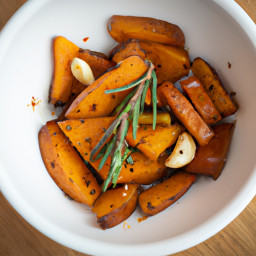
- 2 lb sweet potatoes, peeled and cut into 1-inch cubes
- 2 tbsp olive oil
- 2 garlic cloves, minced
- 1 tbsp fresh rosemary, chopped (or 1 tsp dried)
- Salt and freshly ground black pepper to taste
- Optional: zest of 1 lemon for finishing
1. Preheat oven to 425°F (220°C). Toss sweet potato cubes with olive oil, minced garlic, rosemary, salt, and pepper.
2. Spread in a single layer on a rimmed baking sheet (use parchment or a light oil coating).
3. Roast 20–25 minutes, turning once or twice, until edges are browned and potatoes are tender.
4. Remove from oven, sprinkle with lemon zest if using, and serve hot.

- 2 large sweet potatoes (about 1.5–2 lb), peeled and cut into 1/4–1/2-inch fries
- 2 tbsp olive oil
- 1 tsp cornstarch (optional, for extra crispness)
- 1 tsp smoked paprika
- 1/2 tsp garlic powder
- Salt and freshly ground black pepper to taste
1. Preheat oven to 425°F (220°C). If using, toss cut fries with cornstarch until lightly coated.
2. Drizzle with olive oil and toss with smoked paprika, garlic powder, salt, and pepper.
3. Spread fries in a single layer on a baking sheet (use two sheets if needed to avoid crowding).
4. Bake 20–25 minutes, flipping halfway, until edges are crisp and centers are tender. Serve immediately.

- 2 lb sweet potatoes, peeled and sliced 1/8-inch thick
- 1 1/2 cups heavy cream or whole milk
- 1 cup grated Gruyère or sharp cheddar
- 2 tbsp unsalted butter, plus extra for greasing
- 1 garlic clove, halved
- 1/4 tsp ground nutmeg
- Salt and freshly ground black pepper to taste
- Optional: 2 tbsp breadcrumbs for a crisp top
1. Preheat oven to 375°F (190°C). Rub a shallow baking dish with the cut garlic and butter to grease.
2. Arrange a layer of sweet potato slices in the dish, season lightly with salt, pepper, and a pinch of nutmeg, and sprinkle some cheese. Repeat to make 3–4 layers, finishing with cheese (and breadcrumbs, if using).
3. Pour cream evenly over the layers. Cover tightly with foil.
4. Bake covered 30–35 minutes, then remove foil and bake another 15–20 minutes until potatoes are tender and top is golden. Let rest 10 minutes before serving.

- 12–16 razor clams, scrubbed and rinsed
- 2 tbsp extra-virgin olive oil
- Juice of 1 lemon + extra wedges to serve
- 2 tbsp chopped flat-leaf parsley
- Sea salt and freshly ground black pepper
1. Rinse and purge the razor clams, remove any sand and trim the mantle if needed; keep in cold water until ready.
2. Heat a griddle or heavy skillet until very hot and brush with olive oil.
3. Place razor clams shell-side down (or directly on the hot surface if already opened) and cook 1–2 minutes until just opaque and edges curl.
4. Remove to a platter, season with salt and pepper, drizzle with lemon juice and olive oil, and sprinkle with chopped parsley.
5. Serve immediately with lemon wedges.

- 12 razor clams, cleaned
- 4 tbsp olive oil
- 4 garlic cloves, thinly sliced
- 1 small dried red chili or 1/4 tsp red pepper flakes
- 2 tbsp dry white wine
- 2 tbsp chopped parsley
- Lemon wedges and salt to taste
1. Clean razor clams thoroughly, discarding any with off odors; set aside.
2. Warm the olive oil in a skillet over medium heat, add sliced garlic and chili, and cook until garlic is golden but not bitter.
3. Add razor clams and toss briefly, then splash in white wine and cover for 1–2 minutes until clams are just cooked.
4. Remove cover, season with salt, sprinkle with parsley and a squeeze of lemon.
5. Transfer to a small serving dish with the garlicky oil and serve immediately.

- 12–16 razor clams, cleaned
- 4 tbsp extra-virgin olive oil
- 2 garlic cloves, finely chopped
- 1 cup tightly packed flat-leaf parsley leaves, finely chopped
- 1/4 cup dry white wine
- 1/4 cup light fish or vegetable stock (optional)
- Salt, freshly ground pepper, and lemon to taste
- Crusty bread to serve
1. Prepare and rinse razor clams, keeping them cold until use.
2. Heat olive oil in a shallow pan, gently sauté garlic until fragrant but not brown.
3. Add chopped parsley and briefly wilt, then deglaze with white wine and add stock if using; simmer 1–2 minutes.
4. Add razor clams, warm through for 1–2 minutes until just cooked; season with salt, pepper and a squeeze of lemon.
5. Serve spooned over toasted crusty bread, ensuring plenty of the green sauce.

- 12–15 razor clams, very fresh and thinly sliced
- 1 cup freshly squeezed lime (or lime + lemon) juice
- 1/2 small red onion, thinly sliced
- 1 small red chili (aji) or jalapeño, finely chopped
- 1/2 cup chopped cilantro
- Salt and freshly ground pepper
- Optional: diced avocado and chilled lettuce leaves for serving
1. Thoroughly clean razor clams, slice thinly across the width, and place in a glass bowl.
2. Cover clam slices with lime juice and refrigerate 10–20 minutes until firm and opaque (time varies by thickness; do not over-marinate).
3. Drain most of the juice, then toss clams with red onion, chili, cilantro, salt and pepper.
4. Optionally fold in diced avocado gently. Chill briefly and serve cold on lettuce leaves or with tortilla chips.
5. Use only very fresh clams and keep refrigerated; consume promptly.

- 12 razor clams, cleaned
- 3 tbsp extra-virgin olive oil
- 1 tsp pimentón de la Vera (sweet or smoked)
- Coarse sea salt (flakes)
- Lemon wedges and toasted bread or boiled potato slices to serve
1. Clean the razor clams thoroughly and drain.
2. Quickly grill or sauté the clams 1–2 minutes until just cooked; place on a serving board or slices of boiled potato/toast.
3. Drizzle generously with good olive oil, sprinkle with pimentón and finish with coarse sea salt.
4. Add a squeeze of lemon and serve immediately as a rustic tapa.

- Sea scallops, very fresh, thinly sliced
- Fresh lime juice (enough to cover)
- Red onion, thinly sliced
- Fresh cilantro, chopped
- Jalapeño or serrano chili, finely chopped
- Tomato, diced (optional)
- Sea salt and black pepper
- Olive oil (optional drizzle)
1. Arrange thinly sliced scallops in a shallow bowl and pour enough lime juice to cover; refrigerate 15–30 minutes until scallops are opaque and "cured."
2. Drain some juice if desired, then toss scallops with red onion, cilantro, chili, and diced tomato if using.
3. Season with salt and pepper, drizzle a little olive oil if liked, and serve chilled on small plates, tostadas, or tasting spoons.

- 200 g digestive biscuits (crushed)
- 100 g unsalted butter (melted)
- 1 can (397 g) dulce de leche (or thick caramel)
- 3 ripe bananas, sliced
- 300 ml whipping cream
- 2 tbsp icing (confectioners') sugar
- 3–4 passion fruits (pulp and seeds)
- 1 tsp lemon juice (optional)
1. Mix crushed biscuits with melted butter, press into a 23 cm tart or pie tin to form a compact base; chill 15–20 minutes.
2. Spread the dulce de leche evenly over the chilled base, then arrange a layer of banana slices on top.
3. Whip the whipping cream with icing sugar to soft peaks and spoon or pipe over the bananas.
4. Cut passion fruits and stir pulp with lemon juice; drizzle the pulp and seeds over the whipped cream just before serving.
5. Chill 30 minutes to set slightly, then serve chilled.

- 1 blind-baked 23 cm pie crust
- 4 ripe bananas, sliced
- 2 cups (480 ml) whole milk
- 1/2 cup (100 g) granulated sugar
- 3 large egg yolks
- 1/4 cup (30 g) cornstarch
- 2 tbsp unsalted butter
- 1 tsp vanilla extract
- 300 ml whipping cream, lightly sweetened
- 4–5 passion fruits (pulp)
- 2 tbsp sugar (for coulis)
- 1 tbsp water (if needed)
1. For the pastry cream: heat milk until steaming. Whisk sugar, yolks and cornstarch until smooth, temper with hot milk, return to saucepan and cook over medium heat until thick and bubbling; stir in butter and vanilla, cool slightly.
2. Line the baked crust with a single layer of banana slices. Pour warm pastry cream over bananas, smoothing the top; chill until set (about 2 hours).
3. Make coulis: scoop passion fruit pulp into a small saucepan with 2 tbsp sugar and 1 tbsp water; warm briefly until sugar dissolves, cool and strain if desired.
4. Whip cream to soft peaks and spread atop chilled pie or dollop on each slice.
5. Drizzle passion fruit coulis over the whipped cream and serve chilled.

- 1 cup (240 ml) passion fruit pulp (about 6–8 fruits)
- 3/4 cup (150 g) granulated sugar, divided
- 2 tsp powdered gelatin (or 1 sheet), plus 2 tbsp cold water
- 300 ml whipping cream, chilled
- 2 ripe bananas, sliced
- 2 tbsp unsalted butter
- 2 tbsp brown sugar
- Pinch ground cinnamon (optional)
- 1 tbsp lemon juice
1. Bloom gelatin in 2 tbsp cold water for 5–10 minutes. Warm 1/4 cup passion fruit pulp with 1/4 cup sugar until sugar dissolves; remove from heat and stir in gelatin until fully dissolved. Add remaining pulp and lemon juice; cool but do not set.
2. Whip chilled cream with remaining sugar to soft peaks. Fold about one-quarter of the whipped cream into the cooled passion fruit mix to lighten, then fold in the remainder gently until uniform.
3. Spoon mousse into serving glasses or ramekins and chill at least 3 hours until set.
4. For compote: melt butter in a skillet, add brown sugar, banana slices and cinnamon; cook briefly until bananas soften and glaze forms (2–3 minutes), remove from heat.
5. Spoon warm banana compote over chilled mousse just before serving.

- 4 large egg whites, at room temperature
- 1 cup (200 g) caster (superfine) sugar
- 1 tsp white vinegar
- 1 tbsp cornstarch
- 300 ml whipping cream
- 2 tbsp powdered sugar (for cream)
- 1 tsp vanilla extract
- 2–3 bananas, sliced
- 4–6 passion fruits (pulp)
1. Preheat oven to 120°C (250°F). Beat egg whites to soft peaks, then gradually add sugar until glossy and stiff; fold in vinegar and cornstarch.
2. Pile meringue into a round on a parchment-lined baking sheet, shaping a slight well in the center. Bake 1 hour to 1 hour 15 minutes, then turn off oven and let meringue cool inside with door ajar (prevents cracks).
3. Whip cream with powdered sugar and vanilla to soft peaks.
4. When ready to serve, transfer pavlova to a plate, fill the center with whipped cream, arrange banana slices over the cream, and spoon fresh passion fruit pulp over the top.
5. Serve immediately for best texture.

- 2 cups (480 ml) whipping cream
- 1 cup (240 ml) whole milk
- 1/3 cup (65 g) granulated sugar
- 1 vanilla bean (split) or 1 tsp vanilla extract
- 2 1/2 tsp powdered gelatin (or 3 gelatin leaves)
- 3 tbsp cold water (for blooming gelatin)
- 2 bananas, sliced into coins
- 1 tbsp butter
- 1 tbsp brown sugar
- 4–6 passion fruits (pulp) + 2 tbsp sugar (sauce)
1. Bloom gelatin in 3 tbsp cold water for 5–10 minutes. Heat cream, milk, and sugar with vanilla until steaming (do not boil). Remove from heat, stir in bloomed gelatin until dissolved; if using vanilla bean, remove pod.
2. Pour mixture into molds or ramekins, cool to room temperature, then refrigerate at least 4 hours or overnight until set.
3. For passion fruit sauce: combine pulp and 2 tbsp sugar in a small pan, warm until sugar dissolves, then cool.
4. For banana coins: melt butter in a skillet, add brown sugar and banana slices, cook 1–2 minutes per side until caramelized; remove.
5. Unmold panna cotta onto plates, spoon passion fruit sauce over, and garnish with caramelized banana coins.

- 1 sponge cake or 400 g store-bought sponge fingers, cut into cubes
- 3–4 ripe bananas, sliced
- 2 cups (480 ml) custard (homemade or store-bought)
- 1 cup (240 ml) passion fruit pulp
- 3–4 tbsp sugar (adjust to taste)
- 300 ml whipping cream, whipped with 2 tbsp icing sugar
- Optional: 2–3 tbsp sherry or orange juice to moisten sponge
1. If using, moisten sponge cubes lightly with sherry or orange juice and arrange a layer in the bottom of a large glass trifle bowl or individual glasses.
2. Spread a layer of banana slices over the sponge.
3. Pour a layer of custard over the bananas to cover, then chill 30 minutes.
4. Mix passion fruit pulp with sugar to taste; spoon a thin layer of the passion fruit mixture over the custard (this adds bright acidity between layers).
5. Repeat layers if desired, finishing with a thick layer of whipped cream on top.
6. Chill several hours to meld flavors before serving; garnish with extra passion fruit pulp and banana slices.

- 1 lb flank or sirloin steak, thinly sliced against the grain
- 2 bell peppers (mixed colors), sliced
- 4 scallions (spring onions), cut into 2-inch pieces
- 1–2 hot chili peppers (serrano or fresh red), thinly sliced
- 2 cloves garlic, minced
- 1 tsp fresh ginger, minced
- 2 tbsp soy sauce
- 1 tbsp oyster sauce
- 1 tsp sugar
- 1 tbsp cornstarch mixed with 3 tbsp water (slurry)
- 2 tbsp vegetable oil
- Salt and black pepper to taste
1. Toss steak with 1 tbsp soy sauce, a pinch of pepper, and 1 tsp cornstarch; let sit 10–15 minutes.
2. Heat 1 tbsp oil in a wok or large skillet over high heat; sear steak in batches until just browned; remove and keep warm.
3. Add remaining oil, stir-fry garlic, ginger and hot chili slices 30 seconds until fragrant.
4. Add bell peppers and stir-fry 2–3 minutes until crisp-tender.
5. Return steak to pan, add remaining soy sauce, oyster sauce and sugar; toss to combine.
6. Stir in scallions and cornstarch slurry, cook until sauce thickens and coats ingredients, 1–2 minutes.
7. Adjust seasoning, serve hot with rice.