Entree: Greenland – Southern Culinary Region – Arfeq (Hearty Greenlandic fish and potato stew flavored with onions and local herbs)
Food safety reminder: Follow safe food-handling practices and use a food thermometer to verify safe internal cooking temperatures.
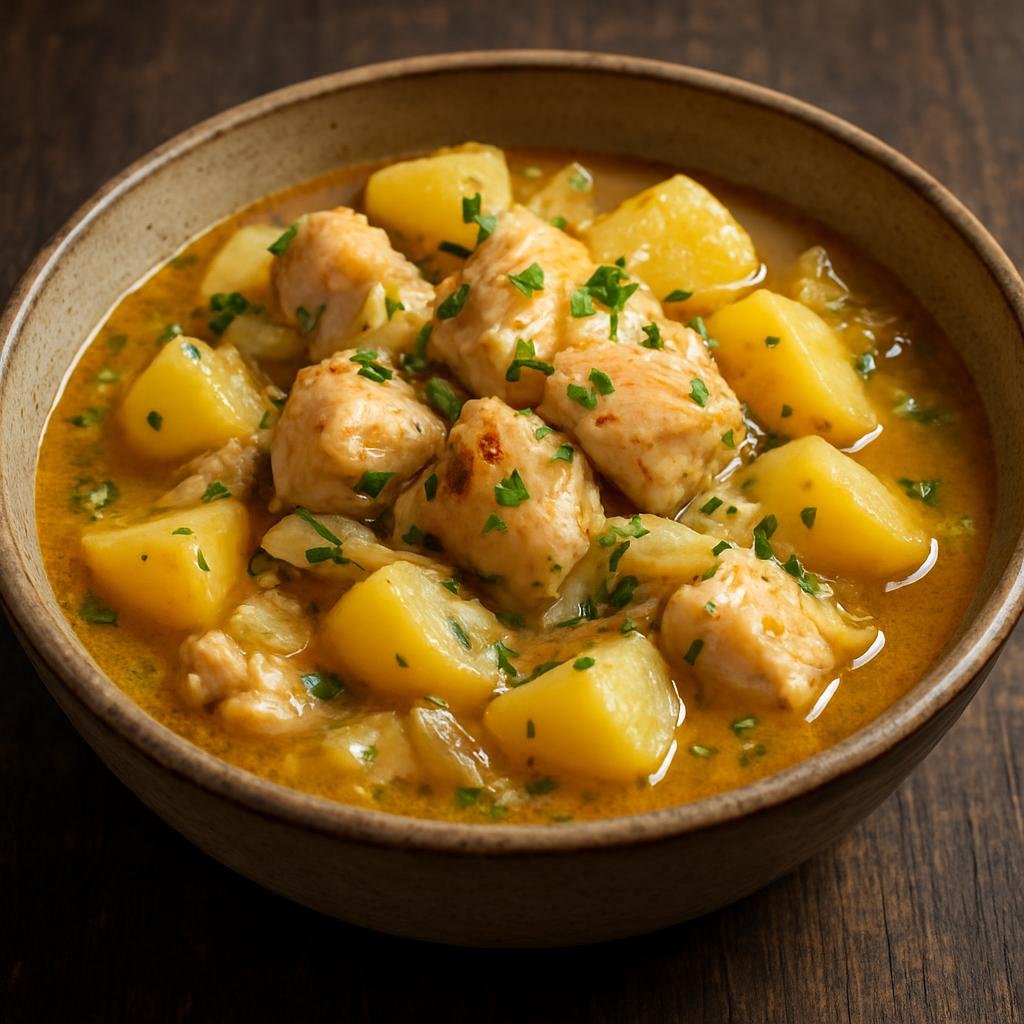
Serving Size: 4
Approximate Time
Prep
15 min
Cook
35 min
Total
50 min
Ingredients
U.S. measurements first, metric equivalents in parentheses. Conversions are approximate; oz means weight ounces, not fluid ounces.
- 3 tbsp (45 ml) unsalted butter
- 1 tbsp (15 ml) vegetable oil
- 1.5 lb (680 g) cod or halibut fillets, boneless, cut into 1–2 inch (2–5 cm) chunks
- 1 lb (450 g) potatoes, peeled and cut into 1-inch (2.5 cm) cubes
- 8 oz (225 g) rutabaga or turnip, peeled and diced
- 1 medium onion, finely chopped (about 6 oz (170 g))
- 2 medium carrots, sliced (about 6 oz (170 g))
- 2 cloves garlic, minced
- 4 cups (960 ml) fish stock or low-sodium chicken stock
- 1 bay leaf
- 1 tsp (5 g) dried thyme or 1 tsp (5 ml) fresh thyme leaves
- 1 tsp (5 g) sea salt, plus more to taste
- 1/2 tsp (2.5 g) freshly ground black pepper
- 1/2 cup (120 ml) whole milk or light cream
- 2 tbsp (8 g) fresh dill, chopped (or 2 tsp (2 g) dried dill)
- 1 tbsp (15 ml) lemon juice
Show original ingredient measurements
- 3 tbsp (45 ml) unsalted butter
- 1 tbsp (15 ml) vegetable oil
- 1.5 lb (680 g) cod or halibut fillets, boneless, cut into 1–2 inch (2–5 cm) chunks
- 1 lb (450 g) potatoes, peeled and cut into 1-inch (2.5 cm) cubes
- 8 oz (225 g) rutabaga or turnip, peeled and diced
- 1 medium onion, finely chopped (about 6 oz / 170 g)
- 2 medium carrots, sliced (about 6 oz / 170 g)
- 2 cloves garlic, minced
- 4 cups (960 ml) fish stock or low-sodium chicken stock
- 1 bay leaf
- 1 tsp (5 g) dried thyme or 1 tsp fresh thyme leaves
- 1 tsp (5 g) sea salt, plus more to taste
- 1/2 tsp (2.5 g) freshly ground black pepper
- 1/2 cup (120 ml) whole milk or light cream
- 2 tbsp (8 g) fresh dill, chopped (or 2 tsp (2 g) dried dill)
- 1 tbsp (15 ml) lemon juice
Instructions
U.S. measurements first, metric equivalents in parentheses. Conversions are approximate.
1. Heat butter and oil in a large heavy pot over medium heat until foaming. Season fish chunks lightly with 1/2 tsp (2.5 ml) salt and a pinch of pepper and briefly sear 1–2 minutes per side just until lightly golden. Transfer fish to a plate and set aside.
2. Add onions, carrots, and rutabaga to the pot and cook over medium heat 6–8 minutes, stirring, until softened and translucent. Add garlic and cook 30 seconds more.
3. Stir in potatoes, bay leaf, thyme, remaining salt and pepper, then pour in the fish stock. Bring to a gentle boil, then reduce heat to a simmer. Cover and cook 12–15 minutes, until potatoes and rutabaga are nearly tender.
4. Return the seared fish to the pot, nestling the pieces into the vegetables. Simmer gently, uncovered, 5–7 minutes more, until fish is opaque and flakes easily.
5. Stir in milk or cream, lemon juice, and chopped dill. Warm through 1–2 minutes without boiling. Taste and adjust seasoning.
6. Remove bay leaf and serve hot in bowls with an extra sprinkle of fresh dill.
Show original instructions
1. Heat butter and oil in a large heavy pot over medium heat until foaming. Season fish chunks lightly with 1/2 tsp salt and a pinch of pepper and briefly sear 1–2 minutes per side just until lightly golden. Transfer fish to a plate and set aside.
2. Add onions, carrots, and rutabaga to the pot and cook over medium heat 6–8 minutes, stirring, until softened and translucent. Add garlic and cook 30 seconds more.
3. Stir in potatoes, bay leaf, thyme, remaining salt and pepper, then pour in the fish stock. Bring to a gentle boil, then reduce heat to a simmer. Cover and cook 12–15 minutes, until potatoes and rutabaga are nearly tender.
4. Return the seared fish to the pot, nestling the pieces into the vegetables. Simmer gently, uncovered, 5–7 minutes more, until fish is opaque and flakes easily.
5. Stir in milk or cream, lemon juice, and chopped dill. Warm through 1–2 minutes without boiling. Taste and adjust seasoning.
6. Remove bay leaf and serve hot in bowls with an extra sprinkle of fresh dill.
Estimated Nutritional Information*
Per serving | Servings: 4
Calories: 454 kcal
Carbohydrates: 37.1 g
Protein: 40.3 g
Fat: 16.1 g
Saturated fat: 7.1 g
Cholesterol: 99 mg
Fiber: 6.3 g
Sodium: 1125 mg
Potassium: 1846 mg
Calcium: 233 mg
Iron: 4.34 mg
Vitamin A: 475 µg RAE
Vitamin C: 47.9 mg
Vitamin D: 1.9 µg
Nutrition estimated: November 5, 2026
*Values are estimates based on USDA data and mathematical calculations. Actual values may vary. Where data are unavailable, those contributions are excluded. Sodium is a known subtotal. Missing contributions are unknown, not zero.