Entree: Eswatini – Northern Culinary Region – Samp and Beans (crushed maize and beans porridge)
Food safety reminder: Follow safe food-handling practices and use a food thermometer to verify safe internal cooking temperatures.
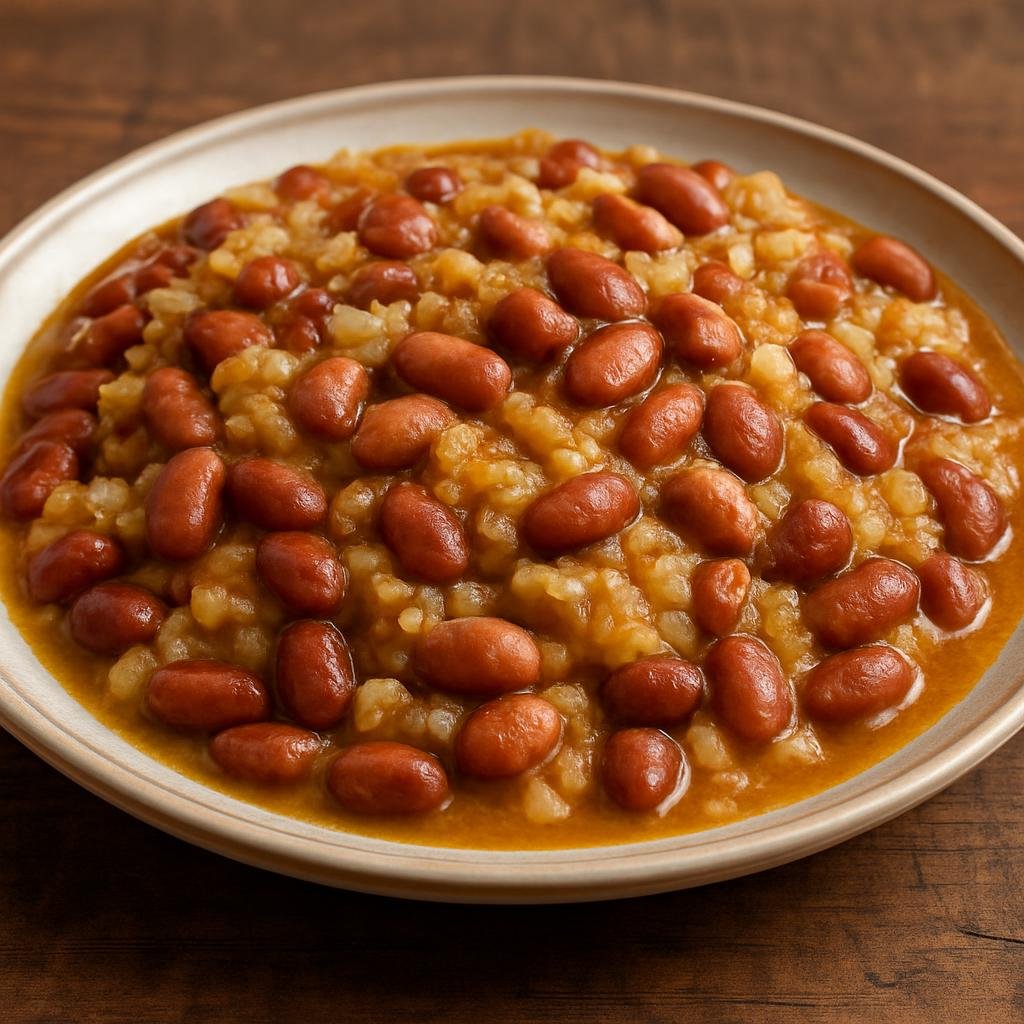
Serving Size: 6
Approximate Time
Prep
25 min
Cook
1 hr 30 min
Additional
8 hrs
Total
10 hrs
Ingredients
U.S. measurements first, metric equivalents in parentheses. Conversions are approximate; oz means weight ounces, not fluid ounces.
12 oz (340 g) dried cracked hominy (samp; crushed dried maize kernels) (estimated edible portion: 12 oz (340 g))
10 5/8 oz (300 g) dried sugar beans, soaked overnight and drained
6 cups (1.44 L) water, plus additional water for soaking and adjusting
4 tbsp (60 ml) (about 1 15/16 oz (55 g)) vegetable oil
1 medium onion, chopped (about 3 7/8 oz (110 g) edible portion)
2 cloves garlic, minced (about 0.21 oz (6 g))
8 1/2 oz (240 g) chopped fresh tomatoes
0.18 oz (5 g) baking soda, optional
0.35 oz (10 g) salt, or to taste
0.071 oz (2 g) ground black pepper
1 bay leaf, optional (about 0.0071 oz (0.2 g))
Fresh parsley, a handful, chopped (about 0.53 oz (15 g))
Show original ingredient measurements
340 g dried cracked hominy (samp; crushed dried maize kernels) (estimated edible portion: 340 g)
300 g dried sugar beans, soaked overnight and drained
1.44 L water, plus additional water for soaking and adjusting
60 ml (about 55 g) vegetable oil
1 medium onion, chopped (about 110 g edible portion)
2 cloves garlic, minced (about 6 g)
240 g chopped fresh tomatoes
5 g baking soda, optional
10 g salt, or to taste
2 g ground black pepper
1 bay leaf, optional (about 0.2 g)
Fresh parsley, a handful, chopped (about 15 g)
Instructions
U.S. measurements first, metric equivalents in parentheses. Conversions are approximate.
1. Soak the dried sugar beans overnight in plenty of water; add the optional baking soda if using. Drain and rinse the beans.
2. Put the soaked beans and 4 cups (960 ml) of the stated cooking water in a large pot. Bring to a boil, then reduce the heat and simmer for 20–30 minutes, until the beans begin to soften but are not tender.
3. Add the dried cracked hominy, the remaining 2 cups (480 ml) cooking water, and the optional bay leaf. Bring to a gentle simmer, cover, and cook for 60–90 minutes, stirring occasionally, until the beans and hominy are soft and creamy. Add extra water as needed to prevent sticking and reach the desired consistency.
4. While the beans and hominy cook, heat the oil in a skillet over medium heat. Add the onion and sauté for about 5 minutes, until translucent.
5. Add the garlic and tomatoes to the skillet and cook for 6–8 minutes, until the tomatoes soften and the mixture is fragrant.
6. Stir the tomato mixture into the pot. Add the salt and black pepper, then simmer uncovered for 10–15 minutes, stirring occasionally. Adjust the consistency with additional water if needed.
7. Remove and discard the bay leaf. Taste and adjust seasoning, garnish with parsley, and serve hot.
Show original instructions
1. Soak the dried sugar beans overnight in plenty of water; add the optional baking soda if using. Drain and rinse the beans.
2. Put the soaked beans and 960 ml of the stated cooking water in a large pot. Bring to a boil, then reduce the heat and simmer for 20–30 minutes, until the beans begin to soften but are not tender.
3. Add the dried cracked hominy, the remaining 480 ml cooking water, and the optional bay leaf. Bring to a gentle simmer, cover, and cook for 60–90 minutes, stirring occasionally, until the beans and hominy are soft and creamy. Add extra water as needed to prevent sticking and reach the desired consistency.
4. While the beans and hominy cook, heat the oil in a skillet over medium heat. Add the onion and sauté for about 5 minutes, until translucent.
5. Add the garlic and tomatoes to the skillet and cook for 6–8 minutes, until the tomatoes soften and the mixture is fragrant.
6. Stir the tomato mixture into the pot. Add the salt and black pepper, then simmer uncovered for 10–15 minutes, stirring occasionally. Adjust the consistency with additional water if needed.
7. Remove and discard the bay leaf. Taste and adjust seasoning, garnish with parsley, and serve hot.
Estimated Nutritional Information*
Per serving | Servings: 6
Calories: 268 kcal
Carbohydrates: 42.3 g
Protein: 3.1 g
Fat: 9.8 g
Saturated fat: 1.5 g
Sodium: 1079 mg
Potassium: 158 mg
Calcium: 38 mg
Iron: 1.15 mg
Vitamin A: 17 µg RAE
Vitamin C: 7.3 mg
Nutrition estimated: November 6, 2026
*Values are estimates based on USDA data and mathematical calculations. Actual values may vary. Where data are unavailable, those contributions are excluded. Calories, Carbohydrates, Protein, Fat, Saturated fat, Sodium, Potassium, Calcium, Iron, Vitamin A and Vitamin C are known subtotals. Missing contributions are unknown, not zero.