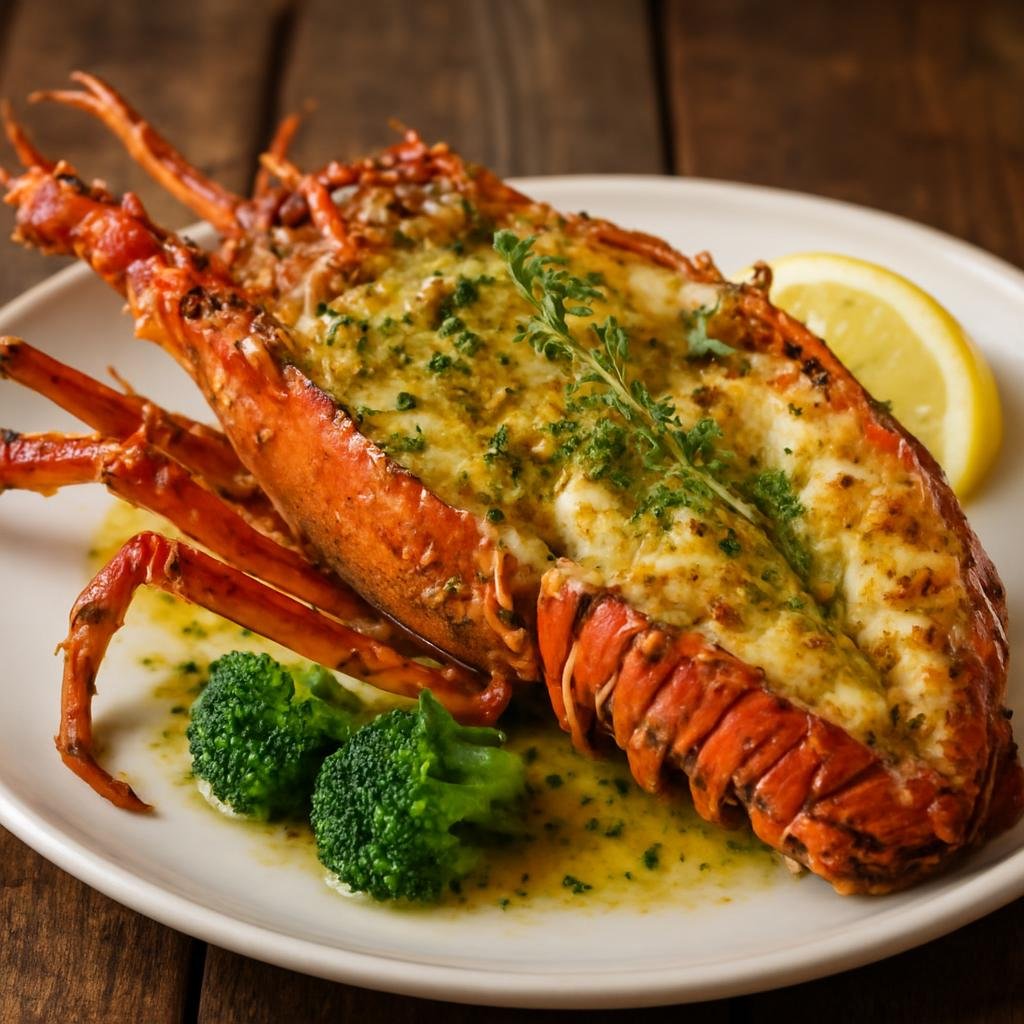
Entree: Bermuda – Central Culinary Region – Spiny Lobster (Bermudian grilled spiny lobster split and served with a rum‑thyme garlic butter)
Food safety reminder: Follow safe food-handling practices and use a food thermometer to verify safe internal cooking temperatures.
Ingredients
U.S. measurements first, metric equivalents in parentheses. Conversions are approximate; oz means weight ounces, not fluid ounces.
- 2 spiny lobsters, whole, split lengthwise, approx. 1.25 lb (570 g) each
- 2 tbsp (30 ml) olive oil
- 6 tbsp (85 g) unsalted butter
- 3 cloves garlic, minced, about 0.3 oz (9 g)
- 2 tbsp (30 ml) dark Bermuda rum
- 2 tbsp (30 ml) fresh lemon juice
- 2 tbsp (8 g) fresh thyme leaves, chopped (or 2 tsp (2 g) dried thyme)
- 1 tsp (5 g) kosher salt
- 1/2 tsp (2.5 g) freshly ground black pepper
- 1/4 tsp (1 g) cayenne pepper (optional)
- 1 lemon, cut into wedges
- 2 tbsp (20 g) chopped fresh parsley for garnish
Show original ingredient measurements
- 2 spiny lobsters, whole, split lengthwise, approx. 1.25 lb (570 g) each
- 2 tbsp (30 ml) olive oil
- 6 tbsp (85 g) unsalted butter
- 3 cloves garlic, minced, about 0.3 oz (9 g)
- 2 tbsp (30 ml) dark Bermuda rum
- 2 tbsp (30 ml) fresh lemon juice
- 2 tbsp (8 g) fresh thyme leaves, chopped (or 2 tsp/2 g dried thyme)
- 1 tsp (5 g) kosher salt
- 1/2 tsp (2.5 g) freshly ground black pepper
- 1/4 tsp (1 g) cayenne pepper (optional)
- 1 lemon, cut into wedges
- 2 tbsp (20 g) chopped fresh parsley for garnish
Instructions
U.S. measurements first, metric equivalents in parentheses. Conversions are approximate.
1. Prepare the lobsters by rinsing and patting dry. With a sharp chef’s knife or kitchen shears, split each lobster lengthwise through the back to expose the meat; remove any vein or dark intestinal tract. Brush the meat lightly with olive oil and season with 1/2 tsp (2.5 ml) salt and 1/4 tsp (1.25 ml) pepper.
2. Preheat a grill or grill pan to medium-high heat. Place the lobster halves flesh-side down and cook 3–4 minutes to get good char marks, then flip and grill flesh-side up 2–3 minutes until just opaque and cooked through. Total cooking time will vary with lobster size; avoid overcooking.
3. While lobsters grill, melt butter in a small saucepan over medium heat. Add the minced garlic and sauté 30–45 seconds until fragrant but not browned. Stir in the rum and let it reduce for 1 minute, then add lemon juice, chopped thyme, remaining 1/2 tsp (2.5 ml) salt, cayenne (if using), and remaining pepper. Keep warm.
4. Transfer the grilled lobsters to a serving platter. Spoon the warm rum‑thyme garlic butter over the split lobsters and garnish with chopped parsley and lemon wedges.
5. Serve immediately with extra butter on the side and simple sides such as boiled potatoes, a crisp green salad, or crusty bread.
Show original instructions
1. Prepare the lobsters by rinsing and patting dry. With a sharp chef’s knife or kitchen shears, split each lobster lengthwise through the back to expose the meat; remove any vein or dark intestinal tract. Brush the meat lightly with olive oil and season with 1/2 tsp salt and 1/4 tsp pepper.
2. Preheat a grill or grill pan to medium-high heat. Place the lobster halves flesh-side down and cook 3–4 minutes to get good char marks, then flip and grill flesh-side up 2–3 minutes until just opaque and cooked through. Total cooking time will vary with lobster size; avoid overcooking.
3. While lobsters grill, melt butter in a small saucepan over medium heat. Add the minced garlic and sauté 30–45 seconds until fragrant but not browned. Stir in the rum and let it reduce for 1 minute, then add lemon juice, chopped thyme, remaining 1/2 tsp salt, cayenne (if using), and remaining pepper. Keep warm.
4. Transfer the grilled lobsters to a serving platter. Spoon the warm rum‑thyme garlic butter over the split lobsters and garnish with chopped parsley and lemon wedges.
5. Serve immediately with extra butter on the side and simple sides such as boiled potatoes, a crisp green salad, or crusty bread.
Per serving | Servings: 4
Nutrition estimated: November 5, 2026
*Values are estimates based on USDA data and mathematical calculations. Actual values may vary. Where data are unavailable, those contributions are excluded. Calories, Carbohydrates, Protein, Fat, Saturated fat, Cholesterol, Fiber, Sodium, Potassium, Calcium, Iron, Vitamin A and Vitamin C are known subtotals. Missing contributions are unknown, not zero.