Entree: Slovakia – National Cuisine – Hovädzí Guláš (Slow-simmered Slovak beef stew seasoned primarily with sweet paprika and onions)
Food safety reminder: Follow safe food-handling practices and use a food thermometer to verify safe internal cooking temperatures.
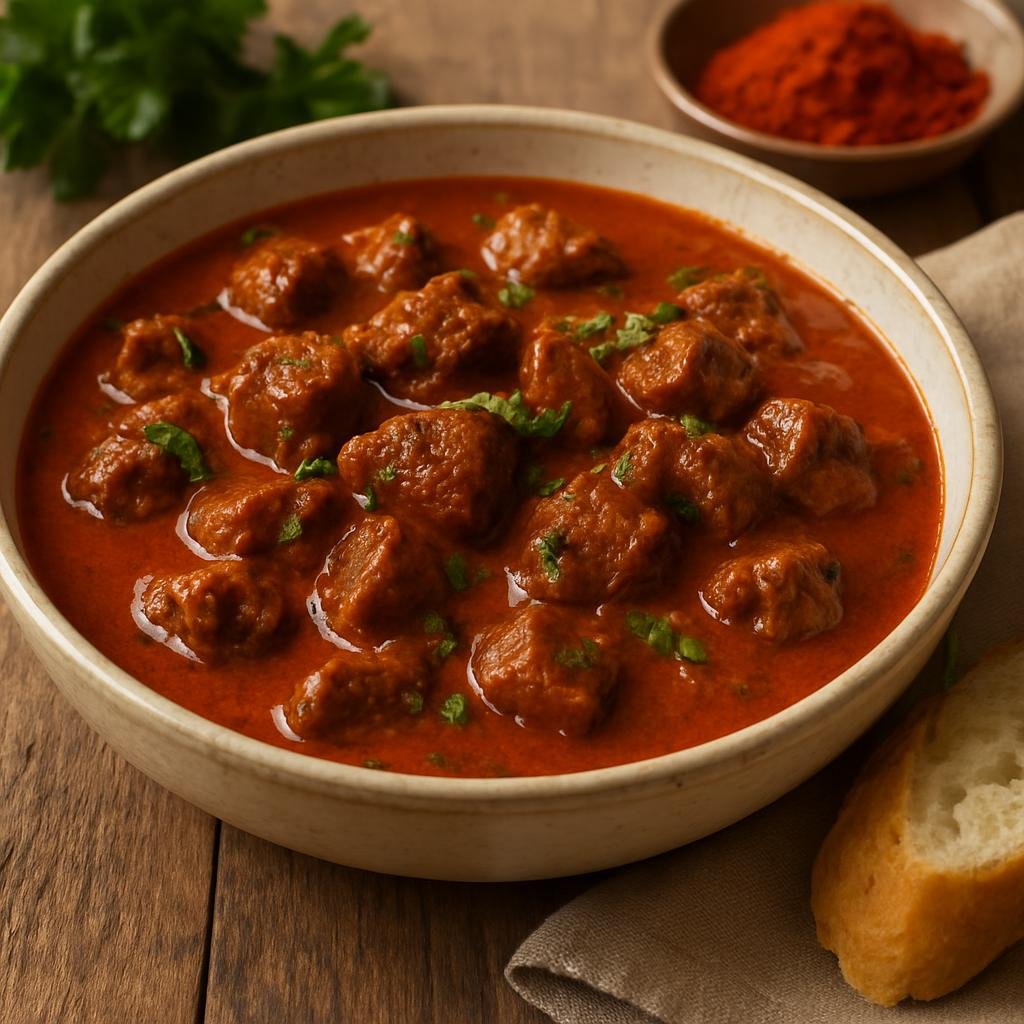
Serving Size: 4
Approximate Time
Prep
35 min
Cook
1 hr 50 min
Total
2 hrs 20 min
Ingredients
- 2 lb (900 g) beef chuck, cut into 1-inch (2.5 cm) cubes
- 2 tbsp (30 ml) lard or vegetable oil
- 2 large yellow onions, thinly sliced
- 3 garlic cloves, minced
- 2 tbsp (20 g) sweet paprika (preferably Hungarian)
- 1 tsp (5 g) caraway seeds, lightly crushed (optional)
- 1 tbsp (15 g) tomato paste
- 1 cup (240 ml) beef stock
- 1/2 cup (120 ml) dry red wine (optional)
- 1 bay leaf
- 1 tsp (1 g) dried marjoram or thyme
- 1 tsp (6 g) kosher salt, or to taste
- 1/2 tsp (2.5 g) black pepper
- 1 tbsp (15 ml) flour (optional, for slight thickening)
- 2 tbsp (30 ml) sour cream for serving (optional)
- Chopped fresh parsley for garnish
Instructions
U.S. measurements first, metric equivalents in parentheses. Conversions are approximate.
1. Pat the beef cubes dry and season lightly with salt and pepper. In a heavy-bottomed pot or Dutch oven over medium-high heat, warm 2 tbsp (30 ml) lard or oil until shimmering. Brown the beef in batches without overcrowding, about 4–5 minutes per batch; remove and set aside.
2. Reduce heat to medium and add the sliced onions to the pot. Cook, stirring frequently, until deeply golden and caramelized, about 20–25 minutes. This step builds the goulash's characteristic sweet-onion base.
3. Stir in the minced garlic, 2 tbsp (30 ml) sweet paprika, and crushed caraway seeds for 1 minute to bloom the paprika, then add 1 tbsp (15 ml) tomato paste and cook another minute. Be careful not to burn the paprika.
4. Return the browned beef to the pot, add 1 cup (240 ml) beef stock and 1/2 cup (120 ml) red wine if using, add the bay leaf and 1 tsp (5 ml) marjoram, and bring to a gentle simmer. Scrape up any browned bits from the bottom of the pot.
5. Cover partially and simmer on low heat for 1.5–2 hours, or until the beef is tender and the sauce is concentrated. Stir occasionally and add a splash more stock or water if it becomes too thick.
6. If you prefer a slightly thicker sauce, mix 1 tbsp (15 ml) flour with a few tablespoons of cold water to make a slurry, stir into the goulash, and simmer 5–10 minutes. Adjust seasoning with salt and pepper.
7. Remove the bay leaf, stir in 2 tbsp (30 ml) sour cream if desired for richness, and garnish with chopped parsley. Serve hot with boiled potatoes, bread dumplings, or fresh rye bread.
Show original instructions
1. Pat the beef cubes dry and season lightly with salt and pepper. In a heavy-bottomed pot or Dutch oven over medium-high heat, warm 2 tbsp lard or oil until shimmering. Brown the beef in batches without overcrowding, about 4–5 minutes per batch; remove and set aside.
2. Reduce heat to medium and add the sliced onions to the pot. Cook, stirring frequently, until deeply golden and caramelized, about 20–25 minutes. This step builds the goulash's characteristic sweet-onion base.
3. Stir in the minced garlic, 2 tbsp sweet paprika, and crushed caraway seeds for 1 minute to bloom the paprika, then add 1 tbsp tomato paste and cook another minute. Be careful not to burn the paprika.
4. Return the browned beef to the pot, add 1 cup beef stock and 1/2 cup red wine if using, add the bay leaf and 1 tsp marjoram, and bring to a gentle simmer. Scrape up any browned bits from the bottom of the pot.
5. Cover partially and simmer on low heat for 1.5–2 hours, or until the beef is tender and the sauce is concentrated. Stir occasionally and add a splash more stock or water if it becomes too thick.
6. If you prefer a slightly thicker sauce, mix 1 tbsp flour with a few tablespoons of cold water to make a slurry, stir into the goulash, and simmer 5–10 minutes. Adjust seasoning with salt and pepper.
7. Remove the bay leaf, stir in 2 tbsp sour cream if desired for richness, and garnish with chopped parsley. Serve hot with boiled potatoes, bread dumplings, or fresh rye bread.
Estimated Nutritional Information*
Per serving | Servings: 4
Calories: 449 kcal
Carbohydrates: 15.4 g
Protein: 51.6 g
Fat: 18.7 g
Saturated fat: 7.5 g
Cholesterol: 154 mg
Fiber: 4 g
Sodium: 930 mg
Potassium: 1176 mg
Calcium: 92 mg
Iron: 6.87 mg
Vitamin A: 139 µg RAE
Vitamin C: 7.6 mg
Vitamin D: 0.4 µg
Generated: 2026-11-05T19:42:20+00:00
*Values are estimates based on USDA data and mathematical calculations. Actual values may vary. Where data are unavailable, those contributions are excluded. Calories, Carbohydrates, Protein, Fat, Saturated fat, Cholesterol, Fiber, Sodium, Potassium, Calcium, Iron, Vitamin A, Vitamin C and Vitamin D are known subtotals. Missing contributions are unknown, not zero.