Entree: Portugal – Alentejo – Feijoada de Chocos (A hearty Alentejo stew of cuttlefish simmered with beans, tomatoes, and herbs, served with rice)
Food safety reminder: Follow safe food-handling practices and use a food thermometer to verify safe internal cooking temperatures.
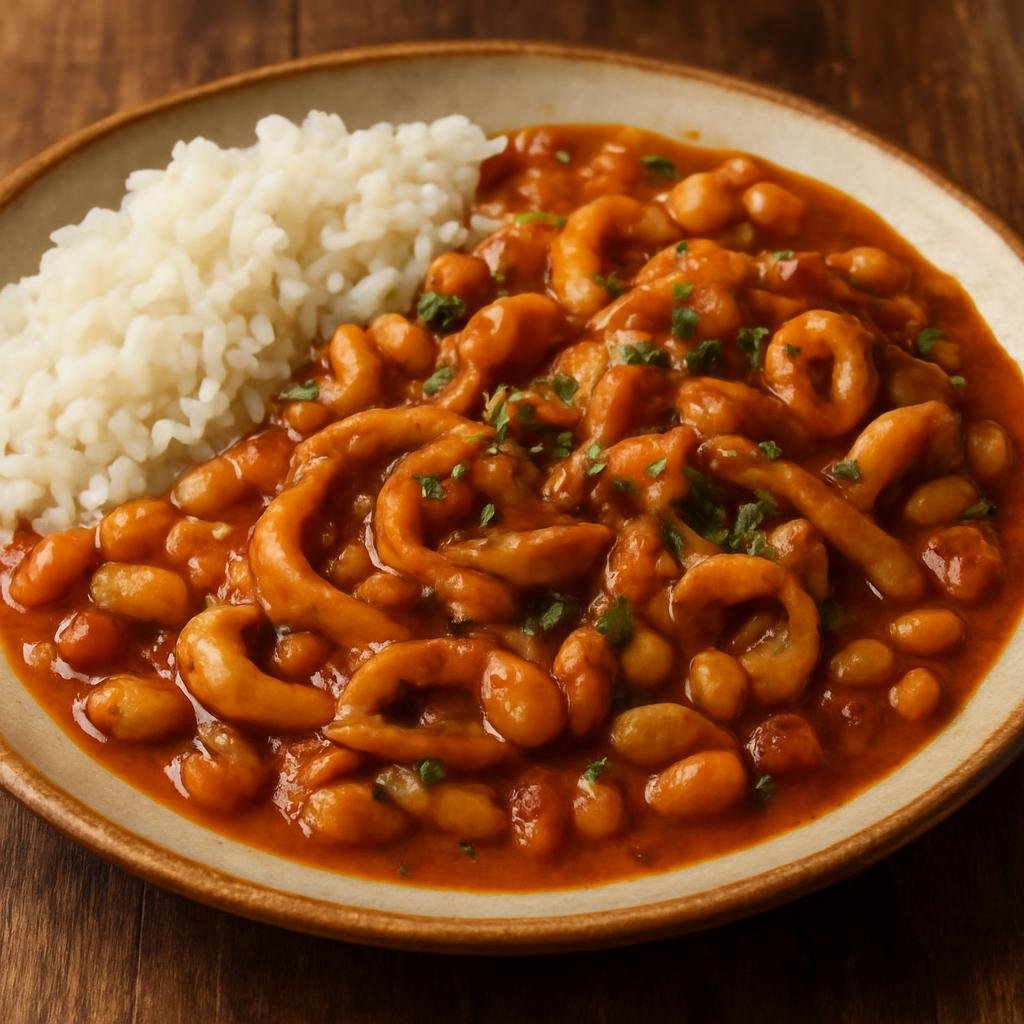
Serving Size: 4
Approximate Time
Prep
20 min
Cook
55 min
Total
1 hr 15 min
Ingredients
U.S. measurements first, metric equivalents in parentheses. Conversions are approximate; oz means weight ounces, not fluid ounces.
1 lb (450 g) cleaned cuttlefish, bodies sliced into rings and tentacles reserved (estimated edible portion: 15 7/8 oz (450 g))
1 cup (200 g) dried white beans, such as cannellini, soaked overnight and cooked until tender; alternatively, use 2 cups (480 g) cooked white beans. Selected example: cannellini beans. (estimated edible portion: 1 lb 7/8 oz (480 g))
3 tbsp (45 ml) good-quality olive oil
1 large onion, finely chopped (about 8 oz (225 g))
3 cloves garlic, minced (about 5/16 oz (9 g))
1 green bell pepper, diced (about 6 oz (170 g))
1 can (14 oz (400 g)) crushed tomatoes
1/2 cup (120 ml) dry white wine
3 cups (720 ml) fish stock (selected option; light seafood stock or water may also be used) (estimated edible portion: 1 lb 9 3/8 oz (720 g))
1 tsp (2 g) smoked paprika (pimentón)
1 bay leaf
1 small bunch fresh coriander (cilantro), chopped; reserve some for garnish (estimated edible portion: 1 1/16 oz (30 g))
1 tbsp (15 ml) red wine vinegar (selected option; lemon juice may also be used)
Salt and freshly ground black pepper, to taste
1 cup (185 g) long-grain rice, rinsed, for serving
2 cups (480 ml) water (selected option; stock may also be used) for cooking rice
2 tbsp (30 ml) olive oil (selected option; butter may also be used), optional
Show original ingredient measurements
1 lb (450 g) cleaned cuttlefish, bodies sliced into rings and tentacles reserved (estimated edible portion: 450 g)
1 cup (200 g) dried white beans, such as cannellini, soaked overnight and cooked until tender; alternatively, use 2 cups (480 g) cooked white beans. Selected example: cannellini beans. (estimated edible portion: 480 g)
3 tbsp (45 ml) good-quality olive oil
1 large onion, finely chopped (about 8 oz / 225 g)
3 cloves garlic, minced (about 9 g)
1 green bell pepper, diced (about 6 oz / 170 g)
1 can (14 oz / 400 g) crushed tomatoes
1/2 cup (120 ml) dry white wine
3 cups (720 ml) fish stock (selected option; light seafood stock or water may also be used) (estimated edible portion: 720 g)
1 tsp (2 g) smoked paprika (pimentón)
1 bay leaf
1 small bunch fresh coriander (cilantro), chopped; reserve some for garnish (estimated edible portion: 30 g)
1 tbsp (15 ml) red wine vinegar (selected option; lemon juice may also be used)
Salt and freshly ground black pepper, to taste
1 cup (185 g) long-grain rice, rinsed, for serving
2 cups (480 ml) water (selected option; stock may also be used) for cooking rice
2 tbsp (30 ml) olive oil (selected option; butter may also be used), optional
Instructions
1. If using dried beans, drain the overnight-soaked beans, cover with fresh water, and cook until tender, about 45–60 minutes; drain and set aside. If using cooked beans, rinse and drain them.
2. Heat 3 tbsp (45 ml) olive oil in a large heavy-bottomed pot over medium heat. Add the onion and green bell pepper and cook for 6–8 minutes, until softened. Add the garlic and smoked paprika and cook for 1 minute, until fragrant.
3. Stir in the crushed tomatoes and cook for 3–4 minutes. Pour in the white wine and simmer for about 2 minutes to reduce slightly.
4. Add the fish stock, bay leaf, and cooked beans. Bring to a gentle simmer, then add the cuttlefish rings and tentacles. Simmer gently for 20–25 minutes, until tender; avoid boiling vigorously.
5. During the final 2 minutes of cooking, stir in the chopped coriander and red wine vinegar. Season with salt and freshly ground black pepper to taste.
6. Meanwhile, bring 2 cups (480 ml) water or stock to a boil in a saucepan. Add the rinsed rice, a pinch of salt, and the optional 2 tbsp (30 ml) olive oil or butter. Reduce the heat to low, cover, and simmer for 15–18 minutes, until the liquid is absorbed. Fluff with a fork.
7. Remove the bay leaf. Serve the feijoada de chocos over the rice and garnish with the reserved coriander.
Estimated Nutritional Information*
Per serving | Servings: 4
Calories: 697 kcal
Carbohydrates: 85.2 g
Protein: 39.9 g
Fat: 20 g
Nutrition estimated: November 6, 2026
*Values are estimates based on USDA data and mathematical calculations. Actual values may vary. Where data are unavailable, those contributions are excluded. Calories, Carbohydrates, Protein and Fat are known subtotals. Missing contributions are unknown, not zero.