Entree: Philippines – Bicol – Kandingga (Bicol-style spicy coconut milk stew of goat meat simmered with chiles and aromatics)
Food safety reminder: Follow safe food-handling practices and use a food thermometer to verify safe internal cooking temperatures.
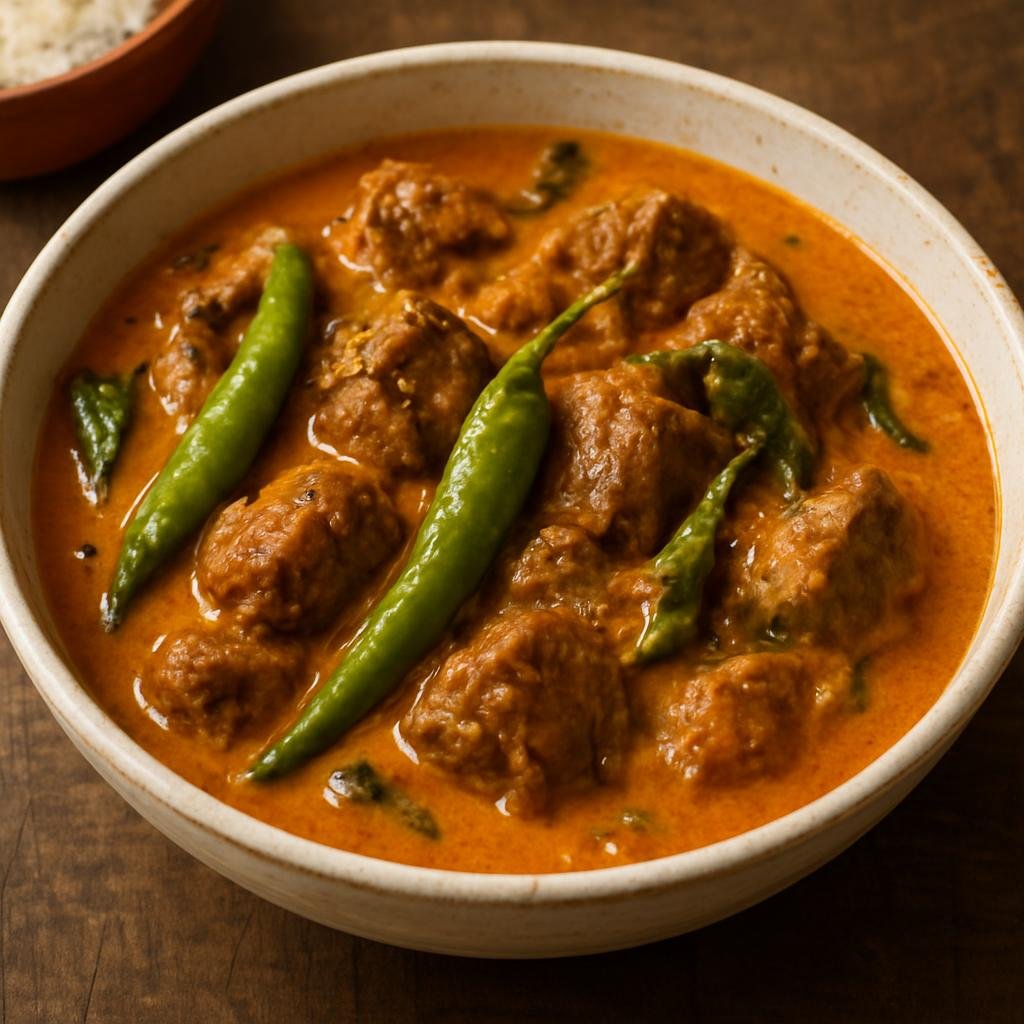
Ingredients
U.S. measurements first, metric equivalents in parentheses. Conversions are approximate; oz means weight ounces, not fluid ounces.
1 lb 15 3/4 oz (900 g) bone-in goat meat, cut into 1.18 to 1.97 in (3–5 cm) chunks; estimated edible raw meat: 1 lb 6 1/4 oz (630 g) (assumed 70% edible yield after bone)
2 tbsp (30 ml) (about 15/16 oz (27 g)) vegetable oil
5 1/4 oz (150 g) onion, thinly sliced
5/8 oz (18 g) garlic, minced
0.984 in (2.5 cm) piece ginger, peeled and julienned (about 0.18 oz (5 g))
8 1/2 oz (240 g) ripe tomatoes, chopped
2 tsp (10 ml) fish sauce
1 cup (240 ml) thin coconut milk
1 cup (240 ml) coconut cream
8–12 bird’s eye chiles (use 10 for estimation), whole or halved
0.088 oz (2.5 g) ground black pepper
0.18 oz (5 g) salt, adjusted to taste
1/2 cup (120 ml) water, plus additional water as needed to maintain a gentle simmer
2 tbsp (30 ml) chopped scallions (about 0.53 oz (15 g)), optional
Show original ingredient measurements
900 g bone-in goat meat, cut into 3–5 cm chunks; estimated edible raw meat: 630 g (assumed 70% edible yield after bone)
30 ml (about 27 g) vegetable oil
150 g onion, thinly sliced
18 g garlic, minced
2.5 cm piece ginger, peeled and julienned (about 5 g)
240 g ripe tomatoes, chopped
10 ml fish sauce
240 ml thin coconut milk
240 ml coconut cream
8–12 bird’s eye chiles (use 10 for estimation), whole or halved
2.5 g ground black pepper
5 g salt, adjusted to taste
120 ml water, plus additional water as needed to maintain a gentle simmer
30 ml chopped scallions (about 15 g), optional
Instructions
U.S. measurements first, metric equivalents in parentheses. Conversions are approximate.
1. Heat the vegetable oil in a heavy pot over medium-high heat. Brown the goat pieces in batches, about 4–5 minutes per side. Remove and set aside.
2. Reduce the heat to medium. Add the onion and sauté until translucent, about 3–4 minutes. Add the garlic and ginger and cook until fragrant, about 1 minute.
3. Add the tomatoes and cook until they begin to break down, about 3–4 minutes. Return the browned goat to the pot.
4. Add the fish sauce and stir to coat the meat. Pour in the thin coconut milk and 1/2 cup (120 ml) water. Bring to a gentle boil, then reduce the heat to low.
5. Cover and simmer gently until the goat is tender, about 1–1½ hours, stirring occasionally. Add more water as needed to maintain a gentle simmer.
6. Stir in the coconut cream and bird’s eye chiles. Simmer uncovered for 10–15 minutes, until the sauce thickens slightly and the flavors meld.
7. Season with the salt and ground black pepper. Adjust salt or fish sauce to taste.
8. Serve hot. Garnish with scallions if desired.
Show original instructions
1. Heat the vegetable oil in a heavy pot over medium-high heat. Brown the goat pieces in batches, about 4–5 minutes per side. Remove and set aside.
2. Reduce the heat to medium. Add the onion and sauté until translucent, about 3–4 minutes. Add the garlic and ginger and cook until fragrant, about 1 minute.
3. Add the tomatoes and cook until they begin to break down, about 3–4 minutes. Return the browned goat to the pot.
4. Add the fish sauce and stir to coat the meat. Pour in the thin coconut milk and 120 ml water. Bring to a gentle boil, then reduce the heat to low.
5. Cover and simmer gently until the goat is tender, about 1–1½ hours, stirring occasionally. Add more water as needed to maintain a gentle simmer.
6. Stir in the coconut cream and bird’s eye chiles. Simmer uncovered for 10–15 minutes, until the sauce thickens slightly and the flavors meld.
7. Season with the salt and ground black pepper. Adjust salt or fish sauce to taste.
8. Serve hot. Garnish with scallions if desired.
Per serving | Servings: 4
Nutrition estimated: November 6, 2026
*Values are estimates based on USDA data and mathematical calculations. Actual values may vary. Where data are unavailable, those contributions are excluded. Calories, Carbohydrates, Protein, Fat, Saturated fat, Cholesterol, Fiber, Sodium, Potassium, Calcium, Iron, Vitamin A and Vitamin C are known subtotals. Missing contributions are unknown, not zero.