Entree: Seychelles – Kari poul (Octopus Curry)
Food safety reminder: Follow safe food-handling practices and use a food thermometer to verify safe internal cooking temperatures.
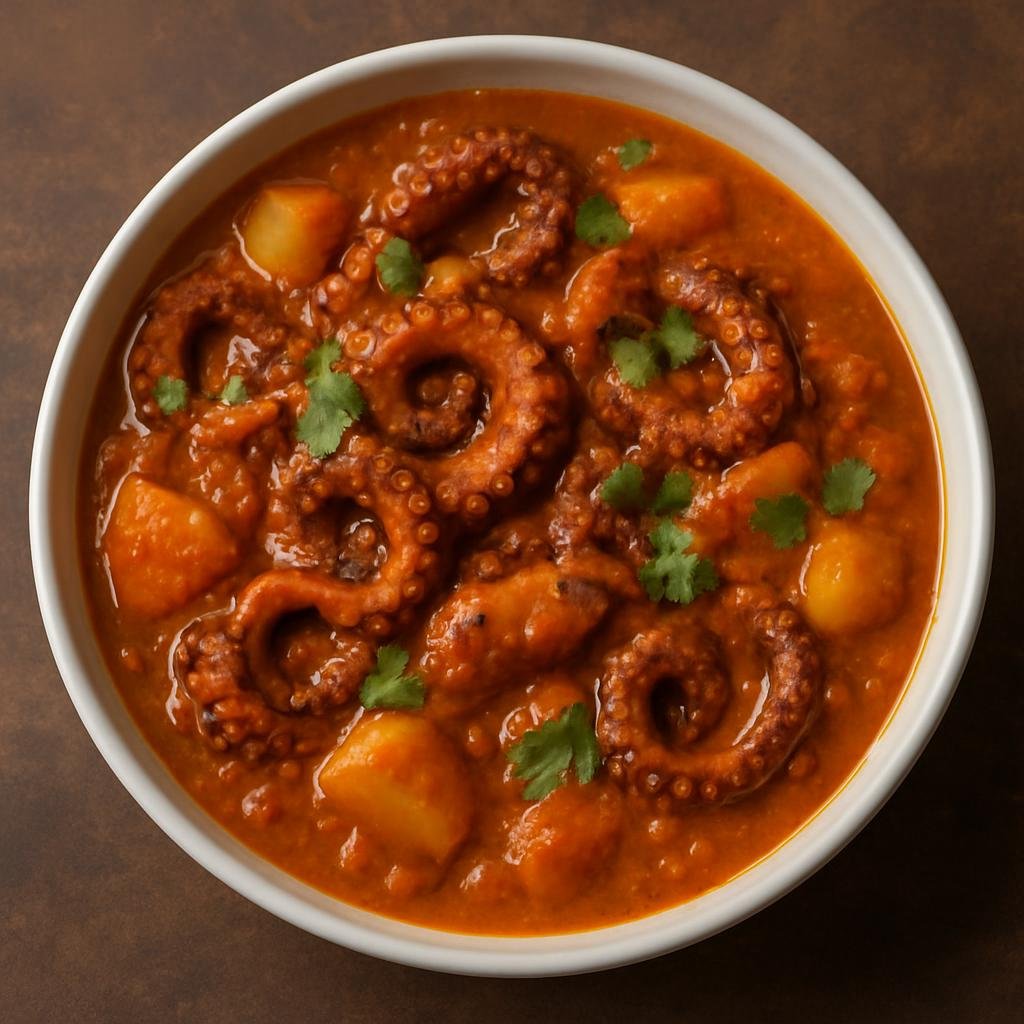
Serving Size: 4
Approximate Time
Prep
20 min
Cook
1 hr 10 min
Total
1 hr 30 min
Ingredients
U.S. measurements first, metric equivalents in parentheses. Conversions are approximate; oz means weight ounces, not fluid ounces.
- 2 lb (900 g) octopus, cleaned (usable weight)
- 2 tbsp (30 ml) coconut oil
- 1 large onion, thinly sliced, approx. 8 oz (225 g)
- 4 cloves garlic, minced (approx. 0.42 oz (12 g))
- 2 tbsp (14 g) fresh ginger, grated
- 1–2 small bird's eye chilies, minced (to taste)
- 2 tbsp (14 g) curry powder (Seychellois or mild curry blend)
- 1 tsp (3 g) ground turmeric
- 2 medium tomatoes, chopped, about 1 1/2 cups (360 g)
- 1 can (14 fl oz (400 ml)) coconut milk
- 1 tbsp (15 ml) tamarind paste
- 2 medium potatoes, peeled and cubed, approx. 12 oz (340 g)
- 1 tsp (5 g) fine sea salt, or to taste
- 1/2 tsp (1 g) freshly ground black pepper
- 2 tbsp (30 ml) fresh lime juice (about 1–2 limes)
- 1/4 cup (15 g) chopped fresh cilantro for garnish
- 4 cups (approx. 800 g) cooked white rice for serving
Show original ingredient measurements
- 2 lb (900 g) octopus, cleaned (usable weight)
- 2 tbsp (30 ml) coconut oil
- 1 large onion, thinly sliced, approx. 8 oz (225 g)
- 4 cloves garlic, minced (approx. 12 g)
- 2 tbsp (14 g) fresh ginger, grated
- 1–2 small bird's eye chilies, minced (to taste)
- 2 tbsp (14 g) curry powder (Seychellois or mild curry blend)
- 1 tsp (3 g) ground turmeric
- 2 medium tomatoes, chopped, about 1 1/2 cups (360 g)
- 1 can (14 fl oz / 400 ml) coconut milk
- 1 tbsp (15 ml) tamarind paste
- 2 medium potatoes, peeled and cubed, approx. 12 oz (340 g)
- 1 tsp (5 g) fine sea salt, or to taste
- 1/2 tsp (1 g) freshly ground black pepper
- 2 tbsp (30 ml) fresh lime juice (about 1–2 limes)
- 1/4 cup (15 g) chopped fresh cilantro for garnish
- 4 cups (approx. 800 g) cooked white rice for serving
Instructions
U.S. measurements first, metric equivalents in parentheses. Conversions are approximate.
1. Place the cleaned octopus in a large pot, cover with water, add 1/2 the sliced onion and 1/2 tsp (2.5 ml) salt, bring to a gentle simmer and cook, covered, until the octopus is tender when pierced (about 40–60 minutes depending on size); with about 20 minutes left add the cubed potatoes so they cook until just tender. Drain the octopus and potatoes, reserve a cup of the cooking liquid, and cut the octopus into bite-sized pieces.
2. In a heavy skillet or saucepan, heat the coconut oil over medium heat and sauté the remaining sliced onion until soft and translucent; add the garlic, ginger, minced chilies, curry powder, and turmeric and cook 1–2 minutes until fragrant. Stir in the chopped tomatoes and cook down briefly, then add the coconut milk, tamarind paste, reserved cooking liquid (as needed to loosen), salt, and pepper. Add the cooked octopus and potatoes, simmer gently 10–15 minutes to meld flavors, finish with lime juice, adjust seasoning, and garnish with cilantro. Serve hot over cooked white rice.
Show original instructions
1. Place the cleaned octopus in a large pot, cover with water, add 1/2 the sliced onion and 1/2 tsp salt, bring to a gentle simmer and cook, covered, until the octopus is tender when pierced (about 40–60 minutes depending on size); with about 20 minutes left add the cubed potatoes so they cook until just tender. Drain the octopus and potatoes, reserve a cup of the cooking liquid, and cut the octopus into bite-sized pieces.
2. In a heavy skillet or saucepan, heat the coconut oil over medium heat and sauté the remaining sliced onion until soft and translucent; add the garlic, ginger, minced chilies, curry powder, and turmeric and cook 1–2 minutes until fragrant. Stir in the chopped tomatoes and cook down briefly, then add the coconut milk, tamarind paste, reserved cooking liquid (as needed to loosen), salt, and pepper. Add the cooked octopus and potatoes, simmer gently 10–15 minutes to meld flavors, finish with lime juice, adjust seasoning, and garnish with cilantro. Serve hot over cooked white rice.
Estimated Nutritional Information*
Per serving | Servings: 4
Calories: 872 kcal
Carbohydrates: 96.9 g
Protein: 45.5 g
Fat: 34.7 g
Saturated fat: 27.9 g
Cholesterol: 108 mg
Fiber: 9.3 g
Sugar: 10.1 g
Sodium: 1037 mg
Potassium: 1914 mg
Calcium: 220 mg
Iron: 18.37 mg
Vitamin A: 153 µg RAE
Vitamin C: 54.5 mg
Nutrition estimated: November 5, 2026
*Values are estimates based on USDA data and mathematical calculations. Actual values may vary. Where data are unavailable, those contributions are excluded. Sodium is a known subtotal. Missing contributions are unknown, not zero.