Entrée: Greece – Γαρίδες Αυγολέμονο ▶ Garides Avgolemono (Shrimp in Avgolemono Lemon-Egg Sauce)
Food safety reminder: Follow safe food-handling practices and use a food thermometer to verify safe internal cooking temperatures.
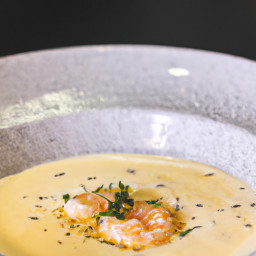
Serving Size: 2
Approximate Time
Prep
10 min
Cook
8 min
Total
18 min
Ingredients
U.S. measurements first, metric equivalents in parentheses. Conversions are approximate; oz means weight ounces, not fluid ounces.
1 lb (450 g) tiger prawns, peeled and deveined
2 tbsp (30 ml) unsalted butter or olive oil
2 cloves garlic, minced
4 cups (1 L) low-sodium chicken or fish stock
2 whole eggs or 4 egg yolks and whites (for tempering)
1 / 4 cup (60 ml) fresh lemon juice and 1 tsp (5 ml) lemon zest
4 cups (120 g) baby spinach or Swiss chard
2 tbsp (8 g) fresh dill, chopped
Salt to taste
Freshly ground black pepper to taste
Show original ingredient measurements
1 lb (450 g) tiger prawns, peeled and deveined
2 tbsp (30 ml) unsalted butter or olive oil
2 cloves garlic, minced
4 cups (1 L) low-sodium chicken or fish stock
2 whole eggs or 4 egg yolks and whites (for tempering)
1 / 4 cup (60 ml) fresh lemon juice and 1 tsp lemon zest
4 cups (120 g) baby spinach or Swiss chard
2 tbsp (8 g) fresh dill, chopped
Salt to taste
Freshly ground black pepper to taste
Instructions
1. Bring stock to a gentle simmer in a wide saucepan; add garlic and simmer briefly.
2. Add prawns and cook until just pink (1–2 minutes); remove prawns and keep warm.
3. Whisk eggs with lemon juice and zest until smooth. Temper the egg-lemon mixture by slowly whisking in 1–2 ladlefuls of the warm stock until warmed through.
4. Reduce heat to very low and slowly whisk the tempered egg-lemon mixture back into the saucepan until slightly thickened; do not boil to avoid curdling.
5. Stir in spinach until wilted, return prawns to the sauce, and warm through gently. Adjust seasoning with salt, pepper, and more lemon if desired.
6. Sprinkle with chopped dill and serve immediately.

---
Estimated Nutritional Information*
Per serving | Servings: 2
Calories: 459 kcal
Carbohydrates: 11.6 g
Protein: 62.6 g
Fat: 20.1 g
Saturated fat: 9.7 g
Cholesterol: 556 mg
Sodium: 526 mg
Potassium: 1479 mg
Calcium: 266 mg
Iron: 4.92 mg
Nutrition estimated: November 5, 2026
*Values are estimates based on USDA data and mathematical calculations. Actual values may vary. Where data are unavailable, those contributions are excluded. Calories, Carbohydrates, Protein, Fat, Saturated fat, Cholesterol, Sodium, Potassium, Calcium and Iron are known subtotals. Missing contributions are unknown, not zero.