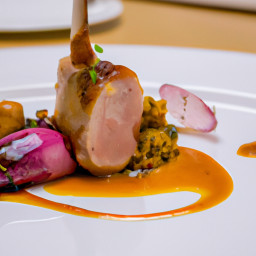
Entrée: France – Lapin À La Moutarde (Rabbit with Dijon Mustard)
Food safety reminder: Follow safe food-handling practices and use a food thermometer to verify safe internal cooking temperatures.
Ingredients
U.S. measurements first, metric equivalents in parentheses. Conversions are approximate; oz means weight ounces, not fluid ounces.
1 whole rabbit (about 2–3 lb (900–1350 g)), jointed into pieces
Salt and freshly ground black pepper, to taste
2 tbsp (30 g) unsalted butter
2 tbsp (30 ml) olive oil
2 shallots, finely chopped
2 garlic cloves, smashed
3 tbsp (45 g) Dijon mustard
1 / 2 cup (120 ml) dry white wine
1 cup (240 ml) chicken stock
1 / 2 cup (120 ml) heavy cream or crème fraîche
1 tsp (5 ml) fresh thyme leaves (or 1 / 2 tsp (2.5 ml) dried)
1 bay leaf
Fresh parsley, chopped (for garnish)
Show original ingredient measurements
1 whole rabbit (about 2–3 lb / 900–1350 g), jointed into pieces
Salt and freshly ground black pepper, to taste
2 tbsp (30 g) unsalted butter
2 tbsp (30 ml) olive oil
2 shallots, finely chopped
2 garlic cloves, smashed
3 tbsp (45 g) Dijon mustard
1 / 2 cup (120 ml) dry white wine
1 cup (240 ml) chicken stock
1 / 2 cup (120 ml) heavy cream or crème fraîche
1 tsp fresh thyme leaves (or 1 / 2 tsp dried)
1 bay leaf
Fresh parsley, chopped (for garnish)
Instructions
U.S. measurements first, metric equivalents in parentheses. Conversions are approximate.
1. Season rabbit pieces with salt and pepper and lightly brush with 1 tbsp (15 ml) Dijon mustard.
2. Heat butter and oil in a heavy skillet or Dutch oven over medium-high heat; brown rabbit in batches until golden; transfer to a plate.
3. Add shallots and garlic to the pan and cook until softened, about 2–3 minutes.
4. Stir in remaining Dijon mustard, deglaze with white wine, scraping up browned bits.
5. Return rabbit to the pan, add chicken stock, thyme, and bay leaf; bring to a simmer, cover, and braise gently for 40–50 minutes until tender.
6. Remove rabbit pieces to a platter; stir cream into the sauce and simmer briefly to thicken; adjust seasoning.
7. Spoon mustard sauce over rabbit, garnish with parsley, and serve.

---
Show original instructions
1. Season rabbit pieces with salt and pepper and lightly brush with 1 tbsp Dijon mustard.
2. Heat butter and oil in a heavy skillet or Dutch oven over medium-high heat; brown rabbit in batches until golden; transfer to a plate.
3. Add shallots and garlic to the pan and cook until softened, about 2–3 minutes.
4. Stir in remaining Dijon mustard, deglaze with white wine, scraping up browned bits.
5. Return rabbit to the pan, add chicken stock, thyme, and bay leaf; bring to a simmer, cover, and braise gently for 40–50 minutes until tender.
6. Remove rabbit pieces to a platter; stir cream into the sauce and simmer briefly to thicken; adjust seasoning.
7. Spoon mustard sauce over rabbit, garnish with parsley, and serve.

---
Per serving | Servings: 4
Nutrition estimated: November 5, 2026
*Values are estimates based on USDA data and mathematical calculations. Actual values may vary. Where data are unavailable, those contributions are excluded. Calories, Carbohydrates, Protein, Fat, Saturated fat, Cholesterol, Fiber, Sodium, Potassium, Calcium, Iron, Vitamin A, Vitamin C and Vitamin D are known subtotals. Missing contributions are unknown, not zero.