Entree: Japan – Kansai – すき焼き ➤ Sukiyaki (Hot pot with thinly sliced beef and vegetables)
Food safety reminder: Follow safe food-handling practices and use a food thermometer to verify safe internal cooking temperatures.
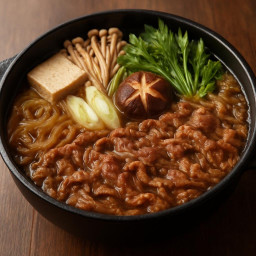
Ingredients
- 1 lb (454 g) thinly sliced beef (ribeye or sirloin), well-marbled
- 8 oz (225 g) firm tofu, cut into 1-inch (2.5 cm) cubes
- 4 cups (100 g) Napa cabbage, sliced into 1-inch (2.5 cm) pieces
- 1 cup (100 g) shiitake mushrooms, stems removed
- 1 medium leek or 2 green onions, cut into 2-inch (5 cm) lengths
- 4 oz (115 g) shirataki noodles (konnyaku), rinsed and drained
- 1/2 cup (120 ml) soy sauce
- 1/4 cup (60 ml) mirin
- 1/4 cup (60 ml) sake
- 1/4 cup (60 ml) dashi stock or low-sodium chicken stock
- 2 tbsp (25 g) granulated sugar
- 1 tbsp (15 ml) vegetable oil
- Optional: raw eggs for dipping (not included) — handle with food-safety caution
Instructions
1. Step 1
   Arrange sliced beef, tofu, cabbage, mushrooms, leeks, and shirataki noodles on plates for easy access. Mix soy sauce, mirin, sake, dashi, and sugar in a bowl to make the sukiyaki sauce.
2. Step 2
   Heat a shallow cast-iron or sukiyaki pan over medium heat and add oil. Sear a few slices of beef briefly to render fat and flavor the pan.
3. Step 3
   Add some of the sauce to the pan, then add a portion of vegetables and tofu. Simmer gently until vegetables begin to soften, about 3–5 minutes.
4. Step 4
   Add more beef slices in batches, dipping and cooking briefly in the simmering broth until just cooked through. Continue adding sauce and ingredients, simmering and eating family-style as items finish.
5. Step 5
   Serve pieces directly from the pan, optionally dipping into a beaten raw egg (traditional) or eating without. Replenish sauce and stock as needed while cooking.
Per serving | Servings: 4
Nutrition estimated: November 13, 2026
*Values are estimates based on USDA data and mathematical calculations. Actual values may vary. Where data are unavailable, those contributions are excluded. Calories, Carbohydrates, Protein, Fat and Sodium are known subtotals. Saturated fat, Trans fat and Cholesterol are known subtotals, with data for 9 of 12 ingredients. Fiber, Sugar and Iron are known subtotals, with data for 10 of 12 ingredients. Potassium and Calcium are known subtotals, with data for 11 of 12 ingredients. Vitamin A is a known subtotal, with data for 7 of 12 ingredients. Vitamin C and Vitamin D are known subtotals, with data for 8 of 12 ingredients. Missing contributions are unknown, not zero.