Entree: France – French Riviera – Socca (Thin, crisp chickpea flour pancake traditionally from Nice)
Food safety reminder: Follow safe food-handling practices and use a food thermometer to verify safe internal cooking temperatures.
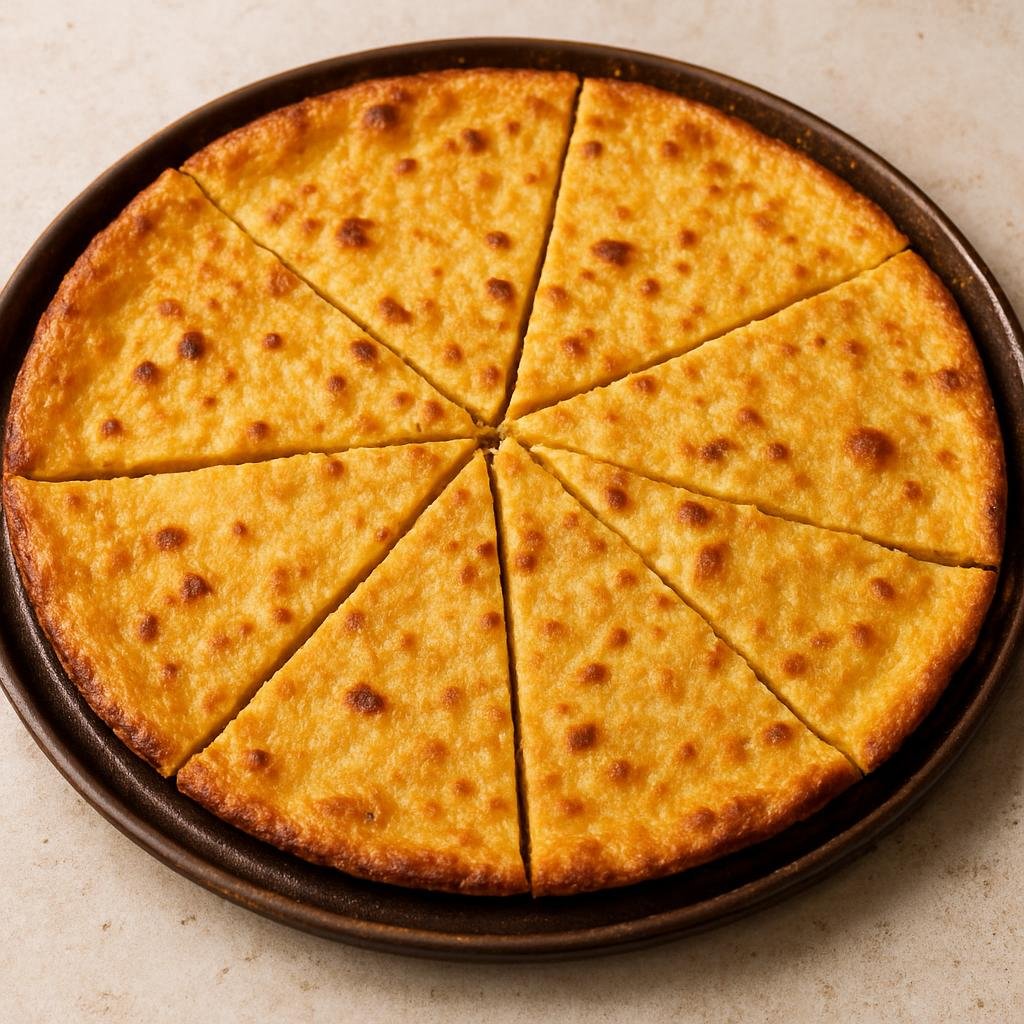
Serving Size: 4
Approximate Time
Prep
10 min
Cook
10 min
Additional
30 min
Total
50 min
Ingredients
- 1 cup (125 g) chickpea flour
- 1 cup (240 ml) water
- 2 tbsp (30 ml) extra-virgin olive oil, plus 1 tbsp (15 ml) for the pan
- 1 tsp (5 g) fine sea salt
- 1/2 tsp (1 g) freshly ground black pepper
- 1/2 tsp (1 g) ground cumin or 1 sprig fresh rosemary minced (optional)
- 1/4 tsp (1 g) baking powder (optional for slight lift)
- 2 tbsp (30 ml) water or more to adjust batter consistency if needed
- Lemon wedges for serving
Instructions
1. In a bowl whisk the chickpea flour, salt, pepper, and optional baking powder together until homogeneous.
2. Gradually whisk in 1 cup (240 ml) water and 2 tbsp (30 ml) olive oil until a thin, smooth batter forms; add up to 2 tbsp (30 ml) more water if needed. Stir in optional cumin or minced rosemary if using.
3. Let the batter rest at room temperature for 30 minutes; this hydrates the flour and improves texture.
4. Preheat the oven to 475°F (245°C). Place a 10–12 inch (25–30 cm) cast-iron skillet on the middle rack while the oven heats so the pan becomes very hot.
5. Carefully remove the skillet, add 1 tbsp (15 ml) olive oil and swirl to coat. Pour in the batter and tilt the pan so it spreads into an even thin layer about 1/8 to 1/4 inch (3–6 mm) thick.
6. Return the skillet to the oven and bake 8–12 minutes until the edges are brown and the top has set. For a charred top, broil 1–2 minutes watching closely.
7. Slide the socca onto a cutting board, squeeze lemon over the surface, tear or cut into wedges, and serve hot.
Estimated Nutritional Information*
Per serving | Servings: 4
Calories: 175 kcal
Carbohydrates: 24.2 g
Protein: 3.3 g
Fat: 7.1 g
Saturated fat: 1 g
Fiber: 0.9 g
Sugar: 0.1 g
Sodium: 515 mg
Potassium: 41 mg
Calcium: 25 mg
Iron: 1.71 mg
Vitamin A: 0 µg RAE
Vitamin C: 0 mg
Generated: 2026-11-05T19:55:42+00:00
*Values are estimates based on USDA data and mathematical calculations. Actual values may vary. Where data are unavailable, those contributions are excluded. Calories, Carbohydrates, Protein, Fat, Saturated fat, Fiber, Sugar, Sodium, Potassium, Calcium, Iron, Vitamin A and Vitamin C are known subtotals. Missing contributions are unknown, not zero.